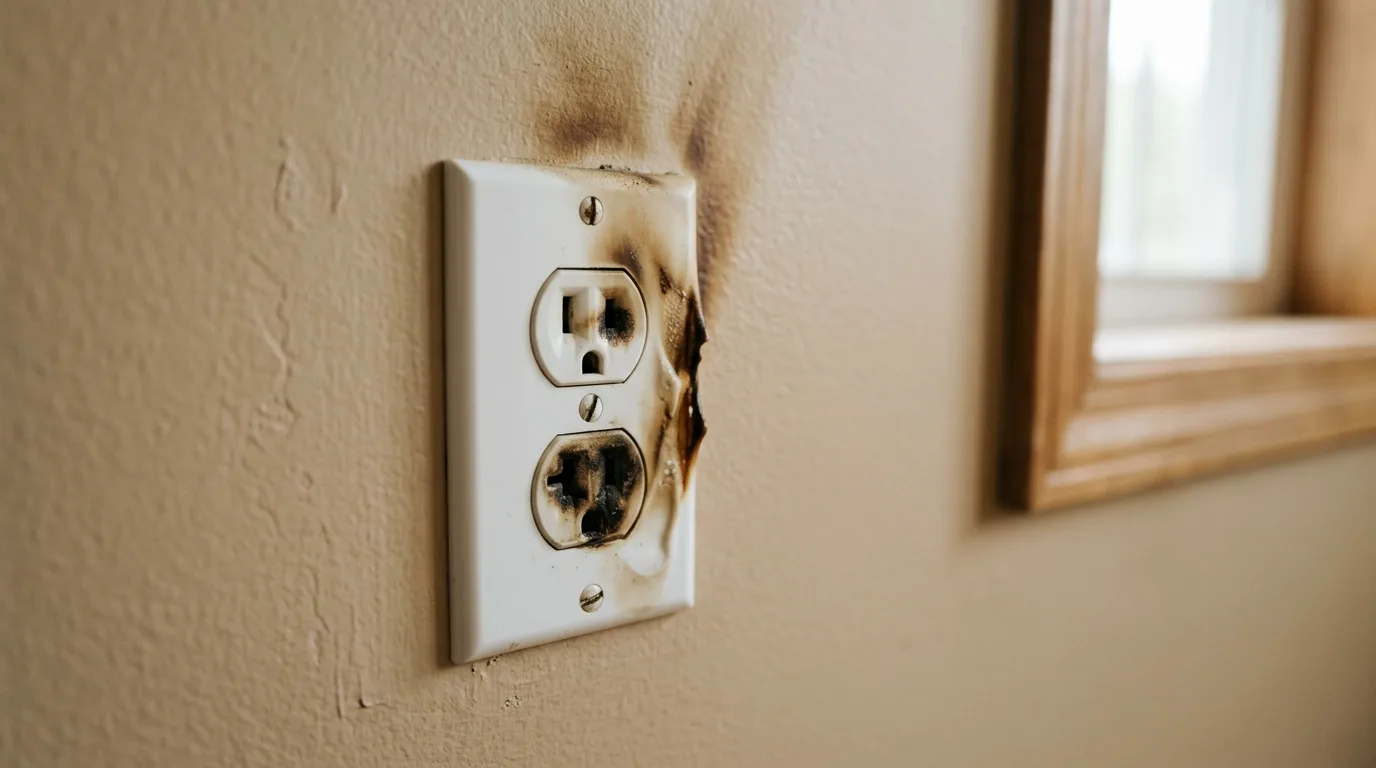
The signs people notice first are a persistent burning or fishy smell with no kitchen source, an outlet or switch plate that feels warm, brown scorch around a receptacle, a breaker that trips again after a reset, or lights that flicker across a room. Each of those can have more than one cause. Smoke, sparks, or open flame is not a diagnose-at-home moment. Leave, call 911, then call a licensed electrician. If you only smell burning or see scorching, stop using that outlet or switch. Do not operate the main. Call a licensed electrician.
Most electrical fires don’t start with a spark you can see. They build slowly inside a wall, behind an outlet, or at a loose connection in the panel, giving off small signals for days or weeks first. This guide walks through warning signs, what each one can mean as a category, and which ones are leave-and-call-911.
TL;DR
- Smoke, sparks, or flame: leave, call 911, then the electrician. Do not stay to reset breakers.
- A burning or fishy smell with no kitchen source: stop using nearby outlets and switches and call a licensed electrician. Do not operate the main.
- Warm or discolored plates can mean overheating, a high-wattage dimmer, or something else. Stop using that device and have it inspected.
- Repeated trips can be overload, a short, a ground fault, or a tired breaker. Do not keep resetting.
- Aluminum wiring, knob-and-tube, or a Federal Pacific or Zinsco label on the cover are reasons to schedule an inspection, not a diagnosis from this page. Challenger is a different product line.
What does an electrical fire smell like?
An electrical fire usually smells like burning plastic, an acrid chemical odor, or a faint fishy smell. That fishy note comes from overheating plastic insulation and components breaking down inside an outlet, switch, or the panel. It’s one of the earliest and most reliable warnings, and it often shows up well before you ever see smoke.
The smell matters because it tells you heat is already high enough to degrade materials. By the time plastic gives off an odor, the connection causing it has been running hot for a while. If you notice a burning smell and can’t trace it to the oven, a candle, or dust burning off a heater, leave that area. Do not operate the breaker from a fire-sign list on this page. Call 911 if there is flame, heavy smoke, or sparks. Then use contact if you still need an electrician. Our guide to a burning smell from an outlet or switch breaks down the three usual causes and what to do first.
The warning signs, ranked from most to least urgent
Not every sign means the same thing. Here’s how to read them in order of how fast you need to act.
1. Burning smell or visible smoke
Visible smoke, sparks, or flame: get everyone out and call 911. Then call a licensed electrician. Do not stay at the panel.
A burning or fishy odor with no flame can still be an overheating connection. Stop using that outlet or switch. Leave the main alone. Call a licensed electrician.
2. Scorch marks or discoloration
Brown, yellow, or black staining around a plate can be heat damage. It can also be old paint, a prior repair, or something else. Stop using that outlet until a licensed electrician opens the box. Do not treat scorching as a reset-and-keep-using problem.
3. Warm or hot outlets and switches
A plate that feels hot, or a standard outlet that is warm with nothing plugged in, is a stop-use condition. A dimmer on a high-wattage load can run warm without being a fire. The homeowner cannot tell those apart from the faceplate. Stop using a hot device and have it inspected. More on why a light switch feels warm.
4. Breakers that trip over and over
A breaker that trips once under a known heavy load may be an overload. A breaker that trips again after a single clean reset, or trips with nothing plugged in, is not a guess-the-cause problem. Leave it off and call. Why a breaker keeps tripping walks the stop-reset tree without naming one cause.
5. Flickering or dimming lights across a room
A single fixture that flickers after a bulb change is often the lamp or the socket. Lights that dim together across a room can be a loose connection, a failing breaker, utility voltage, or something else. If flicker comes with smell, heat, or buzzing, treat it as stop-use. Flickering lights covers the categories.
6. Buzzing or sizzling sounds
Buzzing, crackling, or sizzling at an outlet, switch, or panel is a stop-use sign. Leave the area if you also smell burning or see smoke. Call 911 if there is flame or heavy smoke. Otherwise stop using that circuit and call a licensed electrician. Do not open the panel.
7. Two-prong outlets, frequent shocks, and old wiring
Mild shocks or static-like zaps from outlets and appliances suggest a grounding or wiring fault. Combined with the signs above, in an older home, that raises the overall risk. It’s worth a professional inspection even when nothing is actively overheating.
What are the signs of an electrical fire in the walls?
You cannot see inside a wall. A smell that follows one wall, a warm faceplate with nothing plugged in, buzzing behind drywall, lights on one circuit that dim together, or a breaker that will not hold after one reset are reasons to stop using that circuit and call. Paint discoloration can be heat, moisture, or old finish. National fire counts belong on the separate home electrical fire data article after that page is verified against primary sources. This page is the stop-use tree, not the statistics page. If a wall is warm or smells hot, leave that circuit unused. Do not operate the main.
How do electrical fires start?
Electrical fires start when wiring, a connection, or a device generates more heat than it can shed, and that heat reaches something that burns. Overloaded wires, arcing at a loose connection, and a worn outlet or splice are categories to have measured. This page does not rank which one is most common.
National counts and local shares live in San Diego home electrical fire data. This page stays on what to do when you notice a sign.
Why older San Diego homes carry extra risk
San Diego County has a lot of housing built decades ago, and that era left behind a few wiring systems that age badly. If your home is from that period and hasn’t been updated, the risk runs higher than the warning signs alone suggest.
Aluminum branch wiring showed up in a band of mid-century homes. Connections can loosen with heat cycling. That is a reason to inspect, not a claim that every aluminum home is on fire. Aluminum wiring repair covers the inspection path.
Knob-and-tube has no equipment ground and aging insulation. Federal Pacific Stab-Lok and Zinsco labels on a panel cover are documented inspection flags. Challenger is a different line. Identification from the outer cover and label is the homeowner step. Replacement is a licensed electrician’s call after inspection, not a verdict from this page. FPE and Zinsco replacement covers cover-only ID.
Coastal salt air can corrode outdoor and garage connections. That is a condition to check, not a fire-zone class.
What to do right now if you suspect an electrical fire
If you smell burning, see smoke, or find scorching, take these steps in order.
- Leave if there is flame, heavy smoke, or sparks. Call 911 first. Then call a licensed electrician from outside.
- Do not use water on an electrical fire. A Class C or ABC extinguisher is only for a small, contained fire after you have a clear exit and 911 is already called. If you are unsure, leave.
- Stop using the outlet, switch, or appliance. Do not pull a hot or smoking plug. Do not operate the main.
- Do not keep resetting a breaker that tripped with smell, heat, or scorch.
- Call a licensed electrician. Bright Pro Electric matches San Diego homeowners with independent licensed electricians. Use contact. Leave a message any time. We do not staff a 24-hour desk and we do not dispatch our own trucks.
Don’t reset a breaker, swap an outlet cover, or keep using a circuit that’s shown any of these signs until a professional has traced the cause. The visible sign is rarely where the problem actually sits.
When it’s a true emergency versus a next-day call
Some signs mean call tonight. Others can wait for a scheduled visit, as long as you stop using the affected circuit in the meantime.
Call 911 first if there is flame, heavy smoke, or sparks. Then use contact for a licensed electrician on burning smells, visible scorching, buzzing at the panel, or an outlet that is hot, after you are outside. Availability of a matched electrician the same night is not guaranteed. Emergency electrical is the service path, not a promise of a staffed night desk.
Schedule soon: a breaker that trips occasionally under heavy load, one flickering fixture, or a mild shock from a single appliance. These deserve attention but aren’t usually minutes-matter situations. Electrical troubleshooting finds the root cause before it escalates. If the inspection turns up failing aluminum connections or brittle old wiring, whole-home rewiring or a panel upgrade is often the long-term fix.
Whichever bucket you’re in, the homeowners across El Cajon and the rest of San Diego County who act on the first warning sign are the ones who avoid the worst outcome.
How to lower your risk before anything goes wrong
A few habits and upgrades cut electrical fire risk sharply.
- Test smoke alarms monthly and put one on every level and inside every bedroom. California requires hardwired, interconnected alarms on most permitted work, covered in smoke detector requirements and the electrical permit. They’re your backstop when a fire starts inside a wall.
- Stop overloading outlets. Daisy-chained power strips and space heaters on shared circuits are common culprits. High-draw appliances deserve their own dedicated circuit.
- Replace warm, loose, or discolored outlets instead of living with them.
- Add AFCI and GFCI protection. Arc-fault breakers detect the dangerous arcing that standard breakers miss, and current code requires them in most living spaces.
- Get an inspection if your home is 40-plus years old or you’ve never had the wiring evaluated. A whole-house surge protector and updated panel add another layer.
Frequently asked questions
What are the first signs of an electrical fire?
The earliest signs are usually a burning or fishy smell with no obvious source, outlets or switch plates that feel warm, and brown scorch marks around a receptacle. These appear before any visible smoke because overheating can build behind the wall. Leave. Do not operate the breaker from this list. Call 911 if there is flame, heavy smoke, or sparks. Then use contact.
Can an electrical fire start inside a wall?
Yes. Many electrical fires begin at a loose or damaged connection inside a wall, behind an outlet, or at the panel, where you can’t see it. The first clues are often a smell, warmth on the wall or outlet, or scorching that bleeds out around a faceplate. That’s why a small visible sign can mean a larger problem hidden in the framing.
Should I turn off the breaker if I smell burning?
If you smell burning and cannot trace it to a stove or a candle, stop using nearby outlets and switches. Leave, call 911 if there is smoke or flame. Do not operate the main. Call a licensed electrician.
Why does my outlet feel warm but still work?
A warm outlet that still works almost always has a loose or corroded connection generating heat behind it. It can keep functioning while the heat builds toward a dangerous level, which is what makes it deceptive. Stop using that outlet and have an electrician replace it and check the connection.
Are older San Diego homes more likely to have electrical fires?
Homes built decades ago are at higher risk, especially those with aluminum wiring, knob-and-tube wiring, or Federal Pacific and Zinsco panels. These systems develop loose connections and lose protection as they age. Coastal humidity in San Diego County also speeds up corrosion at electrical connections.
Who do I call for an electrical fire risk in San Diego?
Bright Pro Electric matches San Diego County homeowners with independent licensed electricians via contact. Leave a message any time. For flame, heavy smoke, or sparks, call 911 first.