TL;DR
- Smoke, sparks, or fire: leave, call 911. Do not stay to find the breaker.
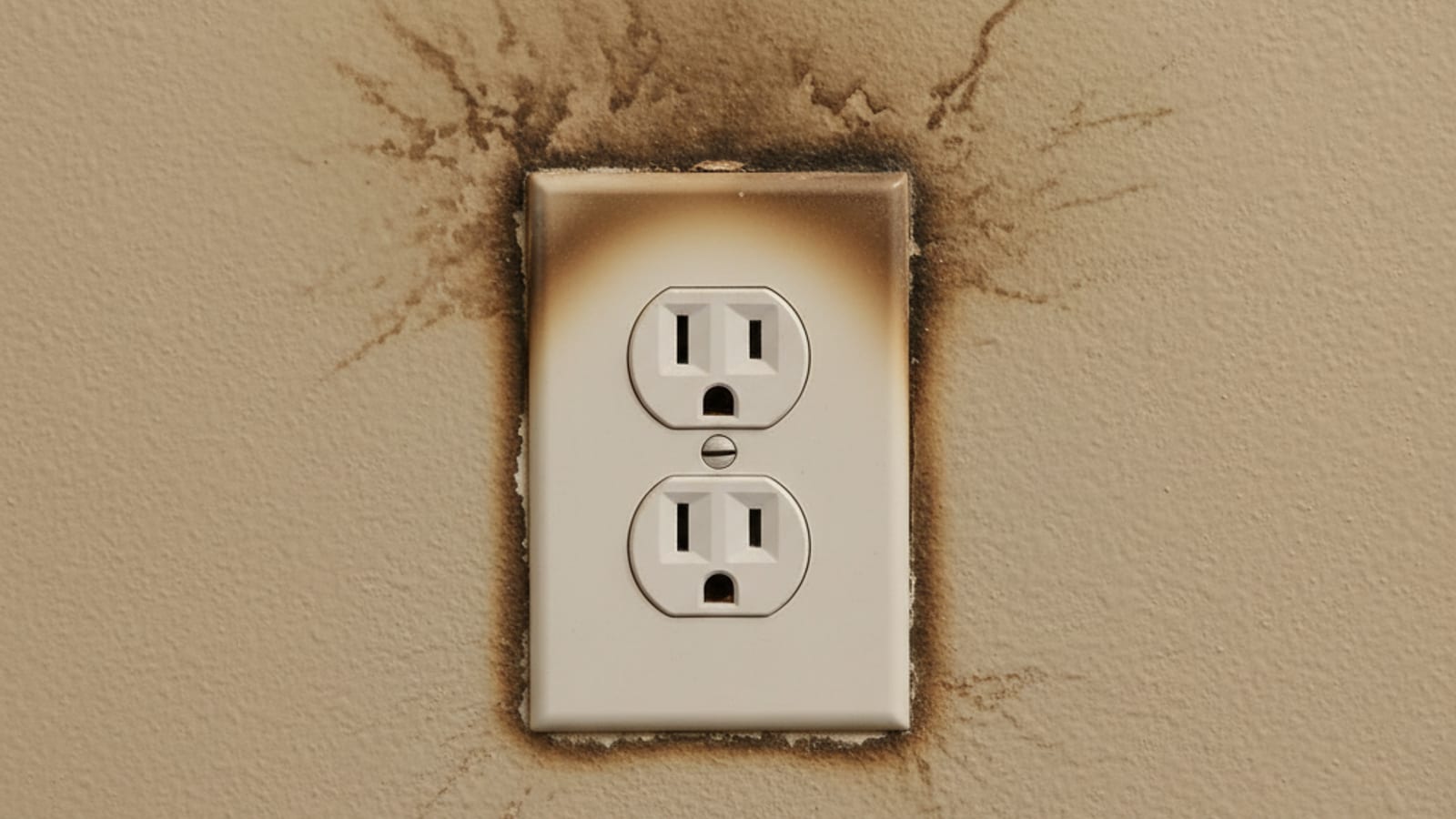
- A burning-plastic smell at an outlet, switch, fixture, or panel is still an emergency. Get people out. Call 911 if you see smoke. Then SDG&E if the meter or drop is involved, then a licensed electrician.
- Causes fall into categories: arcing at a connection, overloaded conductors, or a failing device. This page does not pick one cause from a smell.
- Published repair range on this site: $185-$575 after diagnostic, when the failure is a device or a short conductor repair. Panel or rewire work is more.
- Do not operate the main because this article said to. Do not open the dead front. Bright Pro does not dispatch 24/7 and does not guarantee same-night arrival.
If you smell burning plastic at electrical equipment and you see smoke or fire, stop reading. Leave. Call 911.
If the smell is there without visible fire, still treat it as urgent: get people and pets away from that room, do not keep using the device, and call for help. Use contact during Monday-Saturday 7am-7pm. After hours, leave a message. There is no staffed 24-hour desk.
What to do, in order
- If there is smoke, sparks, or flame: leave the building. Call 911 from outside or a neighbor’s phone.
- Do not operate the main and do not pull the dead front. This page does not walk you through the panel.
- Unplug a portable appliance only if you can pull the cord from a receptacle that is not melted and you are not standing in water.
- If the service drop or meter looks damaged, call SDG&E. The house side is licensed electrical work after the utility has made their side safe.
- Call a licensed electrician for the customer-owned wiring. Same-day response is possible when someone is available. It is not a Bright Pro guarantee. See emergency electrical and 24-hour electrician, how the line actually works.
Why the smell is treated as an emergency
The smell of burning plastic near electrical equipment usually means insulation or a device body is overheating. Three common categories:
1. Arcing at a loose connection
Loose connections make heat. Heat damages insulation. Arc temperature at a fault can be extremely high. This page does not publish a verified 1,000°F figure as a Bright Pro measurement. The practical point stands: the smell can be the warning before open flame in the cavity.
2. Overloaded conductors
Too much current for the conductor ampacity heats the wire. Old insulation, aluminum branch connections, and poor splices are in this category. Diagnosis is on site.
3. Failing breaker, switch, or receptacle
Internal contacts can overheat with the same smell. FPE and Zinsco equipment is inspect-not-diagnose-from-a-photo territory. See Federal Pacific and Zinsco.
Smell location, without DIY panel steps
Panel. Most serious category. Leave the cover on. If the smell is at the can and you see smoke, leave and call 911. Common licensed findings after they open it: loose lug, failed bus connection, corroded termination. Not a homeowner checklist.
Outlet. Stop using it. Do not pull the device. Backstabbed receptacles, overload, and aluminum connections are categories an electrician sorts.
Switch. Stop using it. Dimmer/LED mismatch, worn contacts, and loose terminals are categories.
Fixture. Stop using it. Wrong-lamp heat, failed LED driver, and failed splices are categories.
What a licensed electrician may do
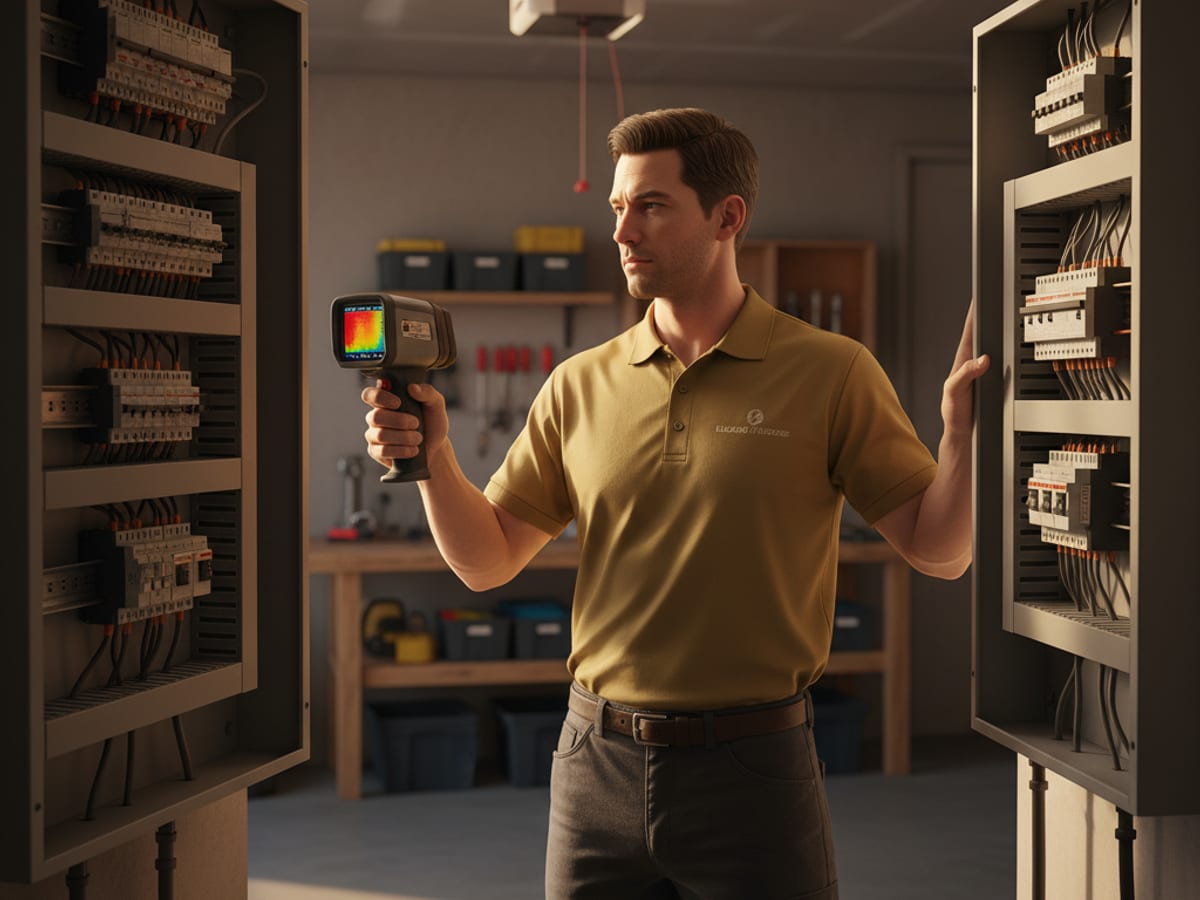
Voltage testing, opening the failed device, looking for discoloration and melted insulation, sometimes infrared, cutting back to undamaged conductor, replacing the device, and checking the rest of that circuit. Bright Pro does not perform those steps. The independent electrician on the job does.
Most burning-smell repairs on this site are published at $185 to $575 after diagnostic when the failure is local. Ask for the price before extra panel or rewire work.
Prevention claims, kept modest
Loose connections often give little warning. Periodic inspection of older equipment is reasonable. This page does not sell a 5-7 year cycle as a code rule and does not claim infrared “every job.” HVAC motors stressing circuits is a possible related category, not a Bright Pro HVAC offering.
Frequently asked questions
Is a burning smell from an outlet always dangerous?
Treat it as dangerous until a licensed electrician says otherwise. Do not keep using the circuit to “see if it returns.”
How much to fix a burning outlet?
$185 to $575 after diagnostic on this site’s published range for many single-device repairs. More if conductors or the panel are involved.
Can I use other outlets on the same circuit?
No. Leave the circuit alone until it is cleared.
Should I open the outlet cover?
No.
Related guides
Breaker keeps tripping, panel upgrade cost, when to call an emergency electrician.
Service area
Matching covers San Diego County. Drive time is the electrician’s, not a promised window. Use the contact form.