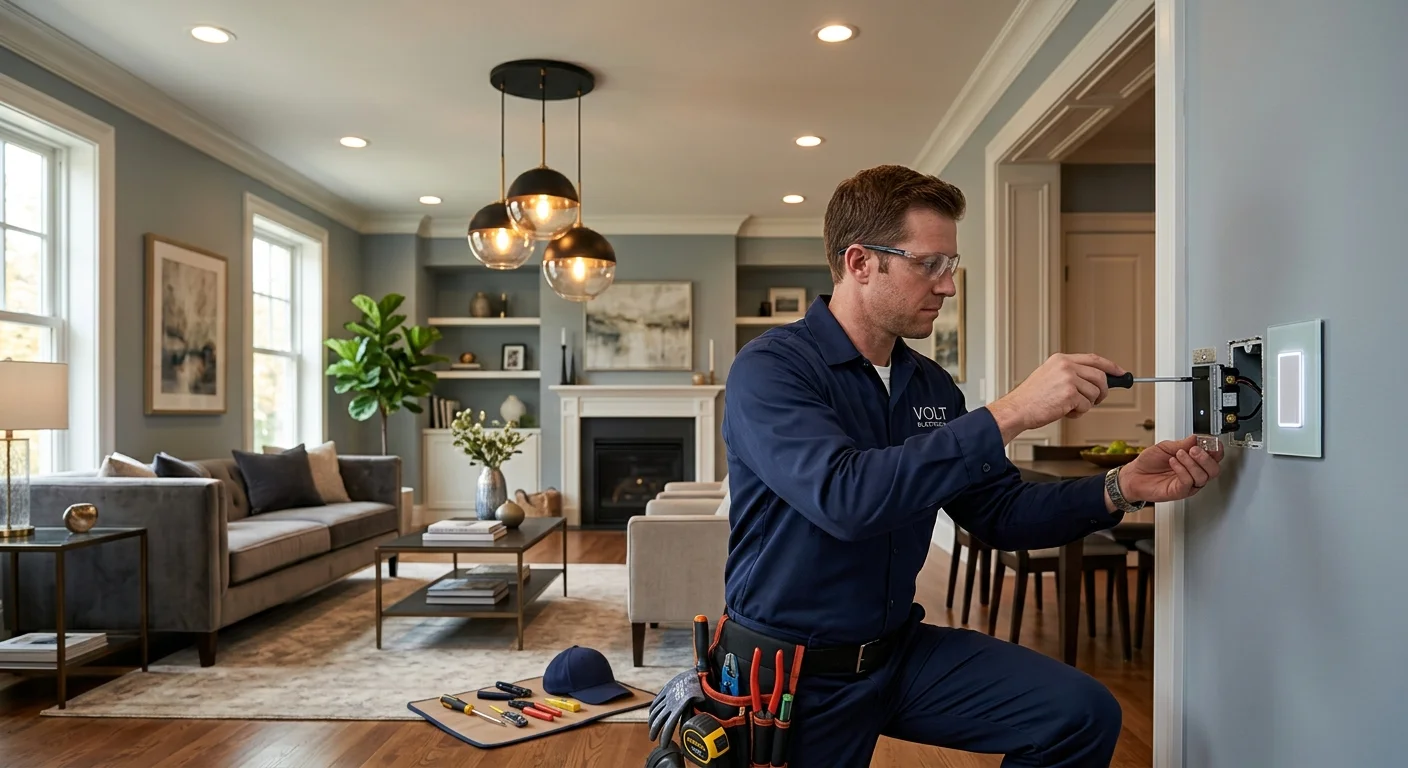
Converting a few key areas to smart lighting in San Diego typically costs $500 to $2,000 for parts and labor, a living room, kitchen, and bedroom with hardwired smart switches installed by a licensed electrician. Smart bulbs are cheaper upfront, but a physical switch that cuts power renders them unresponsive. Smart switches control any bulb on the circuit and keep working even when someone doesn’t know the routine.
TL;DR
- Lead with the existing switch box, dimmer, hub, and circuit. Converting a few key areas typically costs $500-$2,000 including parts and labor. Treat that as a published range on this page.
- Smart switches vs bulbs is a box and listing choice. There is no default platform (not Lutron by default).
- Pre-1980s boxes may lack a neutral. Assess before buying hardware.
- Integration with HomeKit, Google, or Alexa follows the device listing, not a lock-in promise.
Beyond the bulb: what professional smart lighting involves
When we talk about professional smart lighting installation in San Diego, we’re discussing much more than just swapping out a few bulbs. It’s about integrating your home’s lighting infrastructure with intelligent controls that offer reliability, flexibility, and a smooth user experience. This often involves replacing standard light switches and dimmers with smart versions, installing smart fixtures, and ensuring everything communicates effectively with your home’s network.
A professionally installed system, like one built around smart switches or a reliable hub, offers several key advantages over a collection of individual smart bulbs. It provides whole-home control, ensuring that every light in a room, or even across the entire house, responds in unison. This kind of setup is inherently more stable and responsive, as it relies on your home’s existing wiring and a dedicated control system, rather than individual Wi-Fi connections that can sometimes be spotty.
Furthermore, a hardwired smart lighting system can enhance your home’s security. You can program exterior lights to activate based on motion, or simulate occupancy when you’re away. It also contributes to significant energy efficiency by enabling precise scheduling, dimming capabilities, and automated shut-offs. For a hardwired lighting job, see the lighting installation matching page. Bright Pro matches licensed electricians. It does not install those fixtures.
Smart switches vs. smart bulbs: which is right for you?
Deciding between smart switches and smart bulbs is one of the first choices homeowners face when upgrading to intelligent lighting. Each has its place, but they serve different needs and offer varying levels of control and reliability.
Smart bulbs are generally the easiest entry point into smart lighting. You simply screw them into existing fixtures and connect them via Wi-Fi or Bluetooth to an app on your phone. They offer individual control over color, brightness, and sometimes white temperature for single lights. They’re great for renters or for adding smart capabilities to specific lamps without touching any wiring. However, they have drawbacks. If someone turns off the physical light switch, the smart bulb loses power and can’t be controlled via the app. This can be frustrating for guests or family members not familiar with the system. They also consume a small amount of power even when “off” to maintain their network connection.
Smart switches, on the other hand, replace your existing wall switches. Once installed, they provide smart control to any bulb connected to that switch, smart or not. This means your traditional bulbs suddenly become “smart” when controlled by the switch. Smart switches offer several benefits:
- Reliability: They draw power directly from your home’s wiring, providing a more stable connection than many smart bulbs.
- Traditional Feel: The physical switch always works, so anyone can operate the lights without needing an app or voice command.
- Whole-Circuit Control: One smart switch can control multiple lights on the same circuit simultaneously.
- Aesthetics: They blend smoothly with your home’s decor, maintaining a consistent look across all your light controls.
- Energy Efficiency: When a smart switch is off, it genuinely cuts power to the bulbs, unlike some smart bulbs that remain partially on standby.
For most San Diego homeowners looking for a long-term, reliable, and integrated smart lighting solution, smart switches are the stronger hardware path. They still need a licensed electrician when the work is in-wall.
How much does it cost to install smart lighting in San Diego?
The cost of smart lighting installation in San Diego can vary significantly depending on the scope and complexity of your project. It’s not a one-size-fits-all price, as several factors influence the final estimate. Understanding these variables can help you budget effectively for your smart home upgrade.
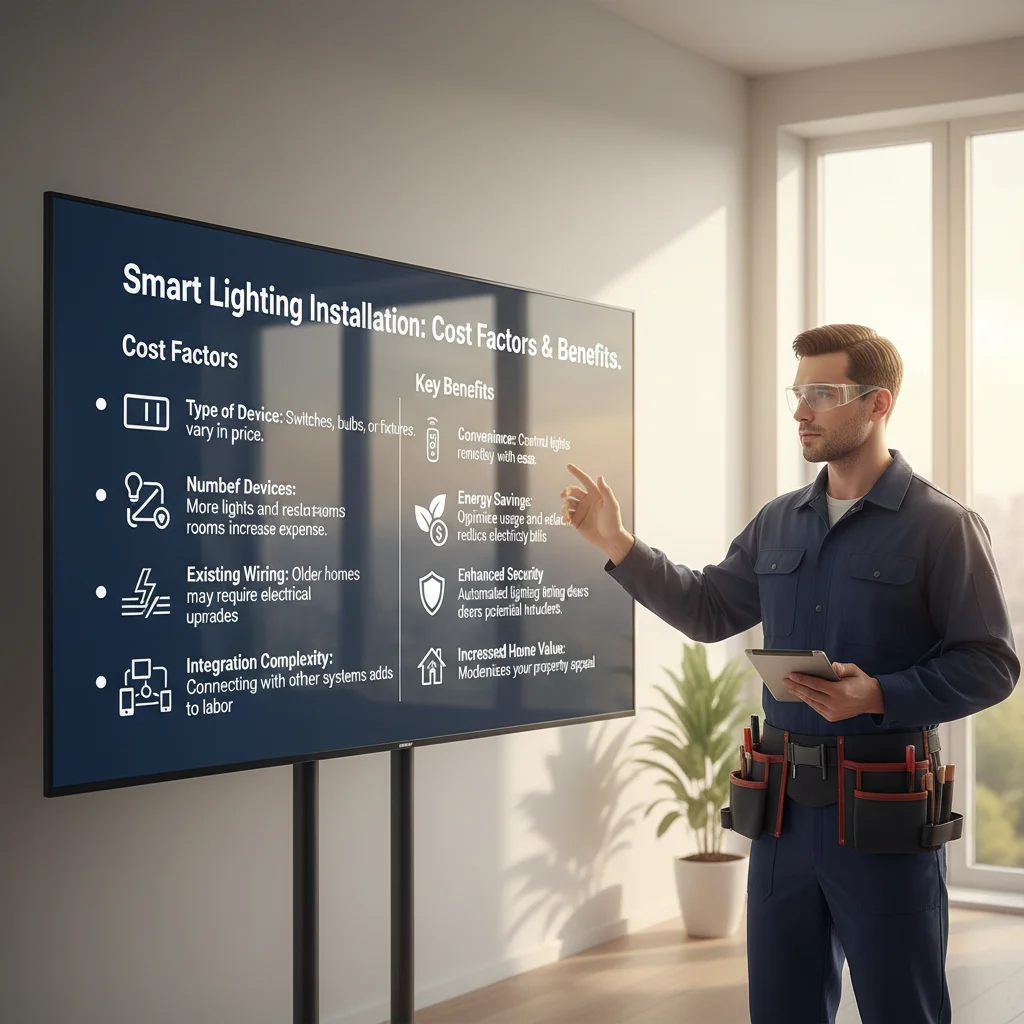
Key factors that affect installation costs include:
- Type of Devices: Smart dimmers typically cost more than basic on/off smart switches. Specialized controls for ceiling fans or multi-way switches (controlling one light from multiple locations) can also add to the price. Brands like Lutron Caseta are popular for their reliability but come at a premium compared to some generic options.
- Number of Switches/Fixtures: The more points of control you want to upgrade, the higher the material and labor costs will be. A small project might involve just a few switches in a main living area, while a whole-home solution could involve dozens.
- Existing Wiring: The condition and configuration of your current electrical wiring play a crucial role. Older homes in San Diego may lack neutral wires in switch boxes, which are necessary for most smart switches (we’ll discuss this more below). Rewiring or adding neutral wires can increase labor costs.
- Integration Complexity: If you want your smart lighting to integrate deeply with an existing smart home system (like a central hub or security system), the setup and configuration time can add to the cost.
- Fixture Installation: Beyond just switches, you might want to install new smart recessed lighting, pendant lights, or under-cabinet lighting. These installations involve more extensive electrical work and material costs.
- Labor Rates: Professional electrician rates in San Diego County vary. Experienced, licensed electricians ensure safe and compliant installations, which is essential for any electrical work.
For a typical San Diego home, converting a few key areas (e.g., living room, kitchen, master bedroom) with smart switches might range from a few hundred to a couple of thousand dollars, including parts and labor. If you’re adding recessed lights at the same time, our recessed lighting installation guide covers how smart dimmers and canless LED fixtures pair together. A more extensive whole-home smart lighting overhaul, especially if it includes new fixture installations or significant wiring modifications, could easily range into several thousands of dollars. Get a detailed, on-site estimate from a licensed electrician for the specific costs on your home.
Integrating smart lights with your existing smart home system
One of the most powerful aspects of professional smart lighting installation is its ability to smoothly integrate with your broader smart home ecosystem. In San Diego, many homeowners already use platforms like Apple HomeKit, Google Home, Amazon Alexa, or Samsung SmartThings to control various devices. Your new smart lighting system should ideally become a cohesive part of that environment, rather than an isolated set of controls.
A licensed electrician matched through Bright Pro Electric installs the hardware. Hub, switch, and voice-assistant pairing follow each device listing. Bright Pro does not install or configure the system.
Proper integration allows for centralized control through a single app or voice command. You can dim lights, change colors, or turn entire rooms on or off using the same interface you use for your smart thermostat or security cameras. This eliminates the need for multiple apps. It’s about building a smart home wiring system that works for you: fewer apps, clearer controls. The licensed electrician configures listed components so switches and sensors follow the platform you already use.
The importance of a neutral wire for most smart switches
When considering smart switch installation in your San Diego home, one technical detail that often comes up is the presence of a neutral wire. Understanding its importance can save you frustration and help you plan your project effectively.
In basic terms, a neutral wire provides a continuous path for electricity to return to the service panel, completing the circuit. For most smart switches, this neutral wire is crucial because the switch itself requires a small, constant trickle of power to operate its internal electronics, such as its Wi-Fi chip, indicator lights, and smart home communication. Without this constant power source, the smart switch can’t maintain its connection or perform its intelligent functions.
Many older homes in San Diego, particularly those built before the 1980s, often lack neutral wires in their switch boxes. Historically, light switches only needed to interrupt the “hot” wire to turn a light on or off. The neutral wire typically went directly from the electrical panel to the light fixture itself, bypassing the switch box entirely. If your switch box only contains a hot wire and a load wire (going to the light fixture), it’s considered a “no neutral” setup.
If your home has no neutral wires in your switch boxes, you have a few options:
- Run a New Neutral Wire: The most comprehensive solution is to have a licensed electrician run a new neutral wire to each switch box that needs one. This involves more extensive electrical work, potentially opening walls, but it provides the most reliable and future-proof solution for smart switches.
- Use “No Neutral” Smart Switches: Some manufacturers offer smart switches designed to work without a neutral wire. These switches often use different internal mechanisms, sometimes relying on a small amount of “leakage” current through the light bulb or requiring a capacitor to be installed at the light fixture. While these can be viable, they may have limitations, such as compatibility issues with certain LED bulbs (leading to flicker or buzzing) or a slower response time. For more on this, you can read our detailed post about smart switch no neutral wire options.
Before purchasing any smart switches, have a licensed electrician from our network inspect your wiring to confirm the presence (or absence) of neutral wires. That is how you choose the right devices and plan any wiring upgrades. It is not a Bright Pro safety guarantee.
Creating scenes and schedules for convenience and security
Beyond simply turning lights on and off with your phone, the true power of smart lighting lies in its ability to create customized scenes and schedules. These features add real convenience to a San Diego home, improve security, and cut what the lighting costs to run.
Imagine a “Good Morning” scene that gently brightens your bedroom lights to a warm white as your alarm goes off, or a “Movie Night” scene that dims the living room lights to a cozy glow while accent lights highlight artwork. With smart lighting, these aren’t just dreams; they’re easily programmable realities. You can configure scenes that adjust brightness, color, and even which lights are on or off, all with a single tap or voice command.
Schedules add another layer of automation. You can program exterior outdoor and landscape lighting to turn on automatically at dusk and off at dawn, adjusting with the changing seasons. During vacations, an away schedule can randomly turn interior lights on and off in different rooms, which some listings describe as an occupancy illusion. That is a feature of the device, not a security outcome Bright Pro can promise.
From an energy perspective, schedules ensure lights aren’t left on unnecessarily. You can program hallway lights to turn off after a certain time each night or dim overhead lights during the day when natural light is abundant. Title 24 and high-efficacy lighting are the California Energy Commission rules that apply to new lighting work. Check current CEC and local Title 24 notes for controls, rather than treating this page as a CEC quote.
Scene and schedule setup is part of commissioning by the licensed electrician or integrator, not a Bright Pro installation. Bright Pro matches you with that electrician. It does not promise a headache-free result.
Frequently asked questions
How much does it cost to install smart switches throughout a San Diego home?
For a typical home upgrading a living room, kitchen, and master bedroom, expect $500-$2,000 for parts and labor. A whole-home overhaul, especially one that includes new fixture installations or wiring modifications, can run $3,000-$8,000 or more. The biggest variable is whether your switch boxes already have neutral wires. We recommend an on-site estimate before budgeting.
My San Diego home was built in the 1970s. Will smart switches work?
Probably, but most 1970s homes have switch boxes wired without a neutral wire, which most smart switches require. Options include running a new neutral to each box (the cleanest solution), using a “no-neutral” smart switch (works, but can flicker with some LED bulbs), or switching to a Lutron Caseta system, which has a battery-powered dimmer that doesn’t need a neutral. A licensed electrician can assess your specific wiring before you buy any hardware.
What’s the difference between Lutron Caseta and RA3 for a San Diego home?
Caseta is a common retail path for many single-family homes. Stock, which platforms it talks to, and price are supplier facts, not Bright Pro facts. Confirm them at the counter. RA3 is Lutron’s professional tier, better keypad options, more devices per system, and more sophisticated scene programming. RA3 requires a Lutron-certified installer and makes the most sense for whole-home remodels with a dedicated lighting design. If you’re asking whether you need RA3, you probably don’t.
Do I need a permit to install smart switches in San Diego?
Confirm with the jurisdiction. A like-for-like switch replacement is often treated as a minor device swap, but this page is not a permit exemption. If you’re running new wiring, adding circuits, or making changes to your electrical panel, a permit is typically required. The licensed electrician doing the work knows which scope needs a permit and handles that process. Bright Pro Electric does not pull permits.
When to call us
While smart bulbs are a simple DIY project, installing hardwired smart switches and integrating them into your home’s electrical system is licensed work. For smart lighting installation in San Diego, especially when dealing with wiring, neutral wires, or complex integrations, match with a licensed electrician. Bright Pro Electric does not install the system. Use contact and we’ll connect you with a vetted local electrician.