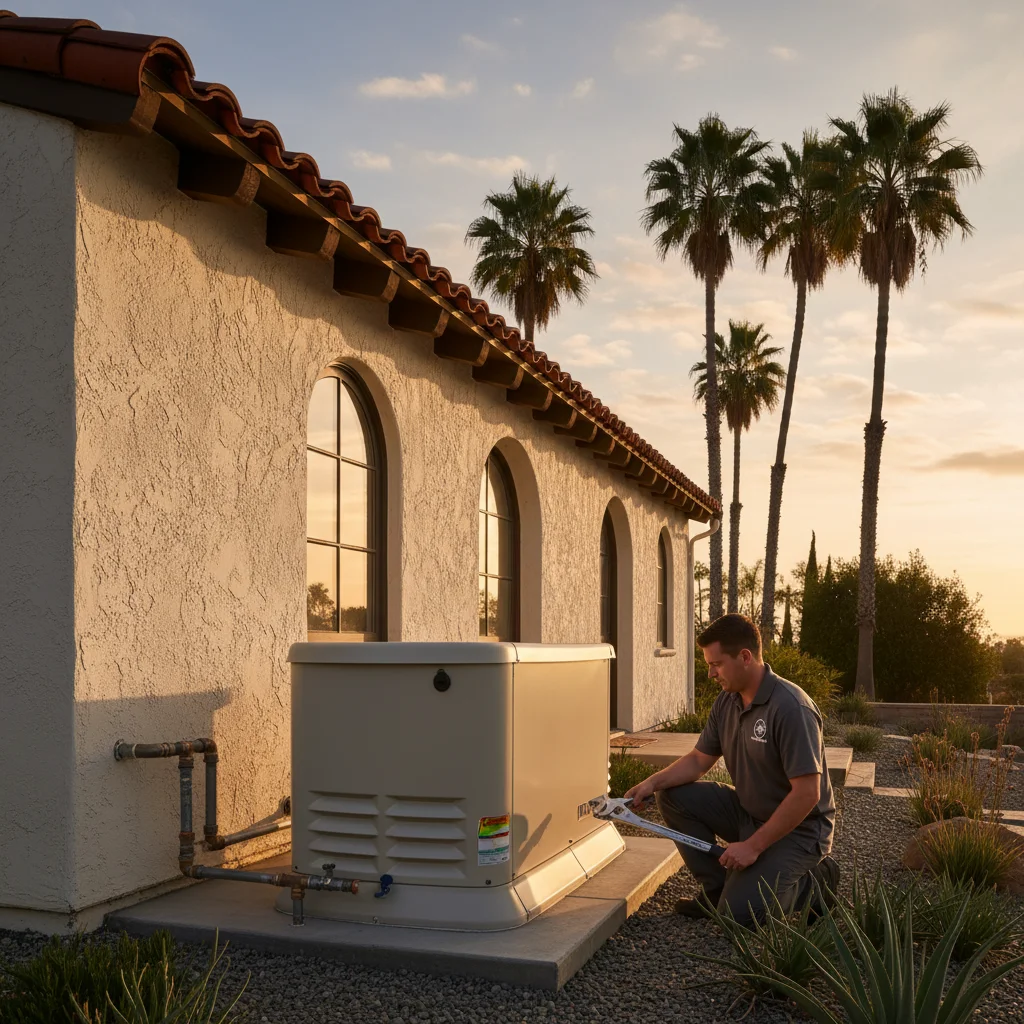
A Generac generator installation in San Diego typically runs $6,000–$12,000 for a 13–24 kW air-cooled Guardian unit with automatic transfer switch, concrete pad, and permits. That envelope is the two Guardian rows later on this page ($6,000–$10,000 for 13–18 kW and $8,000–$12,000 for 18–24 kW). Protector Series liquid-cooled units are listed on this page at $12,000–$20,000+. Those are published industry ranges, not Bright Pro prices. They are written as including permit fees, gas line work, and electrician labor. Confirm the live quote.
TL;DR
- Guardian Series air-cooled units (13–24 kW on this page’s cost rows) are the usual fit for San Diego single-family homes. Combined published install range: $6,000–$12,000.
- Larger Protector Series liquid-cooled units (25 kW+) suit bigger homes or light commercial; installed cost $12,000–$20,000+.
- Generac is a common residential standby brand. Parts and technician availability vary by dealer. This page does not publish a market-share percent.
- The PWRcell battery system pairs with solar but is a separate product from a standby generator. Battery runtime depends on the bank and the load. This page does not state PSPS duration.
- Permanent standby installs typically need an electrical permit and a gas permit in San Diego jurisdictions. Confirm both at the counter that has the house.
Why Generac comes up so often (without a market-share claim)
Generac is one of the brands homeowners already recognize. Local stocking and dealer training still matter for repairs. None of that is a verified 70% US share, and Bright Pro does not have a service-history dataset of “units we see.”
What a typical generator repair costs depends on the part more than the labor. Generac generator repair covers controller lights and common failure patterns for that brand.
Kohler and Cummins also build standby units. Load, fuel, setbacks, HOA rules, and which licensed dealer will warrant the machine decide the purchase. A matching service does not pick the brand for you.
The Generac model lineup: what fits a San Diego home
Generac organizes its residential standby line into two main families. Understanding the difference saves you from overspending or undersizing.
Guardian Series (air-cooled; cost rows on this page are 13–24 kW)
Generac also catalogs smaller air-cooled sizes. This page does not publish an install dollar for an 11 kW unit.
The Guardian Series is the right answer for the majority of San Diego single-family homes. These units are air-cooled, meaning a fan moves air across the engine block, the same way your car engine works. They’re compact, quieter than older standby units, and less expensive to service because the cooling system is simpler.
Common Guardian models and their best-fit use cases in San Diego:
- Guardian 13 kW: Covers essential circuits in a 1,200–2,000 sq ft home. Runs refrigerator, lights, one window unit or a small central AC system, and medical equipment. Won’t handle a 3+ ton central AC and a full kitchen at the same time.
- Guardian 18 kW: A common air-cooled size for a 2,000–3,000 sq ft load if the calculation includes 3–4-ton central AC, refrigeration, a well or sump pump when present, and general circuits. Natural gas is the usual fuel where SoCalGas is already at the house. Square footage alone does not size the unit.
- Guardian 22 kW: Right-sized for larger homes or households with higher electrical demand: home offices with server equipment, electric vehicle charging, or homes with multiple AC zones.
- Guardian 24 kW: Top of the air-cooled line. Appropriate for homes approaching 4,000 sq ft or where the load calculation confirms demand above the 22 kW range.
All Guardian units include Generac’s Mobile Link remote monitoring system, which lets you check generator status, runtime hours, and fault alerts from your phone. It’s a practical feature: you know the weekly self-test ran without having to go outside.
Protector Series (liquid-cooled, 25 kW+)
Liquid-cooled units use an antifreeze loop to manage engine temperature, similar to how a car radiator works. They’re larger, more expensive to purchase and service, and designed for applications where the 24 kW ceiling of the Guardian Series isn’t enough.
For San Diego residential use, the Protector Series makes sense in a handful of situations: very large homes (4,000+ sq ft) with multiple AC zones, homes with electric ranges or electric water heaters that need to stay online, or properties that occasionally house small business operations with higher electrical demand. Installed costs for Protector Series units start around $12,000 and can run to $20,000 or more depending on site conditions and size.
Sizing a Generac for a San Diego home
Sizing wrong is the most expensive generator mistake homeowners make, and it cuts both ways. Undersized means the generator trips the moment your central AC kicks on. Oversized means spending several thousand dollars more than the job required.
The starting point is a load calculation from nameplates, not square footage. Central air locked-rotor and running current are usually the largest motor loads. Use the HVAC nameplate, not a 10–12 A or 14–16 A guess from this page. If the generator cannot start the compressor, it will shut down when the AC cycles.
Add refrigeration, well pumps on rural lots (Ramona, Valley Center, and similar), and any medical equipment the household actually uses. Lighting is smaller. Inland summer cycling is frequent. This page does not state how many minutes between cycles.
Many 2,000–3,500 sq ft houses land on Guardian 18 kW or 22 kW after a calc, not before. The licensed dealer or electrician runs that calc. Bright Pro does not.
Service size matters. 100-amp service can limit generator and ATS choices. A panel upgrade may be a companion job. Newer 200-amp services have more headroom. That is not “most newer homes.”
For a detailed breakdown of how automatic transfer switch sizing affects the calculation, see our whole-house generator installation guide.
Generac PWRcell: battery backup, not a generator replacement
Generac also makes the PWRcell battery storage system, and it’s worth addressing directly because the names cause confusion. PWRcell is a solar-integrated battery product. It stores energy from your solar panels and discharges during an outage or during peak utility pricing.
It is not a standby generator.
A battery bank runs until it is empty. Hours or days depend on kWh stored and what you leave on. This page does not assign a PSPS length to Poway or Alpine and does not classify fire zones. A natural gas standby generator runs as long as gas service and the unit both stay up. See PSPS shutoffs and generator guide.
PWRcell is a solid product for homeowners with solar who want to extend their self-consumption and have short-outage coverage. It’s just a different tool that solves a different problem than a standby generator.
Permits and install reality in San Diego County
Permanent standby generators typically need an electrical permit (ATS, panel connections) and a gas permit (fuel piping). Confirm both with the city or County that has the address. Unpermitted work is a resale and insurer risk. This page does not state that claims are always denied.
The electrical permit is pulled by the licensed electrical contractor or, where the jurisdiction allows, the owner/lessee. Gas piping is licensed plumbing (or a dual-licensed contractor). Inspections are whatever that AHJ schedules.
Setbacks are in the listing, the fuel code, and local amendments, not a countywide 5 ft / 18 in rule from this article. HOAs (4S Ranch, Rancho Bernardo, Carmel Valley and others) can add architectural review. Sort that before the pad is poured.
Manual interlock vs ATS: generator interlock vs. transfer switch.
Permit calendars and whether install is “one full day” depend on the site. No guaranteed two-to-four-week finish.
What Generac installation costs in San Diego
These are real-world San Diego County installed prices, not manufacturer list prices. Permit fees, gas line work, pad, and electrician labor are all included.
- Guardian 13–18 kW with ATS, pad, and permits: $6,000–$10,000
- Guardian 18–24 kW with ATS, pad, and permits: $8,000–$12,000
- Protector Series liquid-cooled (25 kW+): $12,000–$20,000+
- Add for propane on a rural lot with tank installation: $2,000–$4,000 on top of generator cost
Maintenance after installation runs $300–$600 per year under a service contract. That covers annual battery testing, oil and filter change, spark plug inspection, and load test. See our generator maintenance guide for San Diego for what a fair contract should include and what fails first when service gets skipped. Not sure a standby unit is the right tool at all? Our inverter generator vs. standby generator comparison covers when a portable setup at a tenth of the price does the job.
Frequently asked questions
How much does a Generac generator installation cost in San Diego?
A Generac Guardian Series installation in San Diego is listed here at $6,000–$12,000 installed for a 13–24 kW unit with automatic transfer switch, concrete pad, and permits. That is the 13–18 kW row plus the 18–24 kW row. Protector Series liquid-cooled units are listed at $12,000–$20,000+. Those published ranges are written as including gas line work, electrical permit, and labor. They are not Bright Pro prices and not equipment-only figures.
Which Generac model is right for my San Diego home?
Most San Diego homes in the 2,000–3,500 sq ft range are well-served by the Guardian 18 kW or 22 kW. The 18 kW handles a typical 3–4-ton central AC load, refrigerator, and standard circuits. The 22 kW is right for larger homes or homes with higher simultaneous load demand. A load calculation before purchase is the correct way to confirm. Sizing by square footage alone misses critical variables like AC tonnage and well pumps.
Does a Generac generator need a permit in San Diego?
Usually both an electrical permit and a gas permit, issued by the jurisdiction that has the house. The electrical contractor (or owner/lessee, where allowed) pulls the electrical permit. Gas piping needs the proper plumbing license. Skipping permits is a disclosure problem and can complicate insurance. It is not a guaranteed claim denial.
Is the Generac PWRcell battery a replacement for a standby generator?
No. PWRcell is solar-tied storage. Runtime is kWh and load, not a fixed “several hours.” A gas standby unit runs while gas and the engine both work. PSPS length is not stated here. Some households install both. That is a design choice, not a Bright Pro package.
When to call us
Generac installation involves high-voltage panel work, gas line connections, and a multi-agency permit process in San Diego County. This is licensed electrician and plumber work, not a job for a generator vendor who subcontracts to an unlicensed crew, and not a DIY project.
Generator installation is the service category for matching. Bright Pro Electric does not install Generac units, pull permits, or commission controllers. Hours are Monday through Saturday, 7am to 7pm. Use the contact form.