TL;DR
- Three backup options with parked prices: whole-home standby generator ($9,000-$18,000), portable generator with interlock kit ($2,400-$4,200 total), or battery backup ($10,000-$35,000 for whole-home).
- PSPS inclusion is the current SDG&E map and your circuit, not a Ramona/Alpine/Julian zone class. Fuel, transfer method, and protected loads are address-specific.
- A standby generator starts on the sequence in its manual. Do not use a 10-to-30-second or unlimited-gas rule.
- Portable plus a listed interlock is a panel-hookup path when the kit matches the panel.
- Battery runtime is model- and state-of-charge-specific. Do not use an 8-to-24-hour county figure.
- Portable generators with an interlock kit are the budget option for keeping the fridge running and phones charged during outages.
- Battery backup paired with solar is a listed path. Runtime follows the model, the state of charge, and whether solar can recharge that day.
If you live in Ramona, Alpine, Julian, Valley Center, Fallbrook, or any of the East County and mountain communities in the SDG&E PSPS footprint, you’ve already lived through 24+ hour planned shutoffs. The PSPS program (Public Safety Power Shutoff) preemptively cuts power during high-fire-risk wind events to prevent utility-caused ignitions.
It’s the right policy. It also means backup power is no longer an optional luxury for homes in these zones.
Here’s a clear comparison of your three real options.
Option 1: Whole-home automatic standby generator
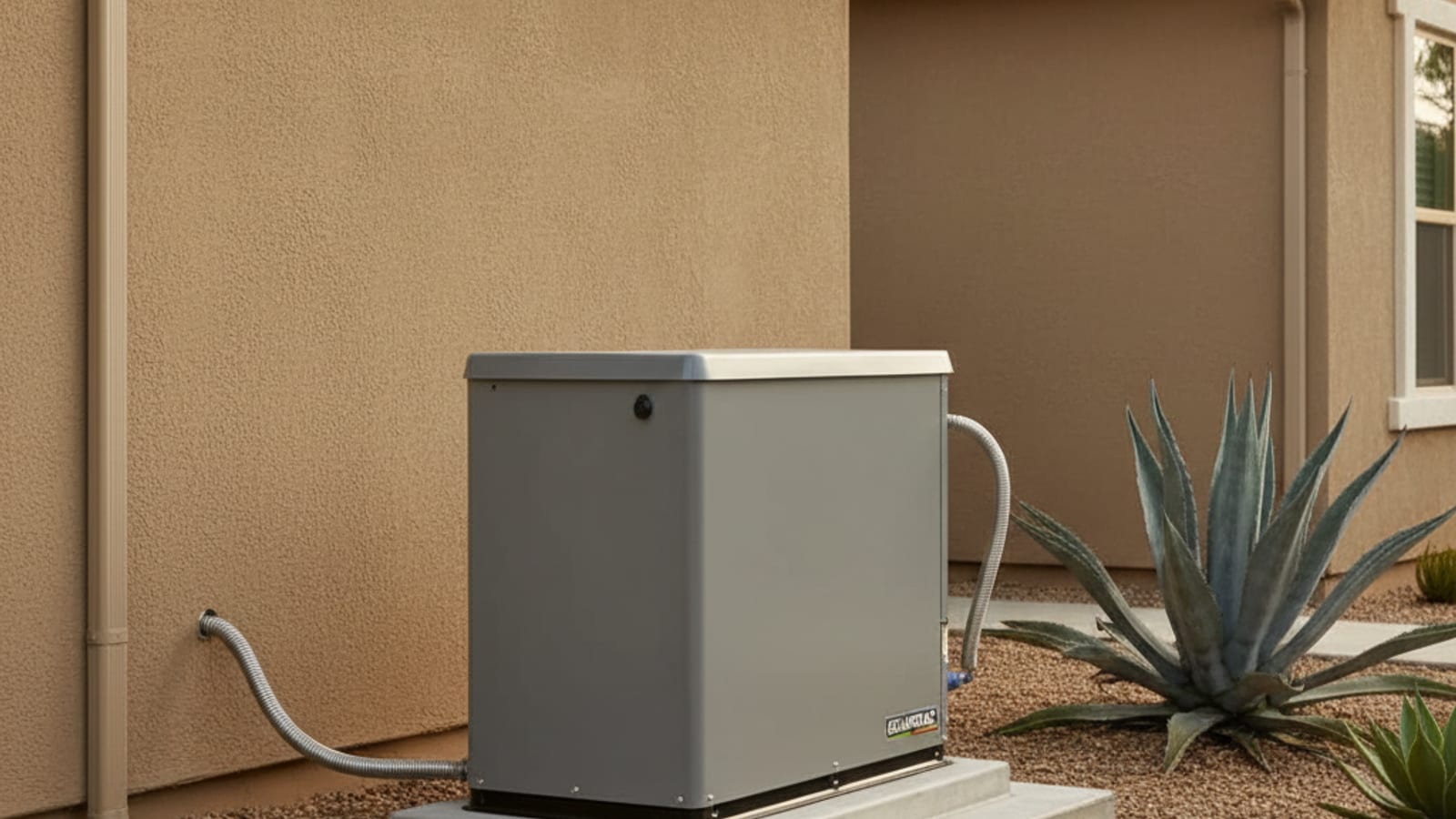
What it is: A permanently installed generator that monitors grid power, starts on the sequence in its transfer-switch and manufacturer manuals, and can energize the entire house or a prioritized portion of it. Do not use a 10-to-30-second rule.
Power source: Natural gas (most common in SDG&E gas service areas), propane (rural mountain installs), or diesel (uncommon for residential).
Brands commonly specified on residential standby jobs:
- Generac Guardian: the volume leader, good support, broad parts availability
- Kohler RES: quieter, higher-quality build, slightly more expensive
- Briggs & Stratton: solid mid-tier alternative
Cost:
- 14 kW unit (covers most essentials + one AC condenser): $9,000–$13,000 installed. For whole-house backup that includes the AC, have an HVAC contractor verify your system’s startup surge requirements so the electricians we connect you with size the generator correctly
- 20–22 kW unit (covers two AC units + most of the house): $13,000–$18,000 installed
- 30 kW+ liquid-cooled units (estate-scale installs): $22,000+
Costs include the generator, automatic transfer switch (ATS), concrete pad, gas line work (or coordination with your gas plumber), permit, and inspection.
Pros:
- Automatic start and transfer when the listed equipment is installed and maintained as specified
- Runtime follows fuel supply and the unit listing. Do not use an unlimited-gas rule. PSPS events cut electricity; confirm current gas status for that address.
- Powers the whole house, including AC, refrigerators, well pumps, medical equipment
- Quiet, modern units run at 60–70 dB at 23 feet, comparable to a window AC
Cons:
- Real money up front
- Requires natural gas or propane supply (some rural mountain homes don’t have gas)
- Annual maintenance ($250–$400/year for service contracts)
- Requires permitting and HOA approval if applicable
Option 2: Portable generator with manual transfer switch interlock
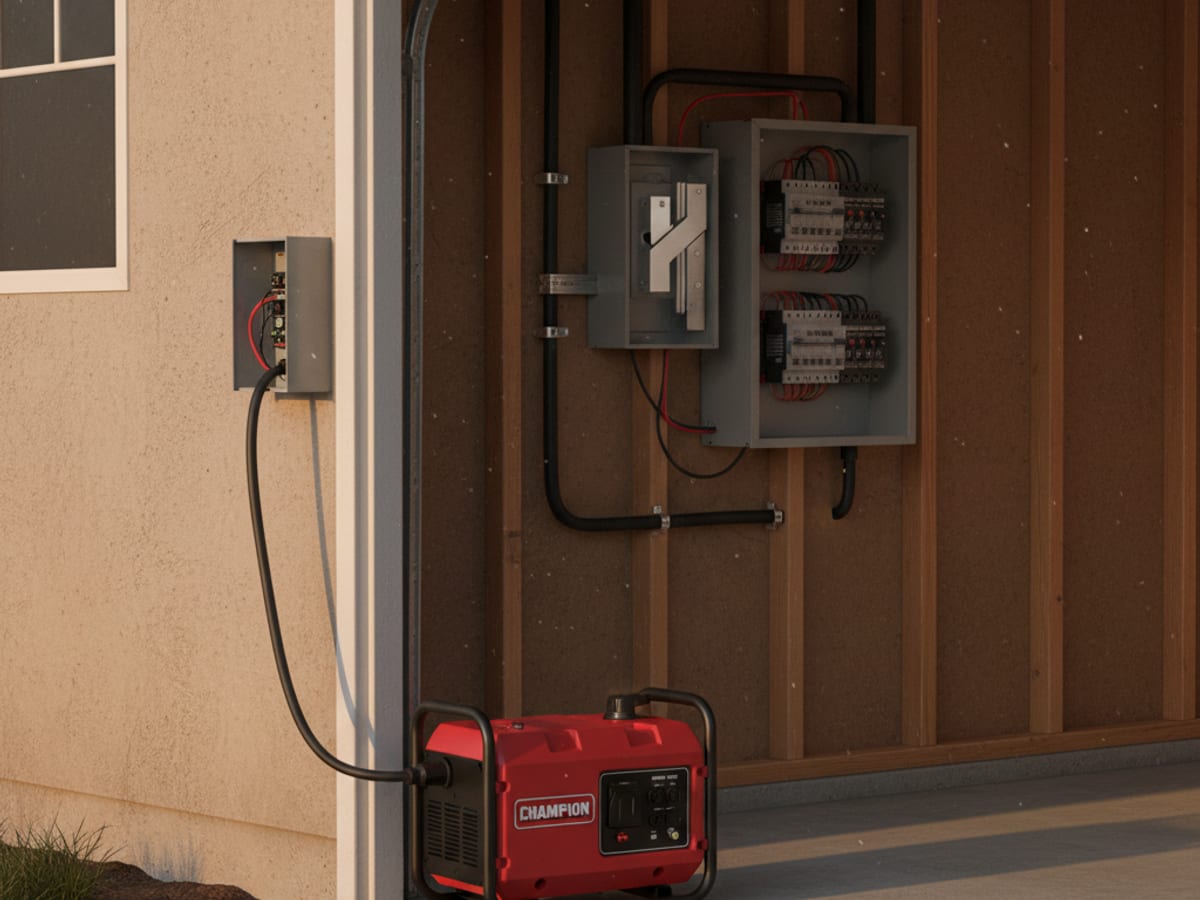
What it is: You buy a portable generator (3,500–8,500 watts typical), and the electrician installs a manual transfer switch or interlock kit at your main panel plus an exterior power inlet. When the grid drops, you wheel the generator out, plug it into the inlet, flip the interlock to disconnect from the grid and connect to generator power, and power on the breakers you want to use.
Cost:
- Interlock kit + exterior inlet install (the electricians we connect you with handle this): $1,400–$2,200
- Portable generator (you buy separately): $700–$2,500 depending on wattage and quality
Pros:
- Far less expensive up front
- The generator can come with you (rental property, road trips, jobsite)
- No annual maintenance cost beyond running it briefly every few months
- Powers what you need most (refrigerator, freezer, a few outlets, well pump if you have one)
Cons:
- Manual operation. You have to be home, set it up, and refuel
- Limited to circuits you can run within the generator’s wattage (usually no central AC, sometimes no electric water heater)
- Requires gasoline storage and rotation
- Loud (75–85 dB for typical portable units)
- Not viable if you’re away during an outage
Option 3: Battery backup (Tesla Powerwall, Enphase IQ, FranklinWH)
What it is: A wall-mounted battery system that stores electricity from the grid (or from solar panels) and provides backup power during an outage. Usually paired with rooftop solar.
Cost:
- Tesla Powerwall 3 (13.5 kWh): $10,000–$14,000 installed for a single unit
- Enphase IQ Battery 5P (5 kWh): $7,500–$10,000
- FranklinWH (15 kWh): $15,000–$18,000
Multiple units stack for whole-home plus AC operation; expect $20,000–$35,000 for a system sized that way. Runtime is whatever that battery and solar recharge can actually deliver on the site.
Pros:
- Silent (no engine noise at all)
- Indoor or shaded outdoor install (no concrete pad needed)
- Pairs with solar to reduce or eliminate net grid dependence
- Most aesthetic option
- Federal storage credits and CPUC SGIP rebates may be available on qualifying battery equipment. Confirm current IRS and SGIP rules. Do not treat the 30D vehicle credit as a battery rebate.
Cons:
- Limited runtime per charge cycle. Use the model sheet and state of charge, not a county hours band.
- Most expensive per kWh delivered for backup-only use case
- Best ROI when paired with solar for daily time-of-use arbitrage, not just backup
- Requires sufficient solar generation to recharge during a multi-day PSPS event
Which is right for your home?
Here’s a matching checklist homeowners use with a licensed electrician:
“I just want to keep the fridge running and charge phones”
Portable generator + interlock kit. Total cost: $2,400–$4,200.
”I work from home and an outage costs me real money”
Standby generator (14 kW) sized for office equipment, refrigerator, and key essentials. Total cost: $9,000–$13,000.
”I have medical equipment and we cannot lose power”
Standby generator with manual override capability. Often also paired with battery backup for the seconds-of-transition gap. Total cost: $12,000–$20,000.
”I have solar already and want maximum independence”
Battery backup integrated with your existing solar. Total cost: $10,000–$25,000+ depending on capacity.
”I’m in PSPS country and want comfort plus reliability”
Whole-home standby (20–22 kW) with automatic transfer switch. Total cost: $13,000–$18,000.
Do you need a permit or HOA approval?
Every standby generator install requires a permit through your city or county, plus possible review by the gas utility for the supply line. The licensed electrician doing the work pulls the permit, schedules the inspection, and stays on site through sign-off. Bright Pro Electric does not pull permits.
If you’re in an HOA community (Rancho Bernardo, Carmel Valley, planned communities), check your CC&Rs for generator placement rules. Most allow side-yard or rear-yard installs with proper screening; some restrict size or visibility.
Service area
Bright Pro Electric matches licensed electricians for generator work across San Diego County, including PSPS-affected communities: Ramona, Alpine, Julian, Valley Center, Pine Valley, Fallbrook, and Bonsall.
Frequently asked questions
How long can a standby generator run during a PSPS shutoff?
Runtime follows the unit listing, fuel type, and whether gas service is actually on at that address. Do not use an unlimited-gas rule. PSPS events are electric shutoffs; confirm current gas status rather than assuming it. Propane-fueled generators are limited by tank size. A 500-gallon propane tank is a common planning example for a 20 kW generator over several days under typical residential load, not a guaranteed duration.
Do I need a permit for a generator in San Diego?
Yes. Every standby generator install in San Diego County requires a building permit and final inspection. If you’re in an HOA, check your CC&Rs for placement rules. Most allow side-yard or rear-yard installs with proper screening.
Can a portable generator power my whole house?
Typically no. Portable generators (3,500–8,500 watts) power essentials like refrigerators, freezers, a few outlets, and well pumps. They usually can’t handle central AC or electric water heaters. A whole-home standby generator (14–22 kW) is what you need for full-house coverage.
How does a battery backup compare to a generator for PSPS outages?
Battery systems like Tesla Powerwall are silent and pair well with solar, but runtime is model- and charge-specific. Standby generator runtime follows fuel supply and the listing, not an unlimited-gas rule. For multi-day PSPS events in mountain communities, compare generator fuel against battery capacity plus solar recharge on that site.
Related guides
A standby generator install often means a panel upgrade to accommodate the transfer switch and additional capacity. Our panel upgrade cost guide covers 200-amp upgrade pricing and SDG&E coordination. For a broader look at what electrical work costs in San Diego, see our electrician pricing guide.
If you’re pairing a portable generator with your home’s panel, see our generator interlock vs. transfer switch comparison for code requirements and cost. Still choosing the portable unit itself? Our inverter generator vs. standby generator comparison covers cost, noise, and what each can actually run. Once your system is installed, our generator maintenance guide for San Diego covers what annual service should include and what fails first.
See our full generator installation service page or use contact to get matched with a licensed pro.