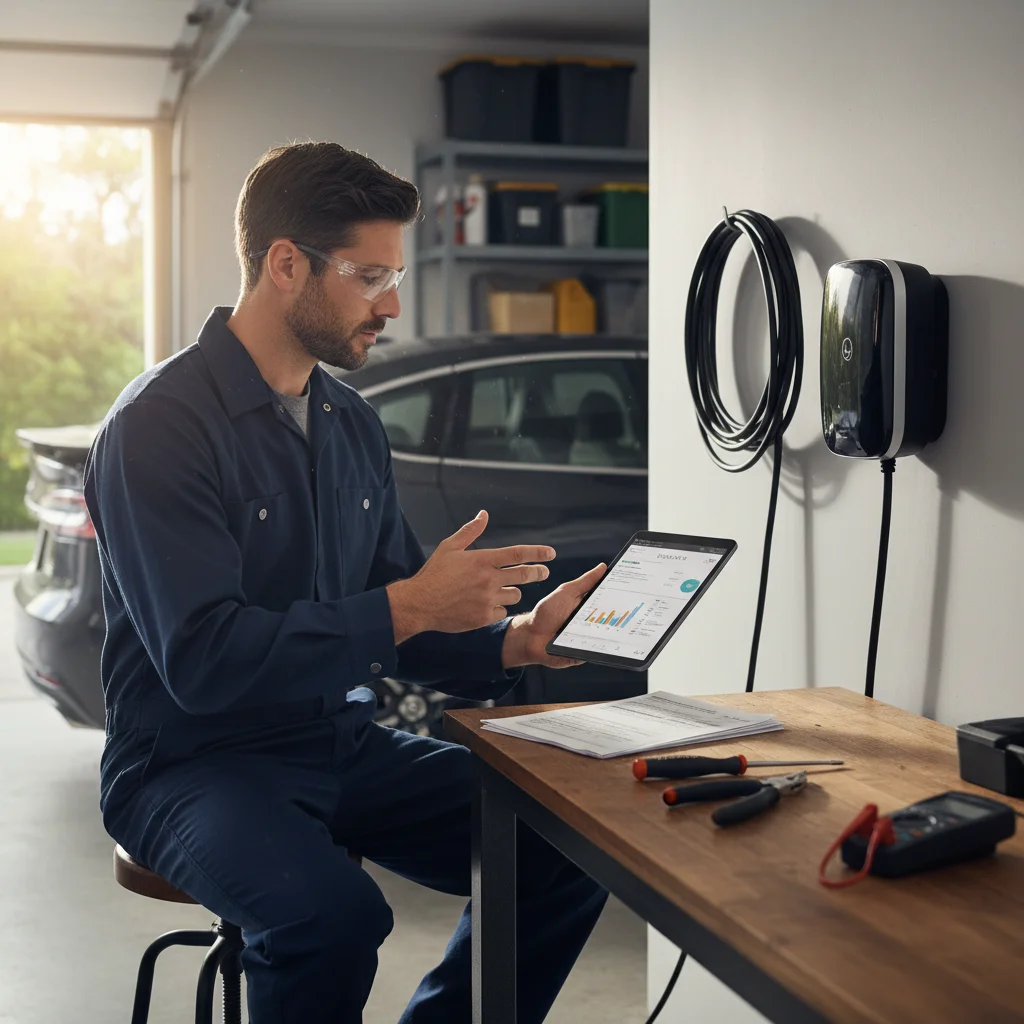
Switching to an electric vehicle is a smart move for your wallet and the environment, but the cost of installing a home charging station can give you pause. Thankfully, a combination of local, state, and federal programs can significantly reduce that expense. The key is knowing which EV charger installation rebates are available in San Diego County and, more importantly, how to stack them correctly.
TL;DR
- Confirm current SDG&E Power Your Drive terms on sdge.com. Do not treat a $500 cap on this page as the live program.
- The federal 30C tax credit covers 30% of your net project cost up to $1,000, but only applies if your address is in a qualifying census tract.
- Stacking correctly: apply the SDG&E rebate first, then calculate the federal credit on the reduced amount. In the right scenario, combined savings can exceed $1,100.
- The CVRP is no longer active for general charger rebates; check the California Energy Commission at energy.ca.gov for new state programs as they launch.
- Your installer must provide an itemized invoice, their C-10 license number, and a signed-off permit for most rebate applications to be approved.
This guide breaks down every major incentive you can access in 2026, including how programs can stack.
SDG&E Power Your Drive rebates explained
San Diego Gas & Electric (SDG&E) is the local utility and the first stop for home charging incentives. Their primary program for residential customers is “Power Your Drive,” which aims to make EV ownership more accessible. While the specific terms can change annually, the 2026 program continues to offer substantial support for homeowners.
Power Your Drive, when it is open, can cover part of charger hardware and labor. Confirm the live amount, equipment list, and whether it is point-of-sale on sdge.com. A $500 residential figure on this page is an illustration from earlier program sheets, not a 2026 filing amount. Eligibility usually requires an SDG&E residential account and an ENERGY STAR charger on the utility’s approved list. Do not treat a $200 / $500 / $1,000 trio as still open without that check.
There are also enhanced rebates for income-qualified households, potentially covering a much larger portion of the total project cost. It’s crucial to check the latest program details on the SDG&E website, as these amounts and eligibility criteria are updated periodically.
One of the most important aspects of the SDG&E program is the requirement to use a licensed electrical contractor. The application process requires your electrician’s license number and a detailed invoice. This ensures the installation is safe, code-compliant, and eligible for the incentive. For a deeper dive into the specific requirements and application steps, you can read our detailed guide to the SDG&E EV charger rebate for 2026.
California Clean Fuel Reward and CVRP
While local utility rebates are a great start, the state of California also offers several EV charger incentives. These programs have evolved over the years, so it’s important to understand the landscape for 2026.
You might have heard of the Clean Vehicle Rebate Project (CVRP). For many years, it was a cornerstone of California’s EV adoption strategy, offering rebates for both vehicles and, in some cases, charger installations. As of late 2023, the CVRP closed to new applications and is transitioning to a new program focused on targeted, income-based incentives. While a direct CVRP replacement for charger hardware isn’t active for all residents in 2026, it’s essential to monitor the California Energy Commission website for new programs that may launch. State priorities can shift, and new funding can become available.
Another program, the California Clean Fuel Reward, is a point-of-sale rebate applied directly to the purchase or lease of a new EV. While it doesn’t directly pay for your charger, it lowers the overall cost of going electric, making the investment in home charging more manageable. Think of it as part of the total financial package that makes an EV work for your budget.
For many San Diegans, the most impactful state-level program is CALeVIP (California Electric Vehicle Infrastructure Project). While primarily focused on commercial and multifamily properties, it sometimes has funding blocks for residential projects in specific communities. It’s worth checking the CALeVIP site to see if any projects are active in your area.
Federal 30C tax credit recap
The federal government offers a significant incentive through the Alternative Fuel Vehicle Refueling Property Credit, better known as the 30C tax credit. This isn’t a direct rebate but a credit you claim on your federal tax return, which can be just as valuable.
The 30C credit allows you to claim 30% of the total cost of your charger and installation, up to a maximum of $1,000. This includes the price of the hardware, labor, wiring, and any necessary electrical panel upgrades directly related to the charger. The total cost of an EV charger installation can vary, so a 30% credit provides a substantial discount. A full breakdown of eligibility rules, census-tract requirements, and how to file is in our dedicated EV charger 30C tax credit guide for San Diego.
However, there’s a major change for 2026 that affects eligibility. Under the rules established by the Inflation Reduction Act, the property must be located in an eligible census tract. This generally means the credit is available to residents in non-urban or designated low-income communities. Before you bank on this credit, you must use the official Department of Energy mapping tool to verify your address is in an eligible location.
To claim the credit, you’ll need to file IRS Form 8911 with your annual tax return. You must have a tax liability to benefit from the credit, as it is non-refundable. Be sure to keep all your receipts and invoices from your electrician as documentation.
Multifamily and commercial-only programs
While this guide focuses on homeowners, strong incentives are also available for other property types. If you’re a landlord, a business owner, or part of a homeowner’s association (HOA) in San Diego, you have access to even larger rebate programs designed to expand public and shared charging infrastructure.
SDG&E runs a “Power Your Drive for Fleets & MUDs” (Multi-Unit Dwellings) program. This initiative often covers the majority of the infrastructure costs, from the utility pole to the parking space, for apartment complexes, condos, and businesses. The property owner is then typically responsible for the charger hardware and final connection.
On the state level, the California Electric Vehicle Infrastructure Project (CALeVIP) is a huge driver of commercial installations. Through its San Diego County Incentive Project, CALeVIP offers thousands of dollars per connector for Level 2 and DC fast chargers installed at public, workplace, and multifamily locations. These programs are competitive and have specific requirements regarding public access and networking, but the financial payoff is significant.
These commercial programs require a much more intensive planning and application process. Working with an experienced commercial electrical contractor who understands the technical requirements and paperwork is essential for a successful project.
How to stack rebates without losing eligibility
This is where you can see truly massive savings. The key to stacking is understanding the rules of each program and the order of operations. Most importantly, you can’t get credited twice for the same dollar spent. Rebates reduce your out-of-pocket cost, which in turn reduces the basis for any tax credits.
Illustration only, and only if those programs still pay those amounts for that address. Encanto or City Heights still need the DOE 30C locator and the live SDG&E sheet. This is not a Bright Pro quote and not a tax return.
-
Project Scope & Quote: You decide to install a Level 2 charger. The total cost from a qualified electrician for the EV charger installation is $2,800. This includes a $700 charger, labor, a new 50-amp circuit, and the permit fee.
-
Apply for Local Rebate: You apply for the SDG&E Power Your Drive rebate. You’re approved for the $500 rebate for installing a qualifying charger.
-
Calculate Your Net Cost: The SDG&E rebate is applied, reducing your direct cost.
- Total Cost: $2,800
- SDG&E Rebate: -$500
- Your Out-of-Pocket Cost: $2,300
-
Calculate Your Federal Tax Credit: Now, you use your out-of-pocket cost to calculate your 30C tax credit. The credit is 30% of this net amount.
- Credit Basis: $2,300
- 30% Tax Credit: $690 (This is below the $1,000 maximum).
-
Determine Final Cost: Subtract the tax credit value from your out-of-pocket expense.
- Out-of-Pocket Cost: $2,300
- Federal Tax Credit Value: -$690
- Final Installation Cost: $1,610
If those amounts still apply, the arithmetic is $1,190. Confirm sdge.com and IRS Form 8911 before you file. Flat-rate rebates, when they exist, usually come off the cost basis before a percentage credit. A tax professional applies your invoices.
Documentation your electrician must provide
You can’t claim these incentives without proper paperwork. Rebate programs are strict about documentation to prevent fraud and ensure all work was performed safely and to code. A professional, licensed electrician will provide these documents as a standard part of their service. If a contractor is hesitant to provide any of these, it’s a major red flag.
Here’s what you’ll need:
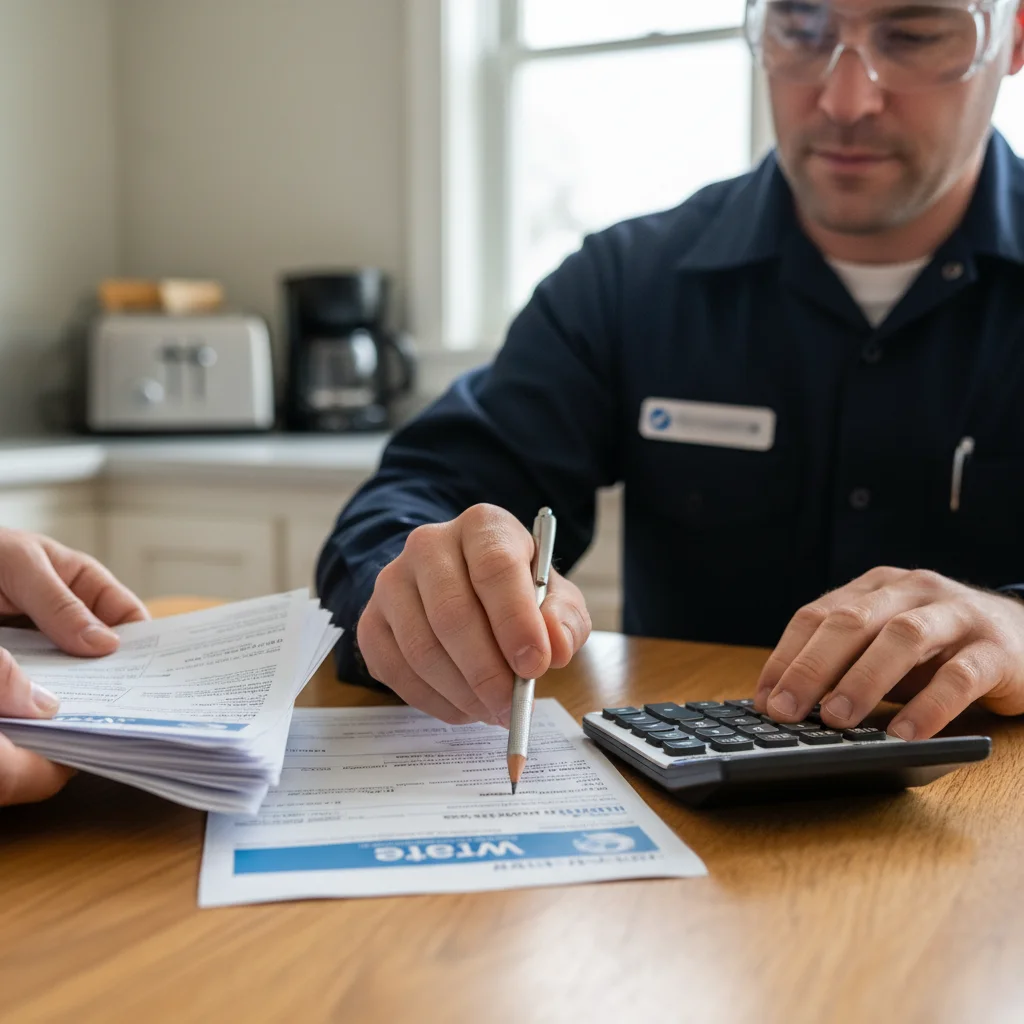
- Itemized Invoice: This is the most critical document. It must clearly show the breakdown of costs for labor and materials. It should list the exact make and model of the EV charger, as well as any other major components like breakers or wiring.
- Proof of License: The invoice should clearly state the electrician’s California C-10 license number. Program administrators will verify this with the Contractors State License Board (CSLB).
- Final, Signed-Off Permit: A proper EV charger installation requires a permit from your local San Diego jurisdiction (city or county). The final invoice should be dated after the permit has been finalized and passed inspection. This proves the work is code-compliant.
- Contractor-Signed Forms: Many rebate programs, especially from SDG&E, have specific forms that the installing contractor must complete and sign, attesting to the details of the installation.
Your electrician’s ability to provide clean, complete, and accurate paperwork is just as important as the quality of their wiring. It’s the final step that ensures you get the money you’re entitled to.
Frequently asked questions
What rebates are available for EV charger installation in San Diego in 2026?
Confirm live SDG&E Power Your Drive terms on sdge.com. Do not treat a $500 cap here as current. Confirm 30C on IRS Form 8911 (30% up to $1,000 when the tract qualifies). Check energy.ca.gov for state programs.
Do I need a licensed electrician to claim the SDG&E rebate?
Yes. SDG&E requires the installation to be completed by a licensed electrical contractor. The rebate application requires the contractor’s California C-10 license number and a detailed itemized invoice. The work also needs to pass city inspection, and some rebate programs require the permit to be finalized before the application is processed.
What documentation do I need to claim the 30C federal tax credit?
You’ll need an itemized invoice from your electrician showing the hardware cost, labor, materials, and permit fees, dated after the installation is complete and the permit is closed. You’ll also need your address verified as being in a qualifying census tract using the DOE mapping tool. File IRS Form 8911 with your annual return for the tax year when the charger was placed in service.
Can I stack the SDG&E rebate with the federal 30C credit?
When both still apply, the usual order is SDG&E first, then 30C on the reduced basis. A $2,800 / $500 / $690 walkthrough on this page is arithmetic, not a 2026 award. Confirm the live rebate and Form 8911.
Next step
A licensed electrician files the permit and supplies the invoice most rebate programs want. Bright Pro matches San Diego County homeowners with those electricians. Bright Pro does not install the charger or file the rebate. Use contact.