TL;DR
- Adding a single outlet to an existing circuit costs $185-$325; a new dedicated 20-amp circuit runs $475-$950; a 240V outlet for EV chargers/dryers costs $650-$1,100.
- You can extend an existing circuit for low-draw devices (lamps, chargers) but need a new dedicated circuit for high-draw appliances (microwaves, window ACs, space heaters).
- Current NEC requires GFCI protection in kitchens, bathrooms, garages, and outdoors, and AFCI protection in bedrooms, living rooms, and hallways.
- Ask for a written quote before work starts.
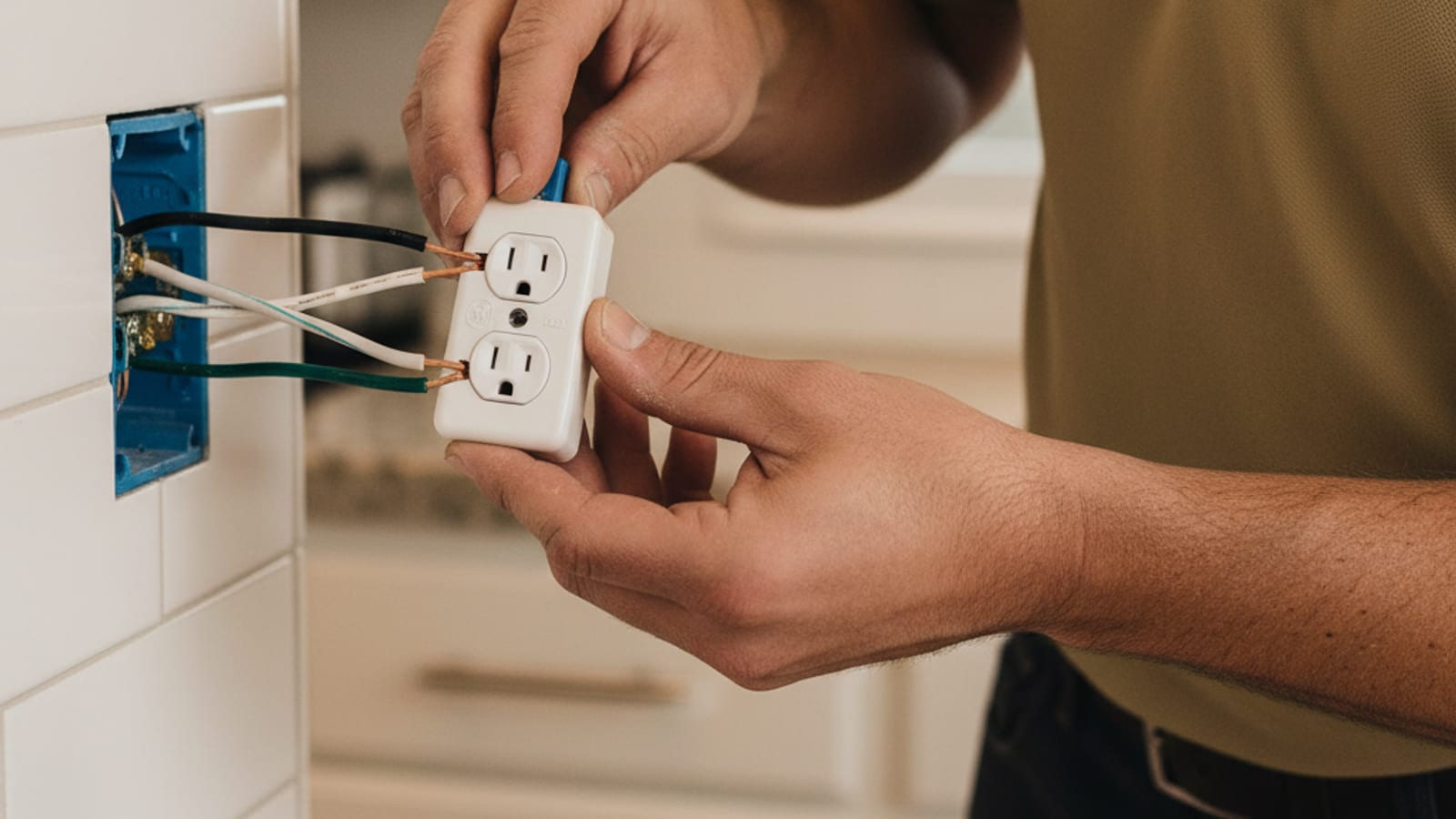
You need an outlet where one doesn’t exist. Maybe it’s a kitchen counter that has just one outlet at the back, or a garage that came with one outlet by the door, or a bedroom where you need a charger spot beside the bed.
Here’s what published San Diego ranges look like on this page, and how to know whether you need a simple outlet add-on or a new dedicated circuit. They are not Bright Pro prices.
How much does it cost to add an outlet?
For a typical San Diego home with reasonable wall access:
- Single outlet added to existing circuit: $185 to $325 depending on wall opening and routing
- Two-prong → three-prong outlet upgrade with proper grounding: $245 to $425 per outlet
- GFCI outlet replacement or new install: $185 to $295 per outlet
- AFCI outlet retrofit: $225 to $325 per outlet
- New dedicated 20-amp circuit (kitchen appliance, garage tool, bathroom): $475 to $950 depending on panel-to-outlet distance and whether the panel has space for a new breaker
- 240V outlet for dryer, range, hot tub, EV charger: $650 to $1,100 including breaker and conduit
- Outdoor weatherproof outlet with in-use cover: $245 to $475 including drilling through the wall
Ask for a written quote rather than an hourly rate, so you hear the price before work starts. No “well, it took longer than expected” surprises on the invoice.
When can you extend an existing circuit?
Adding to an existing circuit (running a new outlet off a nearby outlet’s spare terminal) works when:
- The existing circuit has spare capacity. A 15-amp bedroom circuit serving four outlets and a ceiling light typically has capacity for one or two more outlets used for low-current devices (lamps, chargers, small electronics).
- The new outlet location is electrically downstream from existing outlets (the electrician can fish a cable from the closest box).
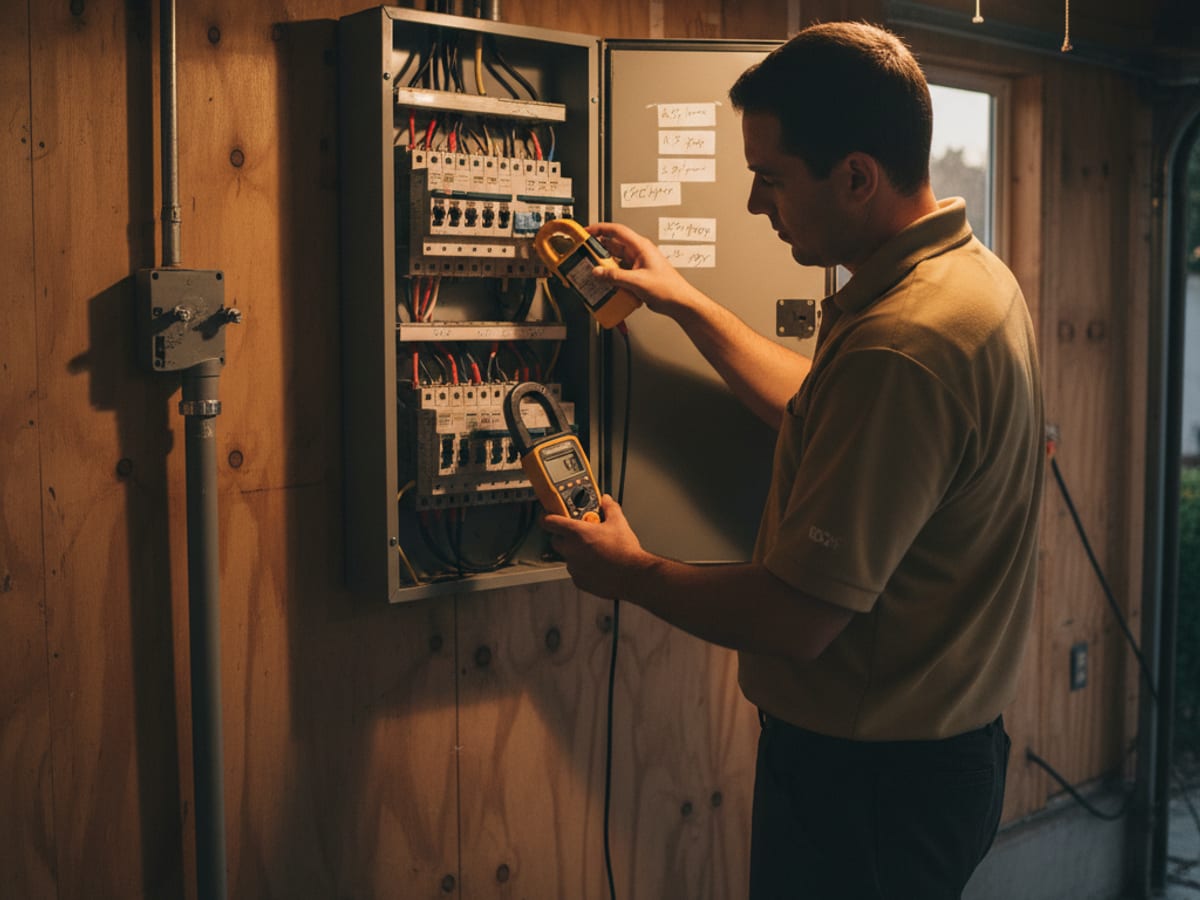
- The circuit isn’t already at the limit (a licensed electrician measures with a clamp meter to confirm typical loads).
Common safe additions:
- An extra outlet in a bedroom for a charger station
- A second outlet on a garage wall for tools that aren’t used simultaneously
- A reading-lamp outlet near a couch or bed
- A small additional outlet in a bathroom for a hair dryer (off the existing GFCI)
When do you need a new dedicated circuit instead?
Adding a dedicated circuit (running a new wire all the way from the panel) is necessary when:
- The new outlet powers a high-draw appliance. Microwaves, window AC units, space heaters, garage compressors, kitchen counter appliances all need dedicated 20-amp circuits per current code. If you’re adding a circuit for a new mini split or window AC, coordinate with an HVAC contractor on equipment sizing first. They’ll confirm the amperage draw so the electrician can spec the right breaker and wire gauge from the start.
- The existing circuit is already loaded. If a kitchen circuit serves the dishwasher and disposal, you can’t just add the new microwave outlet to it.
- The location requires it by code. Bathrooms must have at least one dedicated 20-amp small appliance circuit; kitchens require multiple dedicated circuits for counter outlets.
- You’re adding a 240V appliance. Dryers, ranges, hot tubs, EV chargers, and welders all require 240V dedicated circuits.
What do the most common outlet jobs cost?
”I want to add a microwave outlet above the counter”
You need a dedicated 20-amp circuit. $675–$950 typical depending on panel-to-counter distance and whether the panel has space for a new breaker.
”I want a charging outlet by my bed”
Usually an extension of the existing bedroom circuit. $185–$295.
”I want to add a 240V outlet for a window AC”
Window ACs above 12,000 BTU typically need a dedicated 240V circuit. $650–$950 installed.
”I want an outdoor outlet for holiday lights”
Weatherproof outlet with in-use cover, GFCI protected. $245–$475 depending on whether the closest indoor outlet is interior to a finished wall (drilling required) or in a garage (easier access).
”I want to add four outlets in my garage”
Often most cost-effective as a single dedicated circuit running to all four locations. $675–$1,200 for the full set depending on layout.
”I want a 240V outlet for an EV charger”
This is really a Level 2 EV charger install. See our complete EV charger installation guide for that scope. $850–$1,800 typical, depending on panel distance.
What about GFCI and AFCI?
Current NEC requires:
- GFCI protection for all bathroom, kitchen, garage, basement, outdoor, and laundry outlets (and within 6 feet of any sink)
- AFCI protection for all bedroom, family room, dining room, hallway, and most other living-space outlets
When electricians in our network add a new outlet in any of these locations, they install or upgrade to GFCI/AFCI as required. The pricing above includes that. They don’t downgrade to non-protected outlets to save you money. That’s a code violation and a real safety issue.
How do you upgrade from two-prong to three-prong outlets?
If your home has the old two-prong outlets (no equipment ground), upgrading to three-prong has three real solutions:
- Pull a ground wire from the panel (or a nearby grounded box): best, cleanest, most expensive option
- Install a GFCI outlet marked “No Equipment Ground”: code-compliant for two-wire circuits, protects against shock but doesn’t actually ground equipment
- Replace the outlet with a properly grounded GFCI that protects downstream non-grounded outlets
They pick per outlet based on what’s behind the wall, what’s on the circuit, and what the homeowner needs from the location. Bright Pro does not.
What about the diagnostic fee?
A diagnostic visit makes sense when you’re not sure what you need: when an existing outlet isn’t working, when you want to scope a larger project, or when you want a price that requires inspection. Ask the licensed electrician whether that visit has a separate diagnostic fee. Bright Pro does not set a no-fee policy.
Frequently asked questions
Can I add an outlet myself or do I need an electrician?
California allows homeowners to do their own electrical work with a permit, but most outlet additions involve running new wire through walls, verifying circuit capacity, and meeting GFCI/AFCI code requirements. A miswired outlet creates a fire or shock risk. For anything beyond swapping a cover plate, hire a licensed electrician.
How do I know if I need a new circuit or can extend an existing one?
If the new outlet powers a low-draw device (lamp, phone charger, small electronics), extending an existing circuit usually works. If it powers a high-draw appliance (microwave, window AC, space heater), current code requires a new dedicated 20-amp circuit. A licensed electrician measures the existing circuit load with a clamp meter to confirm. Bright Pro does not.
Why are two-prong outlets a problem?
Two-prong outlets have no equipment ground. Modern electronics and appliances expect a ground path for safety and surge protection. Upgrading to three-prong with proper grounding costs $245 to $425 per outlet. A GFCI outlet is a code-compliant alternative that protects against shock even without a ground wire.
Do I need GFCI outlets in my garage?
Yes. Current NEC requires GFCI protection for all garage, bathroom, kitchen, outdoor, basement, and laundry outlets. If your garage outlets aren’t GFCI protected, they’re out of code. The electrician installs or upgrades to GFCI as part of every outlet job in those locations.
Related guides
For a broader look at what electrical work costs across different job types, see our full electrician pricing guide. If you’re also planning smart switches or dimmers, our smart switch no-neutral-wire guide covers the options for older switch boxes that lack a neutral. For a deep dive into where GFCI protection is required and what it costs, see our GFCI outlet installation cost and code requirements guide.
Service area
Outlet and circuit work across San Diego County. See the outlet and switch installation service page for scope. Use the contact form to match with a licensed electrician. That electrician quotes the work. Bright Pro does not.