TL;DR
- A 200-amp service or panel project in San Diego costs $2,800–$4,200 installed on this page. Separate service upgrade, panel replacement, and meter equipment. Included scope is whatever the written proposal lists.
- Four things that move the price: meter-to-panel distance, overhead vs. underground service, sub-panel add-ons, and whether you’re replacing a Federal Pacific/Zinsco panel. Inspect those brands. Do not diagnose them here. Challenger is a different line.
- Common triggers: adding an EV charger or heat pump, replacing a panel the electrician flags, or a sale inspection. Not a Bright Pro job mix.
- Outage duration during the swap is proposal-specific. Do not skip a required permit. Unpermitted work is uninspected. Ask the insurer and the buyer how they treat it. This page does not void a policy.
This post focuses on the 100-amp-to-200-amp upgrade specifically: what’s in the price, what drives it higher or lower, and what to watch for in a quote. If you’re comparing panel sizes across the full range (100A, 150A, 200A, 400A) or need permit fee tables by city, our complete panel upgrade cost guide has all of it in one place.
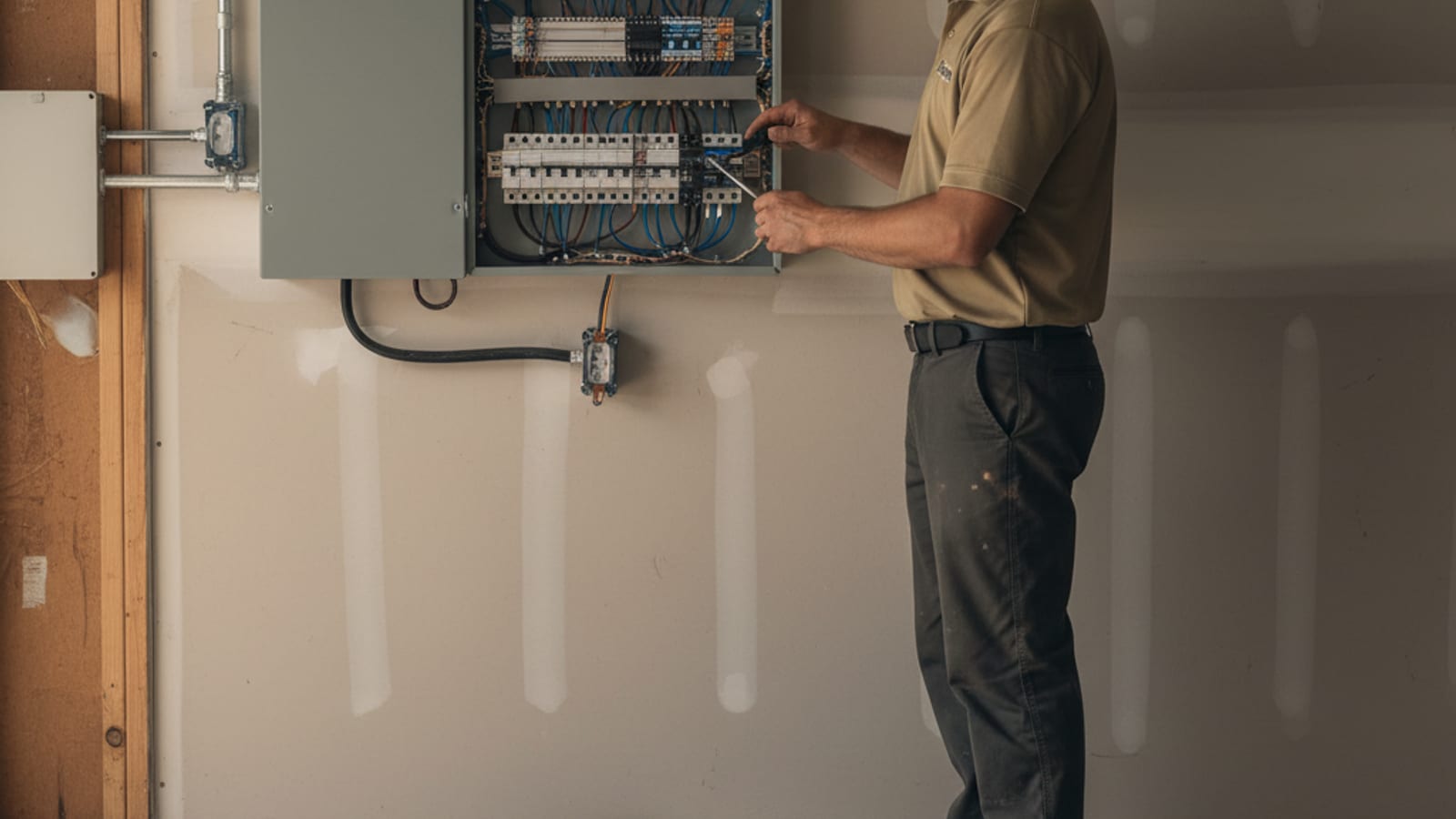
A 200-amp panel upgrade in San Diego County runs $2,800 to $4,200 installed for most single-family homes. That includes the permit, the new meter socket, the main breaker panel, the grounding electrode, and SDG&E’s coordinated disconnect/reconnect.
What’s included in a typical 200-amp upgrade?
Every quote from a licensed electrician should line-item these:
- Permit through your city or county building department ($150–$400 depending on jurisdiction)
- New 200-amp main breaker panel (Square D QO, Eaton CH, or Siemens series, your call, all UL-listed)
- New meter socket rated for 200A, with proper SDG&E meter spec
- Grounding electrode and bonding: new ground rod or upgraded supplemental ground, plus correct bonding to water service if applicable
- AFCI/GFCI breakers for circuits that current code requires (kitchen, laundry, bedrooms, bathrooms, outdoor)
- Whole-home surge protection device (SPD): increasingly standard on new panels, and often the right time to add one since the panel is already open. For pricing detail, see whole-house surge protector cost in San Diego.
- SDG&E coordination: scheduling the morning disconnect, completing work, calling for re-energization
- Inspection sign-off: the electrician who takes the job meets the inspector when that is in the proposal. Bright Pro Electric does not.
If a quote is light on these line items, ask. A quote that just says “panel upgrade, $X” is hiding something.
What drives the cost up or down?
1. Distance from the meter to the panel
Most homes have the meter and panel right next to each other, sometimes back-to-back through a garage wall. That’s the easy version.
If your meter is at the front of the house and your panel is in the back garage, the electrician is running new service entrance cable through the structure. That’s $300–$800 of additional labor and material on this page.
2. Exterior weatherhead vs. underground service
Overhead service (the wire comes from a utility pole down to a weatherhead on your roof) is typical in older San Diego neighborhoods. The electrician replaces the weatherhead and service entrance during the upgrade.
Underground service (the wire comes up from the ground) is typical in newer neighborhoods (Carmel Valley, Eastlake, Otay Ranch). The buried conductors are usually fine, but if SDG&E’s connection point is corroded or if the conduit needs replacement, that adds $400–$1,200.
3. Sub-panels for ADUs, garages, or pool equipment
If you have a detached structure that needs power, a sub-panel install ($1,400–$2,800) often gets bundled into the main upgrade. Doing them at the same time saves on shared trenching and conduit work.
4. Federal Pacific or Zinsco existing panel
If you have one of these brands (see our Federal Pacific replacement guide), inspect. Do not diagnose FPE or Zinsco from this page. Challenger is a different line. Ask the insurer what they want in writing. This page does not require replacement before a renewal.
When do you actually need a panel upgrade?
Not every home needs to jump from 100A to 200A. Here are the real triggers:
You’re adding major loads
- EV charger: A Level 2 charger pulls 32–48 amps. Add a heat pump or pool equipment and a 100A service runs out of headroom fast. A licensed electrician does an honest load calc per NEC Article 220. Sometimes a 100A or 125A service still works with load management.
- Heat pump or AC: New high-efficiency systems pull less than the old ones, but pool heat pumps and whole-home heat pumps in larger homes need real capacity. An HVAC contractor handles the equipment side. The electrician who takes the electrical side coordinates so the panel, breaker, and disconnect are sized correctly before the HVAC crew arrives.
- Pool equipment: A heater + pump combo for a typical pool needs a dedicated 60–100A sub-panel.
Your panel is old or unsafe
- Federal Pacific Stab-Lok: documented failure-to-trip reports exist. This page does not diagnose your panel. An electrician inspects and quotes replacement if that is the listing.
- Zinsco / Sylvania: same documented failure pattern. Inspect. Do not diagnose it from this page.
- Challenger: a different product line from FPE and Zinsco. Inspect. Do not diagnose it from this page.
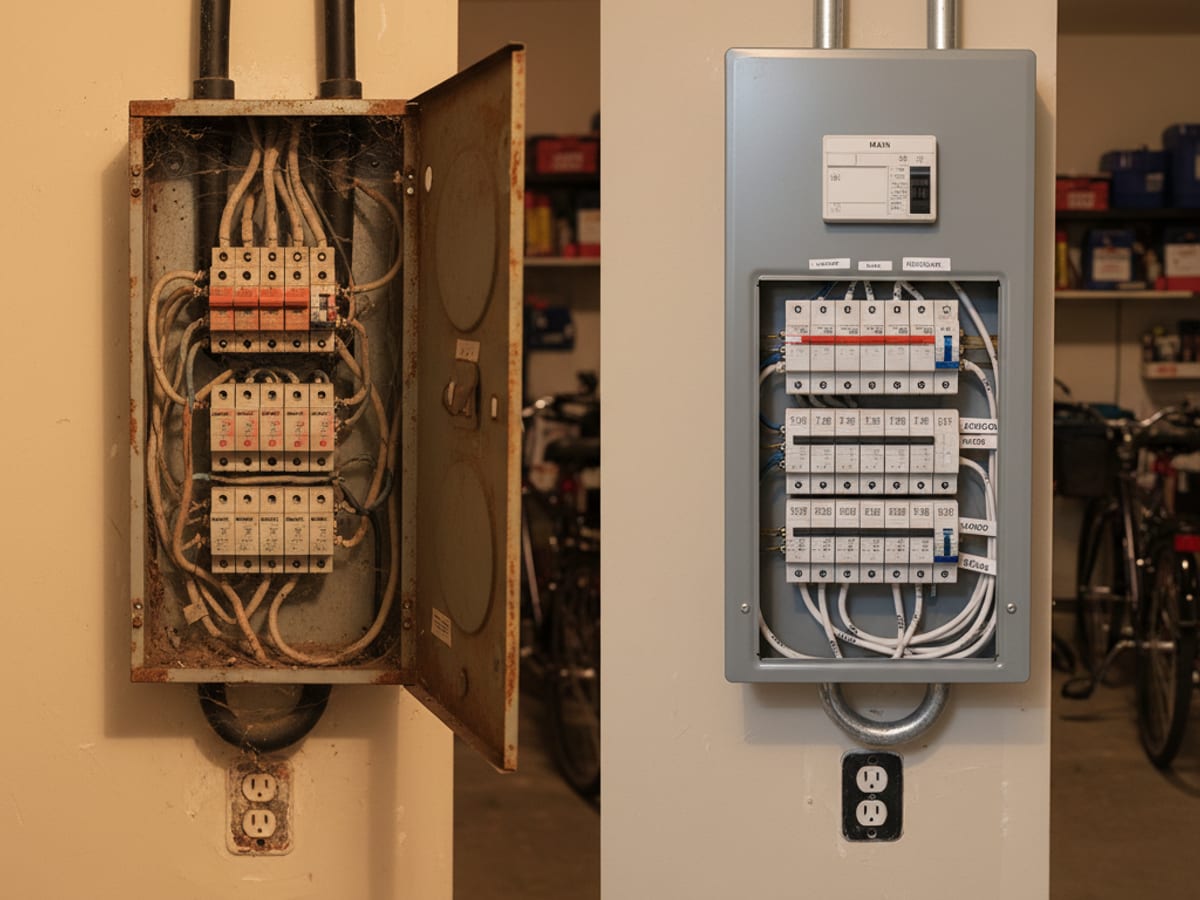
- Visible scorch marks, rust, or melted insulation inside the panel. That is an inspect-now condition, not a self-replace order from this article.
- Breakers that feel warm to the touch during normal operation. That is an inspect-now condition, not a self-replace order from this article.
You’re selling the home
Pre-purchase inspectors flag old panels and undersized service routinely. Buyers ask for credits or refuse to close. Doing the upgrade before listing usually nets back more than the cost in negotiating room.
What’s not included in the base price?
These are common add-ons. Make sure your quote calls out which side of the line they’re on:
- Drywall repair if the panel is being relocated. Drywall is a separate trade. Bright Pro Electric does not patch walls.
- Trenching if underground conduit needs to be added (running power to an ADU, for example).
- Generator interlock or transfer switch if you’re pairing the upgrade with generator readiness.
- EV charger install during the same visit, usually $850–$1,800 added to the panel job, with shared labor savings.
How long is the power off during the upgrade?
Outage duration during the swap is proposal-specific. Coordination with SDG&E for disconnect and reconnect is the electrician’s job when that is in the proposal. Refrigerators and freezers often ride through a daytime window; confirm with the written plan.
If you have medical equipment that needs power, a home office with critical hours, or an aquarium temperature requirement, tell the electrician when they schedule. Temporary power, including a portable generator on named circuits, is only if the proposal lists it. Bright Pro Electric does not run a generator during the swap.
Can you skip the permit to save money?
The question comes up: “Can we just do this without a permit?”
No. Required panel work should be permitted. Unpermitted work is uninspected. Ask the insurer and a buyer how they treat it. This page does not void a policy.
- Insurance: Ask the carrier how they treat a fire traced to unpermitted electrical work. This page does not void coverage.
- Resale: Closing inspections can flag unpermitted work. Ask the buyer and the lender how they treat it.
- Record: Permits create an inspection record. Skipping them leaves the work unverified.
Ask whether permit costs are included in the quote. A “cash, no permit” discount is uninspected work, not a savings plan.
Frequently asked questions
How long is the power off during a panel upgrade?
Outage duration is proposal-specific. The electrician coordinates with SDG&E for disconnect and reconnect when that is in the proposal. Refrigerators and freezers often ride through a daytime window; confirm in writing.
Can I skip the permit to save money on a panel upgrade?
No. Required panel work should be permitted. Unpermitted work is uninspected. Ask the insurer and a buyer how they treat it. This page does not void a policy. Ask whether permit costs ($150-$400) are included in the quote.
Do I need a 200-amp panel for an EV charger?
Not always. A 100A or 125A service can sometimes handle a Level 2 charger using load management, an EVSE that throttles back when other big loads run. A licensed electrician does a load calc per NEC Article 220 and only recommends the upgrade when the math requires it. Bright Pro Electric does not run that calc.
What panel brands do you install?
The electrician installs Square D QO, Eaton CH, and Siemens, all UL-listed, all widely available for future service. Your call on which one. Bright Pro Electric does not install panels or push a brand.
Related guides
Need pricing across all panel sizes, not just 200-amp? Our complete panel upgrade cost guide for San Diego covers 100A, 150A, 200A, and 400A pricing with permit fee tables by city. If your panel is damaged, failed, or a fire-risk brand and you’re facing a forced replacement rather than a voluntary upgrade, see our separate guide on electrical panel replacement cost in San Diego for the cost differences and what changes. If your panel is a Federal Pacific or Zinsco, read our FPE and Zinsco replacement guide for the specific risks and timeline. And if breaker trips are what brought you here, our breaker tripping troubleshooting guide covers when a trip means the breaker is doing its job versus when the panel itself is the problem.
Service area
Licensed electricians in the matching network do panel upgrades across San Diego County, from coastal Encinitas and Carlsbad to inland Poway and Escondido, through East County (El Cajon, Santee), South Bay (Chula Vista), and the mountain communities.
Ask for a written quote before any work starts. See the panel upgrade matching page for what’s in a typical proposal. Use the contact page. Hours are Monday through Saturday, 7am to 7pm. After hours, leave a message.