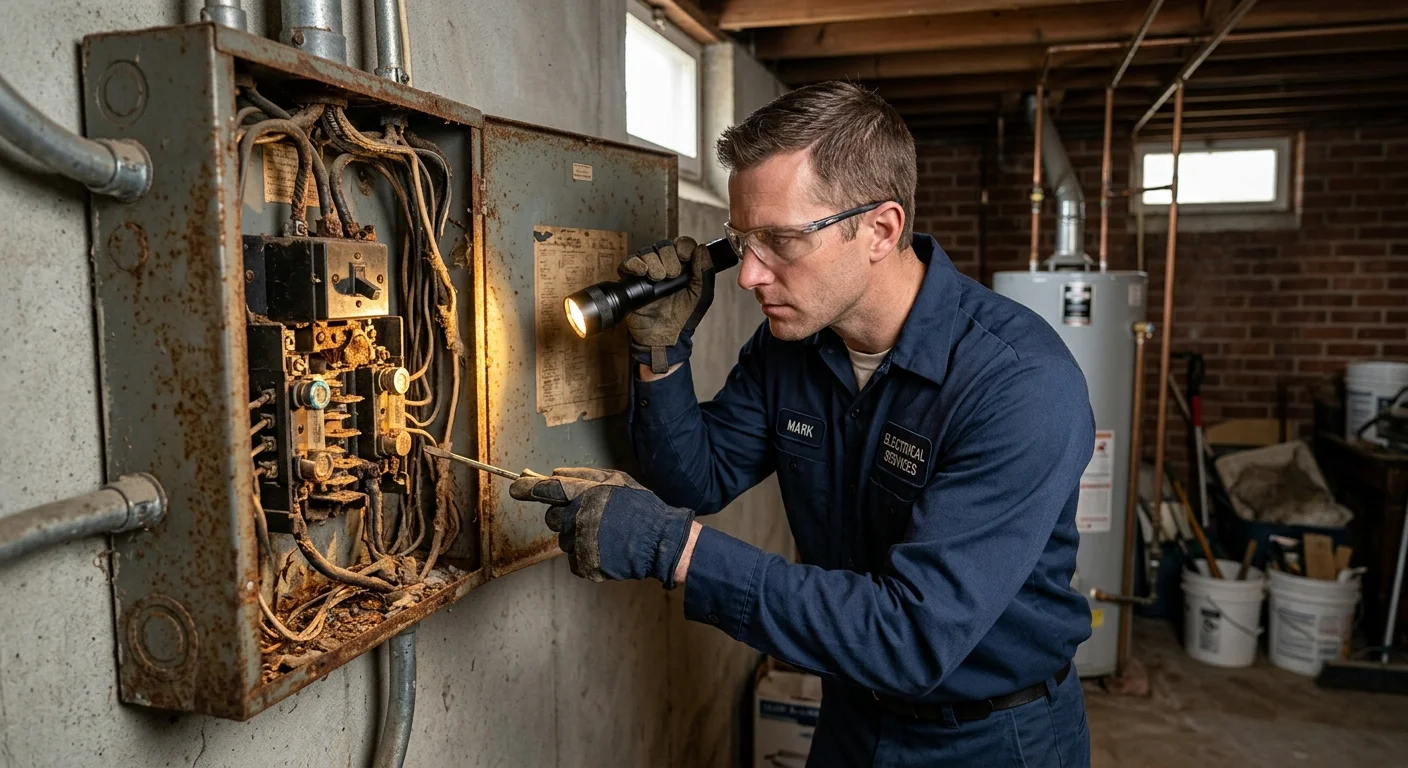
You may need a panel upgrade in San Diego if breakers trip often, you still have a fuse box, you are adding a large load such as an EV charger, or the panel is full. Federal Pacific Stab-Lok and Zinsco labels on the cover are documented inspection flags, not a diagnosis from this page. Challenger is a different line. Whether an insurer will renew is that carrier’s decision. These are inspection reasons, not a ranked job mix.
TL;DR
- Frequent trips, a fuse box, lights that dim when large loads start, or no spare breaker spaces are load and space questions for a licensed electrician.
- Federal Pacific (Stab-Lok) and Zinsco labels are reasons to inspect. Insurer replacement demands vary by policy. Do not treat this page as an insurance-renewal promise.
- A 200-amp panel upgrade in San Diego typically costs $2,500-$5,000 depending on scope.
- Rust or corrosion on a panel is stop-use for DIY. Do not open the inner cover. Call a licensed electrician.
- Panel work usually needs a permit and utility coordination. Unpermitted work can complicate a sale. Ask your insurer about coverage. It is not automatically void.
Frequent trips, a fuse box, flicker on large loads, a full bus, FPE or Zinsco labels, rust, or a new EV charger are reasons to have a licensed electrician inspect the panel. They are not a numbered diagnosis from this page.
Your circuit breakers trip frequently
If a kitchen circuit goes dark when the microwave or toaster runs, and resetting the breaker is a regular chore, have the panel and that circuit measured. Frequent trips can be overload, a failing breaker, or something else. This page does not name the cause.
When a circuit breaker trips, it is interrupting that circuit. Frequent trips are a reason to have the panel and that circuit measured. This page does not name overload, a failing breaker, or a too-small panel as the cause. A 200-amp service is one path a licensed electrician may quote after they measure.
You still have an old fuse box
Walk into some older San Diego homes, and instead of a modern circuit breaker panel, you’ll find an antiquated fuse box. These systems rely on individual fuses, usually glass or ceramic, that burn out and need physical replacement when a circuit overloads. While they were the standard for many years, fuse boxes are simply not designed for the electrical demands of today’s households.
The primary issue with fuse boxes is their limited capacity and potential for misuse. Homeowners might mistakenly install fuses with a higher amperage rating than the wiring can safely handle, which defeats the safety purpose and creates a significant fire hazard. Modern circuit breakers, by contrast, are designed to trip and be easily reset, offering a much safer and more convenient solution without the risk of incorrect fuse installation. If your home still uses a fuse box, it’s not just an inconvenience; it’s a strong indicator that your entire electrical system is outdated and potentially unsafe. Upgrading to a modern circuit breaker panel is one of the most important safety improvements you can make for an older home.
Your lights flicker or dim when appliances turn on
Lights that dip when the air conditioner starts, or flicker when a high-draw kitchen appliance runs, can be a voltage drop under load. That is a reason to have the panel and the circuit measured. It is not proof the whole system is failing.
Lights that dim when a large load starts are a reason to have voltage and the panel measured. This page does not name brownout, an overburdened panel, or appliance wear from that flicker.
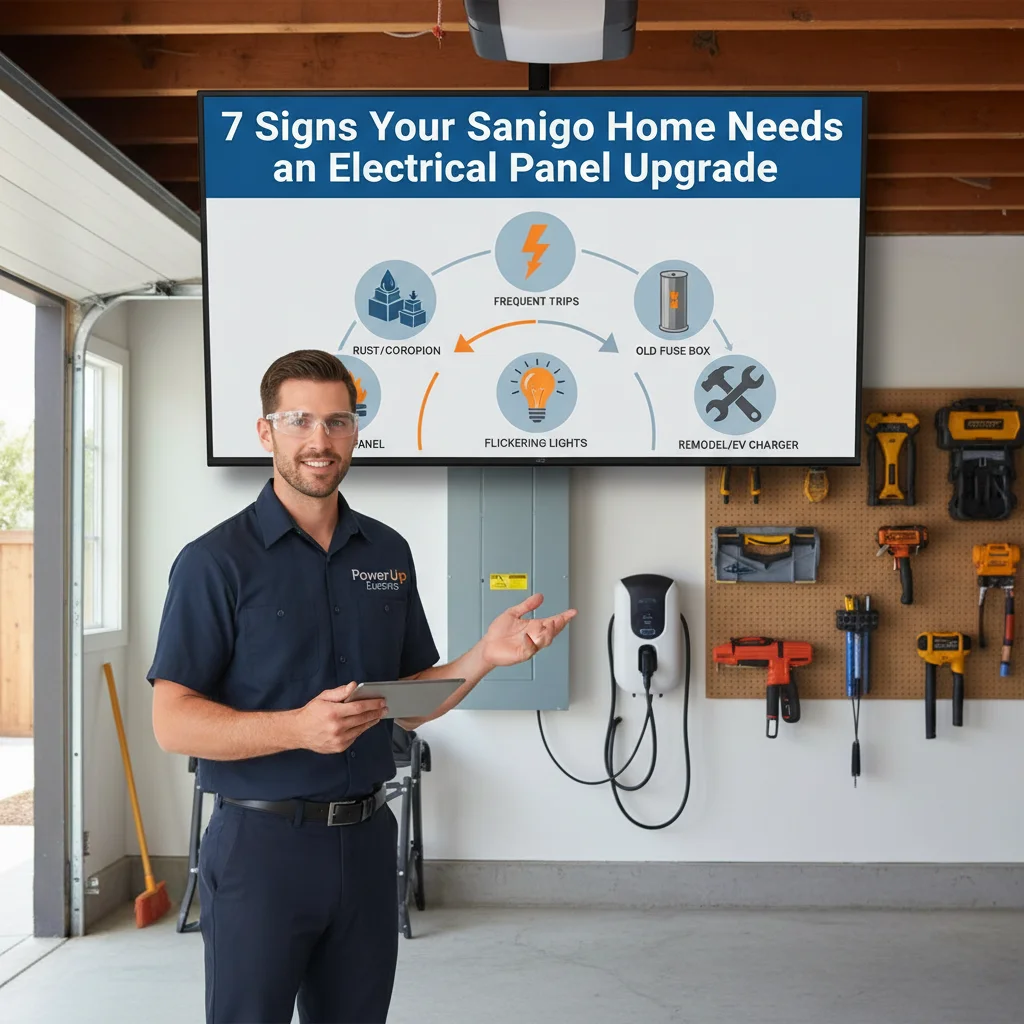
You’re planning a major remodel or adding an EV charger
San Diego homeowners are constantly improving their properties, whether it’s a kitchen renovation, a bathroom overhaul, or the popular addition of an electric vehicle (EV) charger. While these upgrades enhance your home and lifestyle, they also significantly increase electrical demand. A major remodel, especially in areas like the kitchen or bathroom, involves installing new high-wattage appliances, additional outlets, and specialized lighting. These additions require dedicated circuits and a much larger power supply than an older panel can typically provide.
A Level 2 charger often needs a dedicated 240-volt circuit. Whether the existing panel can take it is a load calculation on that panel, not a vintage guess. Trying to add large loads without spare capacity or spare spaces is a space-and-calculation problem. Plan the calculation with the electrician before you buy the charger. You can also read panel replacement vs. upgrade and electrician cost.
Federal Pacific or Zinsco labels
Some electrical panels from mid-century have documented failure modes in published investigations. Two names that show up on San Diego covers are Federal Pacific Electric Stab-Lok and Zinsco. Identification from the outer door and label is the homeowner step. Whether the breakers fail to trip on a given house is an inspection finding, not a verdict from this page. Challenger is a different product line.
Insurers sometimes ask about these brands at renewal. That is a carrier decision. Some will not write a policy until the panel is replaced. Some will. Ask your agent. Do not assume a rate cut after replacement.
A licensed electrician inspects and, if needed, replaces the equipment. Federal Pacific and Zinsco panel replacement is the related ID page. Confirm the label on the equipment.
You’re running out of space for new circuits
New circuits for a hot tub, office, or theater need spare spaces or a subpanel. If the electrician finds the bus full, they quote spaces, a subpanel, or a service change. Do not open the inner cover to count slots.
This lack of space is a common problem in older homes, whose panels were designed for a time when electrical demand was much lower. Modern homes often need more circuits for specialized appliances, GFCI protection in wet areas, and AFCI protection for bedrooms. If your panel is full, an electrician cannot simply add new breakers. This limitation means you’re stuck with your current electrical configuration or you risk overloading existing circuits by attempting to “double-tap” (connecting two wires to one breaker), which is a serious code violation and a fire hazard. Running out of space is a clear signal that your panel can no longer accommodate your home’s growing needs and that a panel upgrade is essential for any future electrical improvements.
You notice rust or corrosion on the panel
Rust, corrosion, or water marks on the cabinet are stop-use for DIY. Do not open the inner cover. Call a licensed electrician. The panel is often in a garage, basement, or utility closet. Confirm the location with the electrician.
Water and electricity are a perilous combination. Moisture inside the panel can corrode wiring, bus bars, and circuit breakers, leading to poor electrical connections, short circuits, and increased resistance. This increased resistance generates heat, which can damage components and potentially ignite nearby materials, leading to an electrical fire. Even without direct water exposure, high humidity in coastal areas like San Diego can contribute to rust over time, particularly if the panel isn’t sealed properly. Any discoloration, pitting, or powdery residue within or on the exterior of your electrical panel suggests a serious and active safety issue. Do not attempt to open or inspect a corroded panel yourself; always call a licensed electrician.
Frequently asked questions
How much does it cost to upgrade an electrical panel in San Diego?
A standard 200-amp panel upgrade in San Diego typically runs $2,500-$5,000, including permit fees and SDG&E coordination. The range depends on whether the existing service entrance needs replacing, how much new wiring is involved, and whether circuit breakers need to be relocated. If you’re simultaneously adding an EV charger circuit or a subpanel for a detached garage, the price goes up accordingly. A licensed electrician may quote a written estimate after seeing the panel, the service entrance, and the loads you want to add. Bright Pro Electric does not perform that assessment.
Do I have a Federal Pacific or Zinsco panel and how do I find out?
A licensed electrician reads the panel label and the breaker brand. Federal Pacific often says Stab-Lok. Zinsco sometimes appears with a Sylvania label. Confirm the label on the equipment. Do not open the inner dead front to study bus bars. If you see either brand or aren’t sure, call a licensed electrician for an inspection.
How long does a panel upgrade take in San Diego?
How long the power is off is the electrician’s plan with SDG&E and the inspector, not a one-day or 4-to-6-hour rule on this page. The electrician you hire coordinates the permit and utility disconnect. Inspection timing is set by the city or county, not by Bright Pro.
Will upgrading my panel lower my homeowner’s insurance in San Diego?
Ask your carrier. Some will not renew on a listed hazard brand. Some offer a different rate after replacement. Those are policy decisions, not a Bright Pro guarantee. The $2,500-$5,000 upgrade range is a project cost, not an insurance rebate.
When to call us
A panel upgrade is licensed work. Bright Pro Electric matches you with an independent licensed electrician. We do not assess the panel ourselves. Use contact and we will connect you. Leave a message any time.