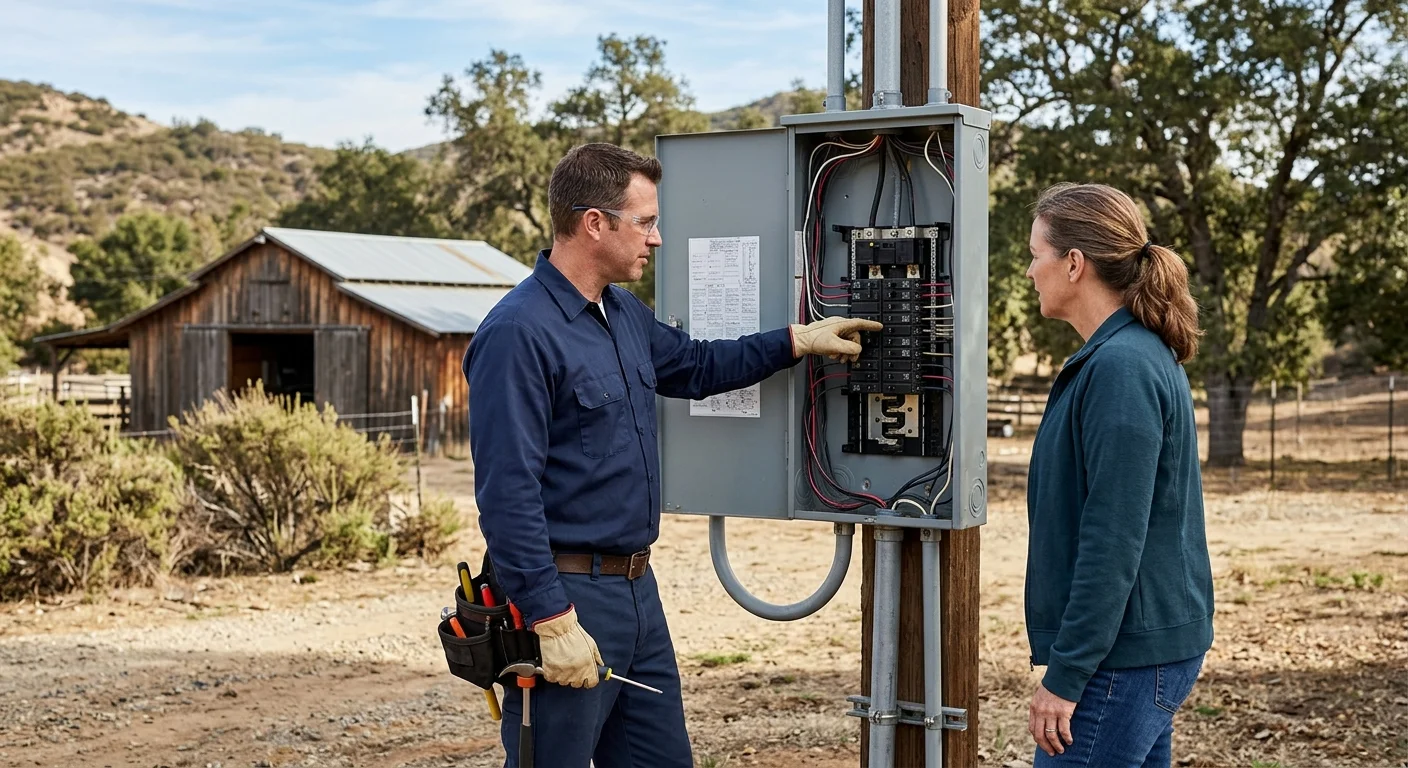
A 200-amp panel isn’t automatically the right answer for every Ramona property. The decision starts with the entire electrical load, including wells, outbuildings, and planned equipment. It also depends on whether the existing panel or the full utility service must change.
Why the load review starts beyond the main house
Ramona properties can place important electrical loads outside the main residence. A complete review should account for every structure and piece of equipment connected to the service.
That may include a well pump, detached garage, workshop, barn, gate motor, septic controls, pool equipment, or outdoor lighting. The electrician should also ask about unused equipment and abandoned circuits. A breaker label alone may not reveal where every feeder goes.
This property-wide review matters when comparing a 200 amp panel upgrade in Ramona. A house may look modest while supporting several detached loads. Another property may have a large panel but little remaining demand. The service size printed on a label doesn’t answer the full capacity question.
Ask the electrician to trace feeders serving detached structures. Confirm whether those structures have subpanels and what equipment they support. If a workshop might gain larger tools later, include that plan now. The same applies to an EV charger, heat pump, electric water heater, battery, or future accessory dwelling unit.
The site layout deserves attention too. An electrician should note where the meter, main disconnect, well equipment, and outbuildings sit. This is especially useful on parcels extending away from Main Street, San Vicente Road, or Old Julian Highway, where the house may be only one part of the electrical layout.
Our electrical panel upgrade service explains how Bright Pro Electric connects homeowners with licensed independent pros. The matched electrician performs the site review and any approved work.
How an electrician checks whether 200 amps is necessary
The electrician begins by identifying the existing service rating and panel condition. That includes reading equipment labels and checking the main disconnect. The review should also distinguish the panel’s rating from the available utility service.
Next comes a load calculation. The electrician inventories existing electrical equipment and expected additions. For an EV charger added to an existing panel, NEC 220.87 is one recognized load-calculation reference. The method used should match the project, available records, and proposed equipment.
Ask what specific load is driving the recommendation. A clear answer might identify an EV charger, electric heating equipment, a workshop feeder, or several planned additions. “You need 200 amps because that’s standard” isn’t a property-specific explanation.
A larger service may be appropriate when the calculated demand and future plans support it. In another case, the existing capacity may be enough. The electrician might also identify a different project scope, such as replacing damaged equipment without increasing service capacity.
Share future plans before proposals are written. A panel selected only for today’s equipment may not match a renovation already scheduled. Yet adding hypothetical loads that will never exist can distort the scope.
Our countywide guide to 200-amp electrical panels provides broader background. For a Ramona property, the useful answer still comes from an on-site review of the house, detached equipment, and utility connection.
Ask for the contractor’s current license information before signing.
Panel replacement and a full service upgrade aren’t identical
A panel replacement changes the distribution equipment that holds the breakers. A full service upgrade can reach beyond that enclosure. It may involve the meter area, main disconnect, service conductors, utility connection, or other equipment serving the property.
That distinction affects how you compare proposals. Two electricians may both use the phrase “panel upgrade” while describing different work. One proposal could cover the panel only. Another could include changes between the utility connection and the home’s circuits.
Ask each electrician to identify the existing service rating, proposed rating, and equipment being replaced. The proposal should state whether the meter equipment changes. It should also explain what happens to existing feeders, grounding components, and circuits entering the panel.
Service-run questions deserve special attention in Ramona. Determine whether the utility connection is overhead or underground. Ask where responsibility shifts between utility-owned and customer-owned equipment. If the service crosses a large parcel before reaching the house, make sure the proposal explains which section was inspected and which section is included.
A 200-amp service upgrade in Ramona may also uncover separate work at an outbuilding or subpanel. Don’t assume that work is included. Have the electrician name every structure covered by the proposal.
The difference between panel work and broader service work also shapes pricing. Published contractor prices vary by property and scope, and this page doesn’t state an unverified Ramona range. Our electrical panel upgrade cost guide explains the project details that can change a proposal without treating every home alike.
Which permit authority and utility process apply to the address
Don’t choose the permit office from the mailing address alone. Confirm the property’s governing jurisdiction before relying on a permit process or fee.
The correct permit authority and current fee for this exact Ramona project couldn’t be confirmed from the approved record. Ask the electrician which office governs the property. Then confirm the permit route and current amount directly with that office before paying or scheduling work.
The electrician should explain who will prepare the permit application and arrange inspections. Get that responsibility in writing. Don’t assume the referral service, utility, and electrician handle the same part of the process.
Utility coordination is separate from local permitting. The exact SDG&E application route and review process couldn’t be confirmed from the approved record.
The approved record also didn’t confirm a separate processing option for panel upgrades with no added load. Check the current service-upgrade process directly with SDG&E for your project.
A completion timeline couldn’t be confirmed from the approved record. Ask whether the electrician has submitted the utility request, which information remains outstanding, and what milestone comes next. Current service-planning information should be checked directly with SDG&E.
Ramona properties affected by planned shutoff conditions may also have separate backup-power goals. Our PSPS shutoff and generator guide covers planning questions for that decision. Generator work shouldn’t be quietly folded into a panel proposal without a defined scope.
What to compare in panel-upgrade proposals
Compare scope before comparing the bottom line. Every proposal should describe the existing equipment, proposed service capacity, panel location, and equipment being replaced. It should also identify any work excluded from the quoted project.
Use the same property information for each electrician. Share the well equipment, outbuilding feeders, workshop loads, and future electrical plans. Otherwise, you may receive proposals based on different assumptions.
Look for clear answers to these questions:
- Does the proposal cover a panel replacement or a full service upgrade?
- Which meter, disconnect, conductors, and feeders are included?
- Are detached structures included in the load review?
- Does the scope include labeling and reconnecting existing circuits?
- Who handles the permit application and inspection coordination?
- Who submits information required by SDG&E?
- What conditions could change the scope after work begins?
- What cleanup, restoration, or finish work is excluded?
Ask for the exact contractor name that will appear on the agreement. Confirm the contractor’s current license status before signing. Bright Pro Electric is a referral service, so the independent electrician holds the license and performs the work.
Insurance and warranty terms should also come from that contractor. Request them in writing before approving the proposal. Don’t treat general website language as a substitute for the actual agreement.
Avoid comparing proposals that use vague allowances or undefined “service work.” Ask the electrician to clarify each allowance and explain when it applies. If trenching, wall repair, stucco work, or outbuilding changes aren’t included, the exclusion should be visible.
A strong proposal gives you a traceable path from the load review to the recommended scope. It should show why 200 amps fits the property rather than presenting the number as an automatic upgrade.
When to call us
Call when your Ramona property needs a licensed electrician to review the main house, well equipment, outbuildings, or future loads. We’ll match you with an independent local pro who can assess the site and define the right scope. Call us at (858) 988-5580 and we’ll connect you with a licensed local electrician.