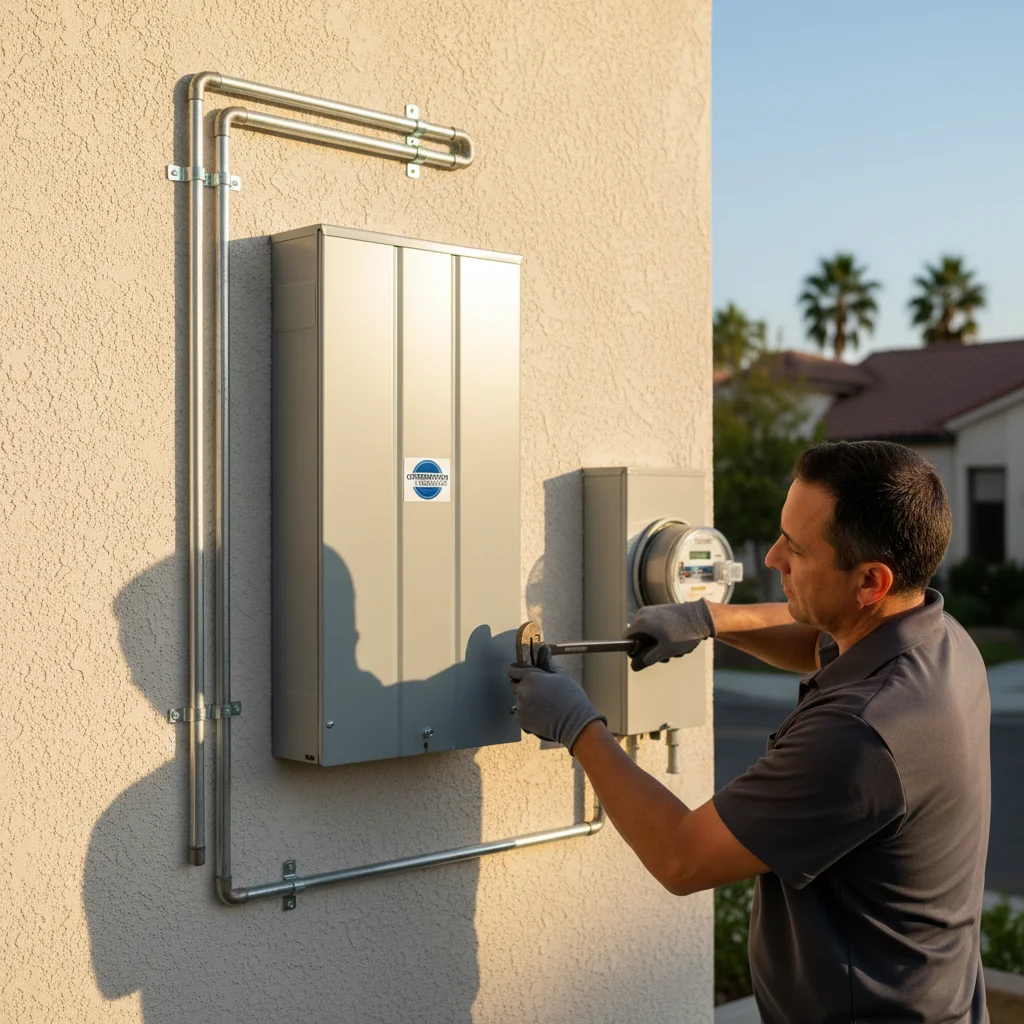
Adding an EV charger, a heat pump, or induction cooking is when people ask whether they need 200-amp service. The answer is a load calculation on this house, not a Facebook rule of thumb. Once an upgrade is actually justified, panel upgrade cost in San Diego covers published pricing by amperage.
TL;DR
- 200-amp, 240-volt service is 48,000 watts of potential capacity. You do not add every nameplate at once. NEC Article 220 applies demand factors.
- A Level 2 charger set to 40 amps continuous needs a 50-amp overcurrent device (125% rule). A charger set to 48 amps continuous needs 60 amps of OCPD, typically 6 AWG copper, not 8 AWG.
- A 100-amp service can still take a charger if the calculated spare capacity is there. It is not automatically “too small.”
- Published 200-amp upgrade range on this site: roughly $3,500 to $7,500 including typical permit and utility coordination line items. Not a quote.
- Power-off windows and permit calendars vary. This page does not promise 4-8 hours dark or a 2-4 week finish.
- ADU, multi-EV, or battery plans can point to 400-amp service or listed load management. Those are separate designs. This is not the ADU-requirements article.
What a 200-amp service actually gives you
Amperage is the service ceiling. 200 A × 240 V = 48,000 W of potential. Diversity and Article 220 demand factors mean the calculated load is lower than a raw sum.
Many older San Diego houses still have 100-amp or 125-amp service. That can be enough for a modest load. It can also be short once you add continuous EV current. More breaker spaces are a side benefit of a larger panel, not a reason to upgrade by themselves. Tandem breakers are legal only in panels listed for them.
Lenders and buyers sometimes ask about service size. That is not a law that sub-200-amp service is defective, and it is not an insurance rule this page can quote.
Signs the existing service may be tight
These are categories:
- Breakers open on ordinary overlapping loads (could be one undersized branch circuit, or a service near its calculated load).
- No spare spaces, and the next circuit would need a listed tandem or a new can.
- You are adding a large continuous load (EVSE, heat pump, pool, ADU feeder).
- The equipment is a problem-brand line such as FPE Stab-Lok or Zinsco. That is inspect territory. Replacement is an inspection finding, not a diagnosis from the cover or a photo. See Federal Pacific and Zinsco.
SDG&E residential bills are not a substitute for a load calculation. Demand on a bill does not by itself prove the service is undersized.
EV chargers, heat pumps, and ranges: do not add nameplates in a column
A worked example is only a sketch. Assume a roughly 1,800 sq ft house in Santee or El Cajon (both have ACS housing-age rows; this example is about loads, not those percents).
| Load | How it actually enters the calc |
|---|---|
| Heat pump | Manufacturer MCA / nameplate, not a flat “20A” |
| Water heater | Nameplate; diversity if the method allows |
| Level 2 EVSE at 40 A continuous | 50 A OCPD, conductors rated for that circuit |
| Level 2 EVSE at 48 A continuous | 60 A OCPD; 8 AWG copper is not the default |
| Induction range | Nameplate; cooking demand factors in Art. 220 |
| Dryer | Nameplate |
| General lighting and receptacles | Calculated, not a guessed 15 A |
A raw column that sums to “157A” and then says a 100-amp panel cannot support it skips demand factors. After Article 220 math, some 100-amp services still have room for a modest charger; some 200-amp services are already tight. NEC 220.87 (existing-load method) is one documented path when adding EV to an existing service. See EV panel upgrade bottleneck.
Heat pumps are a common second continuous load in electrification projects. Size them from the HVAC nameplate, not from “San Diego winters are mild so 20-25A.”
Cost to upgrade (prices parked)
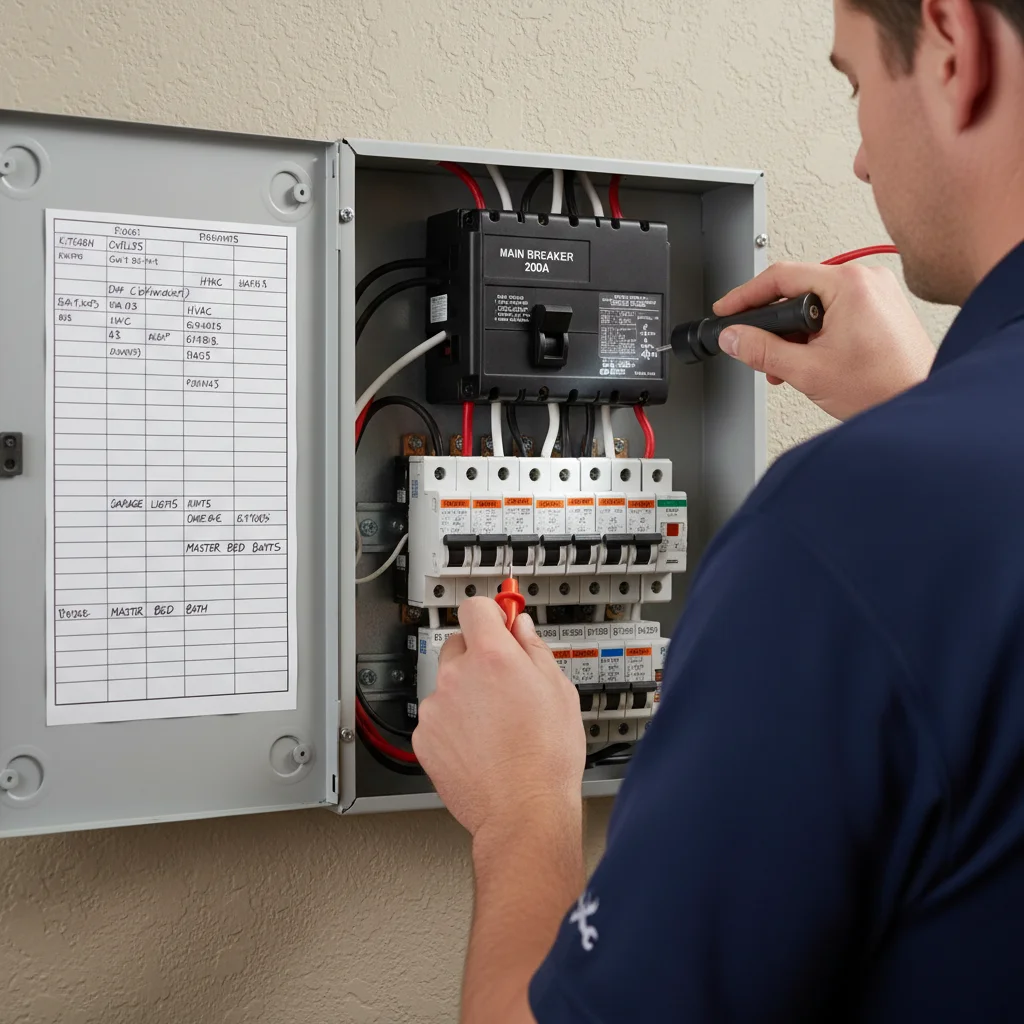
A 200-amp panel upgrade in San Diego County is published here at roughly $3,500-$7,500 for many residential jobs. Variables include panel location, whether the utility must pull the meter, conduit length, and whether branch wiring needs repair. Interior closet panels in older central neighborhoods tend to cost more than a short exterior feed. For drivers, see panel upgrade cost 2026 and electrician cost.
Unpermitted service equipment is a resale and insurer risk. This page does not state that every claim is denied.
Permits, SDG&E, and downtime
A service or panel change needs a permit in the City of San Diego, other cities, or the County, depending on the address. Inspection is how the AHJ checks the work.
When service size changes, SDG&E typically has to be involved for the meter. Scheduling is the utility’s, not a Bright Pro calendar. Power will be off while the service is open. How many hours depends on the job. Medical equipment that cannot lose power needs a plan before anyone pulls a meter, not a “start at 7am” promise.
Bright Pro Electric does not pull permits, coordinate SDG&E, or perform the upgrade. The licensed contractor on the contract does.
When 400-amp or load management belongs in the conversation
200 amps covers many single-family loads. Two-unit or ADU feeders, two Level 2 chargers, or a battery system can need 400-amp service, a second meter, or listed load-management equipment (smart panel, EVSE current sharing). Those products only help if they are listed for the use and the calculated load still works. Check current SDG&E programs rather than assuming a 2026 rebate still exists.
Related guides
Frequently asked questions
How do I know if my San Diego home has 100-amp or 200-amp service?
If the main breaker rating is printed where you can read it with the panel door open and the dead front still on, that number is the usual service overcurrent rating. If it is unlabeled or you would have to remove the cover, stop. A licensed electrician confirms service size.
Can I add an EV charger to a 100-amp panel?
Sometimes. A 40 A continuous charger uses a 50 A circuit. Whether 100-amp service has room is the Article 220 (or 220.87) result, not a yes from this page.
Will SDG&E shut off my power for the panel upgrade?
The utility is typically involved when the meter or service size changes. Outage length is job-specific. Nobody here can promise 4 to 8 hours.
Is a permit required for a 200-amp panel upgrade?
A panel or service change is not a no-permit hobby. The City of San Diego requires an electrical permit for that work. Other jurisdictions run their own counters. Skipping it is a code and disclosure problem. It is not a guaranteed insurance-void sentence.
When to call
If you are adding a major load or the panel is a problem brand, get a licensed electrician to calculate before you buy equipment. Bright Pro Electric matches San Diego County homeowners with independent licensed electricians. Hours are Monday through Saturday, 7am to 7pm. Use the contact form.