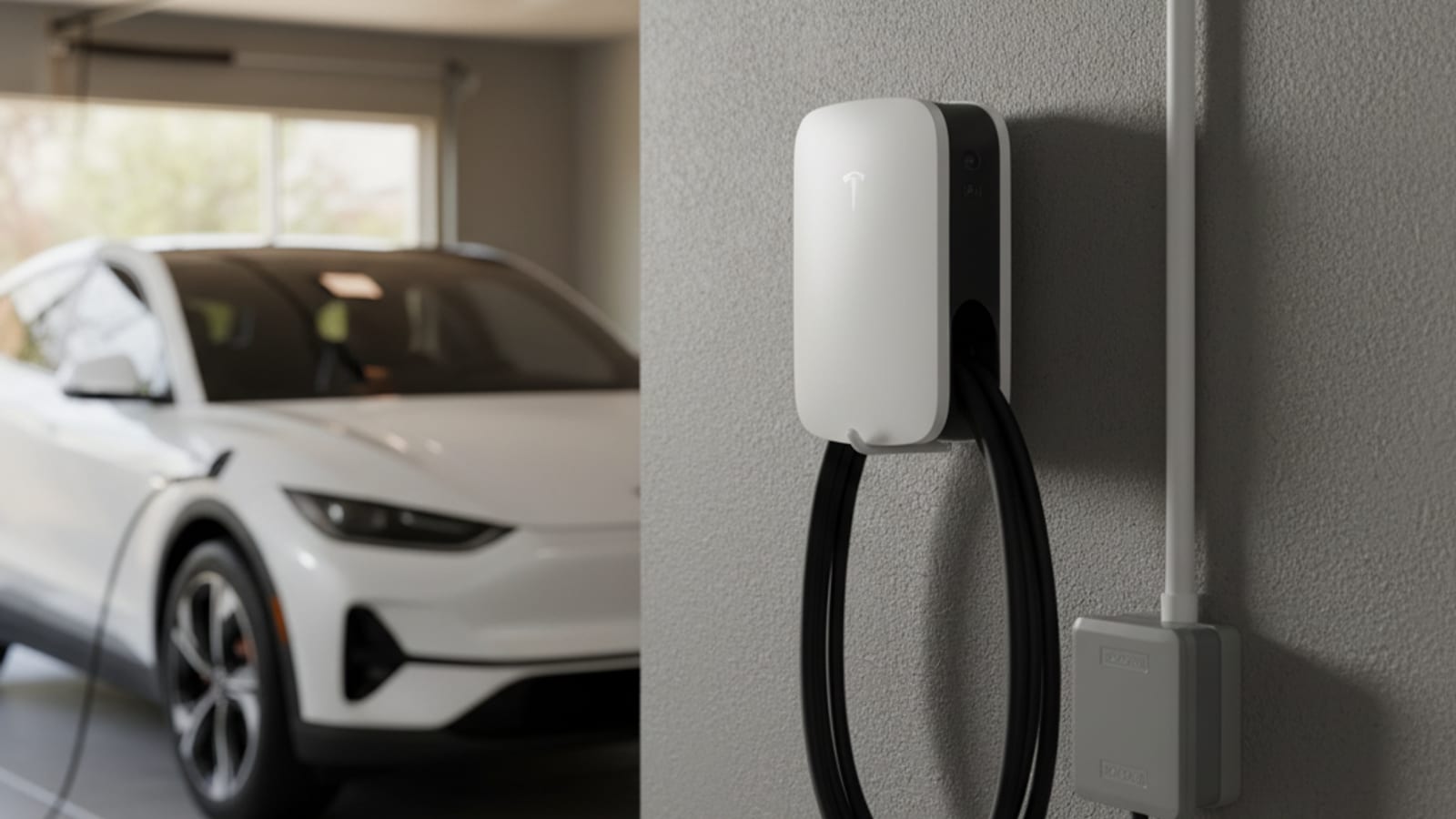
TL;DR
- Most Level 2 EV charger installs in San Diego cost $850-$1,800; add $2,800-$4,200 if a panel upgrade is needed.
- Hardwired is better for permanent 48A+ installs (Tesla Wall Connector, ChargePoint Home Flex); plug-in (NEMA 14-50) works for portable chargers up to 40A continuous.
- A 200A panel usually handles an EV charger alongside existing loads; 100A panels may need load management or an upgrade.
- Confirm 30C on IRS.gov (personal-use property placed in service on or before June 30, 2026 in the Form 8911 materials this site cites). Confirm SDG&E on sdge.com. Do not treat a $200 / $1,000 pair or a $780 net as a typical result.
If you bought an EV and you’re trying to charge from the included Level 1 cord, you already know the problem. Twelve hours of charging adds about 50 miles of range. A Level 2 charger fills the same battery overnight, often for less per kWh because you charge during SDG&E off-peak hours.
Here’s what every San Diego County homeowner should know before installing a Level 2 charger.
What does a Level 2 install actually cost?
Published industry ranges on this page, not Bright Pro prices:
- Most installs: $850 to $1,800 depending on panel-to-charger distance and conduit run.
- NEMA 14-50 outlet only (no charger): $650 to $1,100 if you’re bringing your own portable Level 2 cord.
- Hardwired charger install: $950 to $2,000 for typical garage installs with the panel in the same room.
- Long runs through finished walls or exterior weather-rated installs: $1,500 to $3,500.
- Panel upgrade (if needed): $2,800 to $4,200 in addition to the charger install.
The single biggest cost variable is the distance from your panel to where the charger goes. A panel on the other side of the garage wall is the short-run case. A panel in a front utility room with the charger in a back garage often means 40 feet or more of conduit and conductor.
Should you go hardwired or plug-in (NEMA 14-50)?
There’s no universal right answer. It depends on amperage and use case.
Hardwired:
- Required by NEC for any installation above 48A continuous draw
- Cleaner aesthetic, with no plug or outlet visible
- Slightly safer at high current, with no plug interface to fail or arc
- Typical choice for 48A and 80A chargers (Tesla Wall Connector, ChargePoint Home Flex at full power)
Plug-in (NEMA 14-50):
- Slightly more flexible if you might move the charger or take it with you on a move
- Required for portable Level 2 cords that came with some EVs
- Limited to 40A continuous (50A breaker) by NEC
- Cheaper option if you already own a portable EVSE
For most San Diego homeowners installing a permanent Wall Connector or Home Flex, hardwired wins.
Can your panel handle an EV charger?
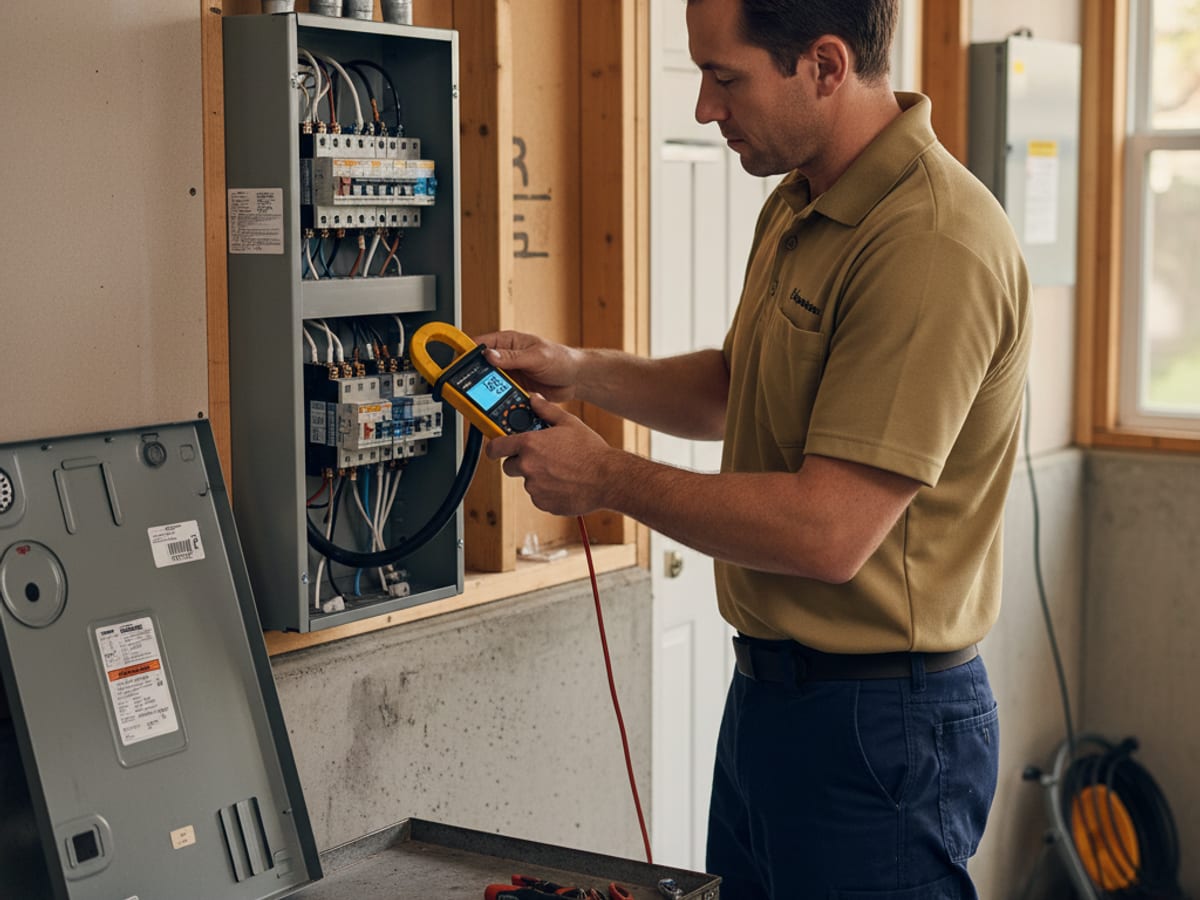
Every Level 2 install needs a real load calculation. The shortcut question, “do I have a 200-amp panel?”, is incomplete. What matters is your calculated load under NEC Article 220 plus the new EV circuit.
A typical 200A service in San Diego easily handles:
- Central AC or heat pump
- Electric water heater (if you have one)
- Range and dryer
- Pool equipment (if applicable)
- A 48A EV charger
A 100A service can sometimes handle a Level 2 charger using load management, an EVSE that monitors total panel draw and throttles back when other big loads are running. ChargePoint Home Flex, Wallbox Pulsar Plus, and Emporia all support this. A licensed electrician sizes the circuit for that house.
While the electrician is sizing the panel for the charger, an HVAC contractor can check AC capacity at the same time. The panel work is already open. Adding a heat pump later can otherwise mean a second panel visit.
If your panel is at capacity, you have three options:
- Upgrade the panel to 200A ($2,800–$4,200, see our panel upgrade cost guide)
- Install a load-management EVSE that throttles based on real-time use
- Add a sub-panel dedicated to the EV (sometimes the cleanest solution)
Which charger should you buy: Tesla, ChargePoint, or Wallbox?
The three most common Level 2 chargers the electrician installs in San Diego:
Tesla Wall Connector (Gen 3): $475
- 48A max output, 11.5 kW
- Works with Tesla vehicles natively; J1772 adapter for non-Tesla EVs (Tesla now supports NACS standard, becoming universal)
- Wi-Fi connected, app control, firmware updates
- Hardwired only
- Sleek aesthetic, minimal design
- Best for: Tesla owners or anyone who prefers minimalist hardware
ChargePoint Home Flex: $599
- 16–50A configurable output, up to 12 kW
- Works with all EVs (J1772 connector)
- Wi-Fi connected, app shows charging history, energy use
- Available hardwired or plug-in
- Load management capable
- Best for: multi-EV households, non-Tesla EVs, anyone wanting detailed usage data
Wallbox Pulsar Plus: $649
- 40A max output, 9.6 kW
- All-EV compatible (J1772)
- Compact, weather-rated for outdoor use
- Hardwired or plug-in
- Best for: outdoor installs, small garages where physical size matters
Licensed electricians in this market install all three. They should not push one brand. Ask what they recommend for your vehicle. Bright Pro does not pick the charger.
What rebates and tax credits can you claim?
Two real money sources you should claim:
SDG&E Power Your Drive (or successor program)
SDG&E runs an EV charging rebate program with up to $1,000 for income-qualifying households and smaller amounts for everyone else. The program changes yearly. Current details on SDG&E’s website. The licensed electrician provides line-item invoices and equipment specs you (or your tax preparer) can submit. Bright Pro does not file the rebate. The application needs utility account info and personal financial details Bright Pro does not keep.
Federal 30C Tax Credit
IRS materials this site cites for personal-use 30C describe 30% of eligible cost up to $1,000 for qualifying property placed in service on or before June 30, 2026. Confirm the current Form 8911 instructions. Your tax preparer files the form. Whether unused credit carries forward is an IRS question, not a Bright Pro rule.
Do not treat $420 or a sub-$1,000 net as a typical filing result. Eligible cost, census tract, and any utility rebate have to match the live rules.
What’s different about an outdoor install?
Indoor garage installs are the standard. Outdoor or carport installs add complexity:
- Charger must be rated for outdoor use (NEMA 4 or 4X enclosure)
- Conduit must be proper PVC schedule 40 or rigid metal, not romex
- A lockable disconnect is sometimes required within sight of the charger
- For coastal homes (within 2 miles of the ocean), stainless or specifically salt-rated hardware
Add $300–$800 to the indoor pricing for a clean outdoor install in non-coastal areas; more for coastal exposure.
Do you need a permit for an EV charger install?
Every Level 2 EV charger install in San Diego County requires a permit. The electrician pulls it, schedules the inspection, and stays on site through sign-off. Working without a permit is the same problem as unpermitted panel work: insurance coverage gap, resale issues, and liability if anything goes wrong later. Our guide on EV charger permits in San Diego covers the difference between a simple and standard permit and what the inspection involves.
How long does the install take?
Most installs finish in 3 to 5 hours from arrival to charger live. Outdoor installs, long conduit runs, or sub-panel installs run a half-day to full day. Arrival windows come from the electrician you hire, not from Bright Pro. Bright Pro hours are Mon-Sat 7am-7pm. After hours, leave a message. There is no overnight desk and no dispatch SLA.
One practical note for new EV owners waiting on a permit or panel upgrade: if you misjudge range on Level 1 charging and end up stranded, Charge Pro SD runs mobile EV charging anywhere in San Diego County. They bring the charge to you, which beats a tow to the nearest public charger.
Frequently asked questions
Can my 100-amp panel handle an EV charger?
Sometimes. A 100A panel can support a Level 2 charger if your calculated load under NEC Article 220 leaves enough headroom. Load-management chargers like ChargePoint Home Flex throttle back when other big loads are running. Independent licensed electricians do a real load calc before quoting.
How long does it take to install a Level 2 EV charger?
Most garage installs finish in 3 to 5 hours from arrival to charger live. Outdoor installs, long conduit runs, or sub-panel additions run a half-day to full day.
Do I need a permit for EV charger installation in San Diego?
Yes. Every Level 2 EV charger install in San Diego County requires a building permit and a final inspection. The electrician pulls the permit, schedules the inspection, and stays on site through sign-off.
Is hardwired or plug-in better for a home EV charger?
Hardwired is better for permanent 48A+ installs like the Tesla Wall Connector or ChargePoint Home Flex at full power. Plug-in (NEMA 14-50) works for portable chargers up to 40A continuous and gives you the option to take it with you if you move.
How much can I save with SDG&E and federal rebates?
Do not treat a $1,400 / $200 / $420 / $780 stack as a typical net. Confirm sdge.com and Form 8911. Income-qualifying utility amounts, if any, are on the live SDG&E sheet.
Related guides
SDG&E and federal rebates can cut your install cost significantly. Our SDG&E EV charger rebate guide walks through the 2026 programs, stacking rules, and income-qualifying tiers. For a broader look at what electrical work costs in San Diego, see our electrician pricing guide.
Looking for a focused cost comparison with a line-item breakdown? Our EV charger installation cost guide for San Diego covers quote components, how to compare three estimates apples-to-apples, and when a panel upgrade changes the math. If you’re still in the contractor-selection stage, our guide to vetting EV charger installers in San Diego covers C-10 license checks, what an honest quote looks like, and the questions to ask before anyone pulls conduit.
Service area
EV charger installation across San Diego County, with heavy demand from Carmel Valley, Rancho Bernardo, Poway, and San Marcos where Tesla and EV adoption has been highest, but available everywhere from coastal to mountain communities.
See the EV charger installation service page. Use contact. Bright Pro does not quote the install.