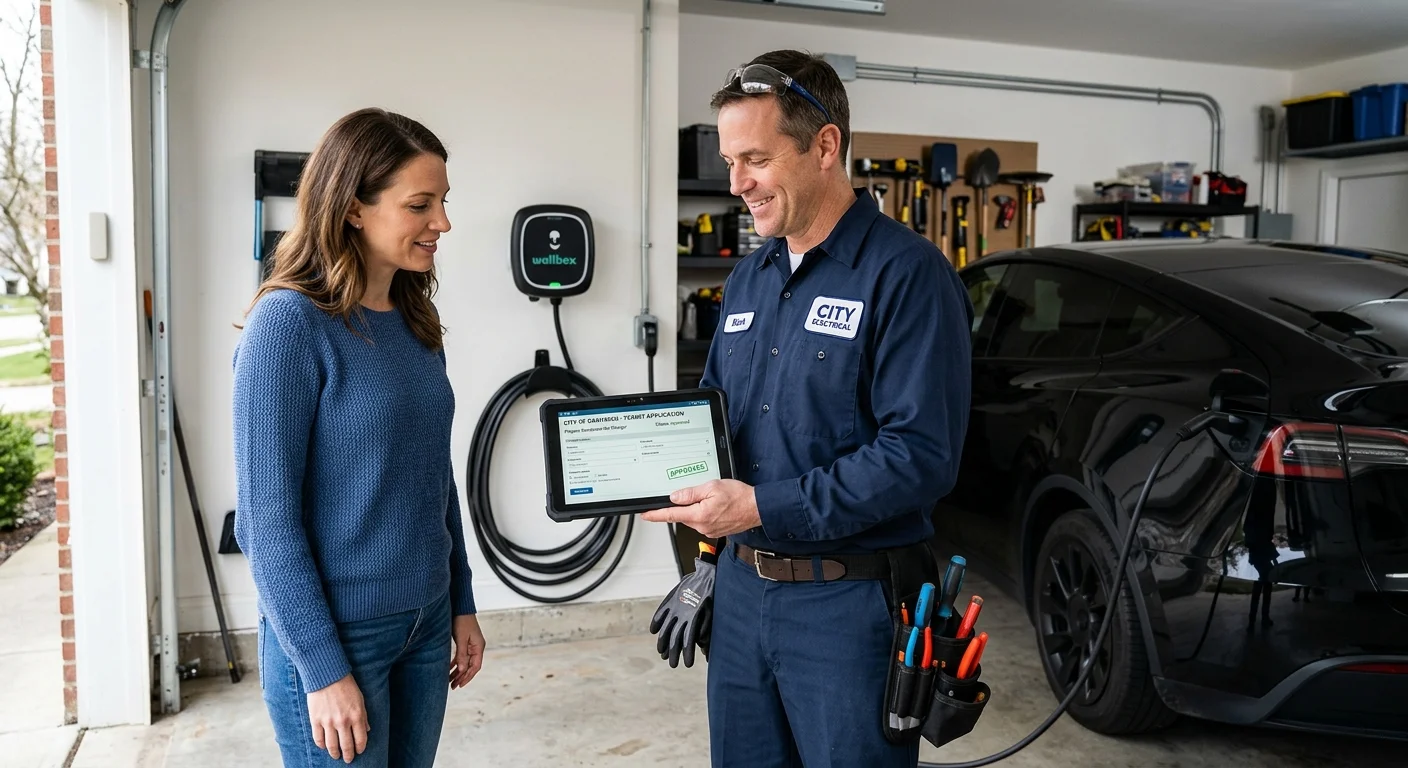
Most residential Level 2 EV chargers in the City of San Diego need a permit. Which of the two permit tracks applies is compared in Simple versus Plan electrical permits in San Diego.
TL;DR
- Nearly all Level 2 EV charger installations require a permit from the City of San Diego Development Services; Level 1 plug-in chargers on existing outlets typically don’t.
- A simple permit applies when your panel has capacity and you’re just adding a new circuit. A standard permit is required when the work involves a panel upgrade or significant wiring changes.
- The City of San Diego’s permit process typically runs one to three business days for straightforward jobs; inspections can usually be scheduled within three to seven days after completion.
- SDG&E rebates require proof of a finalized, inspected permit to process your application.
- Bright Pro Electric matches homeowners with independent licensed electricians. Bright Pro does not pull EV permits.
Yes, most level 2 charger installations require a permit
It’s natural to wonder if adding an electric vehicle charger to your home electrical system warrants official approval. For the vast majority of Level 2 EV charger installations in San Diego, a permit is indeed a necessary step. While Level 1 chargers typically plug into standard wall outlets and don’t require permits, Level 2 chargers draw significantly more power, often requiring a dedicated 240-volt circuit. This increased electrical demand and the modifications it entails are why permits become essential.
Permits exist for a good reason: they ensure that all electrical work meets the strict safety standards outlined in local and national electrical codes. This isn’t just bureaucratic red tape; it protects your home from potential electrical hazards like overloads or fires. When a licensed electrician handles your EV charger installation, obtaining a permit means the work gets reviewed and inspected by the City of San Diego. This process verifies that the installation is safe, reliable, and compliant, giving you peace of mind and preserving your home’s value. Ignoring the permit requirement can lead to fines, difficulties with home insurance, or issues when selling your property down the line. A licensed electrician pulls the permit. Bright Pro matches you with that electrician. Bright Pro does not pull the permit.
What the city of San Diego requires for EVSE permits
The City of San Diego Development Services Department oversees all building and electrical permits, including those for Electric Vehicle Supply Equipment (EVSE), which is the official term for EV chargers. When you apply for an EVSE permit, the city wants to ensure the proposed installation is safe and won’t overwhelm your home’s existing electrical infrastructure. This means submitting detailed plans and calculations. Generally, requirements include a site plan showing the location of the charger, a diagram of the new electrical circuit, and calculations demonstrating that your home’s main electrical panel can safely handle the additional load.
You’ll also need to provide specifications for the EV charger itself, along with any proposed modifications to your home’s electrical system. Hiring a licensed electrician matters here. That electrician knows the documentation the City of San Diego looks for and prepares the plans and calculations to the California Electrical Code and local amendments. Bright Pro does not prepare those blueprints. See electrical permit requirements in San Diego and the City of San Diego Development Services permits page.
The difference between a simple and a standard permit
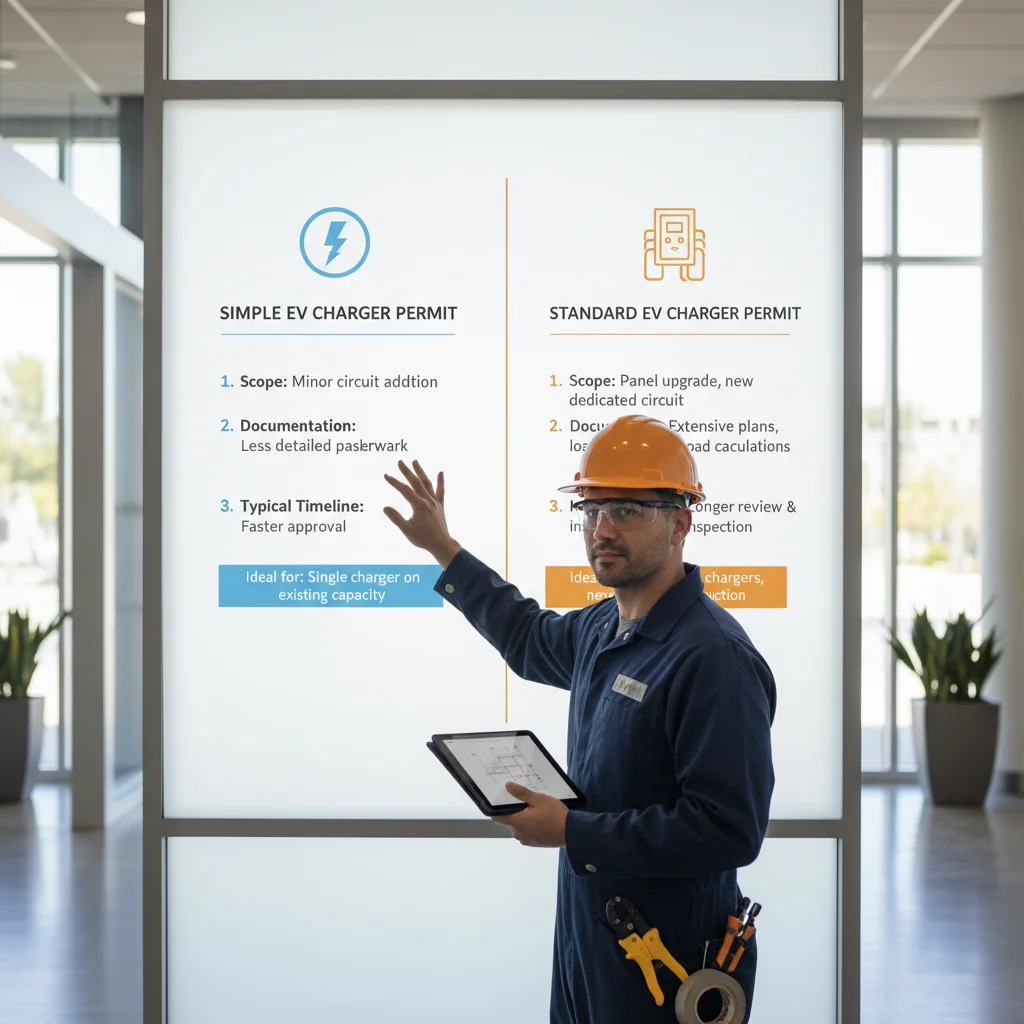
Navigating the permit process in San Diego often involves understanding whether your project qualifies for a “simple” or “standard” permit. This distinction is crucial as it affects the complexity, cost, and timeline of your EV charger installation. A simple permit is typically for straightforward installations where the existing electrical system can easily accommodate the new charger. This usually means your electrical panel has sufficient capacity and available breaker space, and the installation only involves running a new circuit to the charger with minimal structural changes. It’s often quicker and requires less documentation, as the scope of work is limited to adding an electrical device without major system overhauls.
A standard permit, on the other hand, is required for more complex projects. This category often applies if your home needs a new or upgraded dedicated circuit, if your main electrical panel lacks the capacity for the new load, or if the installation involves extensive wiring modifications. For instance, if you need a complete electrical panel upgrade to support your Level 2 charger, you’ll definitely fall into the standard permit category. These permits involve more detailed plan reviews, comprehensive load calculations, and potentially multiple inspections throughout the project. The determining factor usually comes down to the scope of electrical work beyond just connecting the charger itself. The independent licensed electricians assess your home’s specific needs during the initial consultation to accurately identify which permit type applies to your unique situation.
How a panel upgrade affects your EV charger permit
For many San Diego homeowners, installing a Level 2 EV charger goes hand-in-hand with an electrical panel upgrade. This is particularly true for older homes in neighborhoods like North Park, La Jolla, or Coronado, which might have panels designed for the electrical demands of decades past, not today’s high-tech appliances and electric vehicles. A Level 2 charger draws a significant amount of power (typically 40 to 80 amps), which can easily overload an older 100-amp service panel that’s already powering your air conditioning, water heater, and other essential systems. When your existing panel doesn’t have enough available amperage or circuit breaker slots, an upgrade becomes a necessity to safely power your new charger without risking trips or electrical hazards.
When a panel upgrade is needed, it adds another layer to the permitting process. Instead of just a permit for the EV charger, the project now encompasses a major electrical service upgrade, which requires its own, often more involved, standard permit. Additional plans for the new panel, service entrance conductors, and grounding systems go to the City of San Diego. Timeline is the city’s. The licensed electrician sizes the panel and pulls the permits. Bright Pro does not size the panel or pull the permits. See EV charger installation, the EV charger installation cost breakdown, and SDG&E rebates and the federal 30C tax credit.
How licensed electricians handle EV charger permits
Bright Pro matches San Diego County homeowners with licensed electricians. Bright Pro does not install the charger, size the panel, or pull the permit. The electrician starts with an on-site look at the panel and the charger location. That visit is how they decide whether the existing service can take the circuit and which permit track applies.
Once the scope is clear, the electrician prepares diagrams, load calculations, equipment specs, and site plans the city asks for, then files them. They track comments and schedule inspection. Published industry cost ranges for the install itself are on EV charger installation cost in San Diego. Those are not Bright Pro prices. Permit fees are on the city’s current bulletin.
What happens during the final inspection?
The final inspection is a critical last step in the EV charger installation process, signifying that your project is complete and meets all required safety and code standards. The licensed electrician who installs the charger schedules the inspection. Bright Pro does not finish installs or meet inspectors.
The installing electrician should be present to answer the inspector. Bright Pro does not attend inspections and does not promise a first-time pass. If the inspector writes a correction, that electrician handles the re-inspection. There is no Bright Pro hassle-free guarantee. Sign-off closes the permit for that job.
Frequently asked questions
Do I need a permit to install an EV charger in San Diego?
Yes, for virtually all Level 2 EV charger installations. Any new 240-volt dedicated circuit requires a permit from the City of San Diego Development Services Department. The permit ensures the work is inspected, code-compliant, and properly documented. Skipping the permit can create insurance problems, flag the work during a home sale, and disqualify you from SDG&E rebates.
What’s the difference between a simple and standard EV charger permit in San Diego?
A simple permit covers straightforward installs where the existing panel has capacity and you’re only adding a new circuit with no major system modifications. A standard permit is required when the project includes a panel upgrade, new or upgraded service entrance conductors, or other significant electrical changes. Your electrician determines which type applies after the initial assessment.
How long does the EV charger permit process take in San Diego?
Most straightforward residential EV charger permits are approved over the counter or within one to three business days of application. After the work is completed, final inspections are typically schedulable within three to seven business days. From permit application to inspection sign-off, most EV charger projects wrap up in one to two weeks total.
What happens if my EV charger was installed without a permit in San Diego?
Unpermitted electrical work can complicate a sale. Ask your insurer about coverage. It is not automatically void. Rebates have their own eligibility rules. A retroactive permit is an inspector’s process, not a Bright Pro guarantee.
Next step
A Level 2 charger is permitted electrical work. Use a licensed electrician for the circuit and the filing. Bright Pro matches homeowners with those electricians. Use contact.