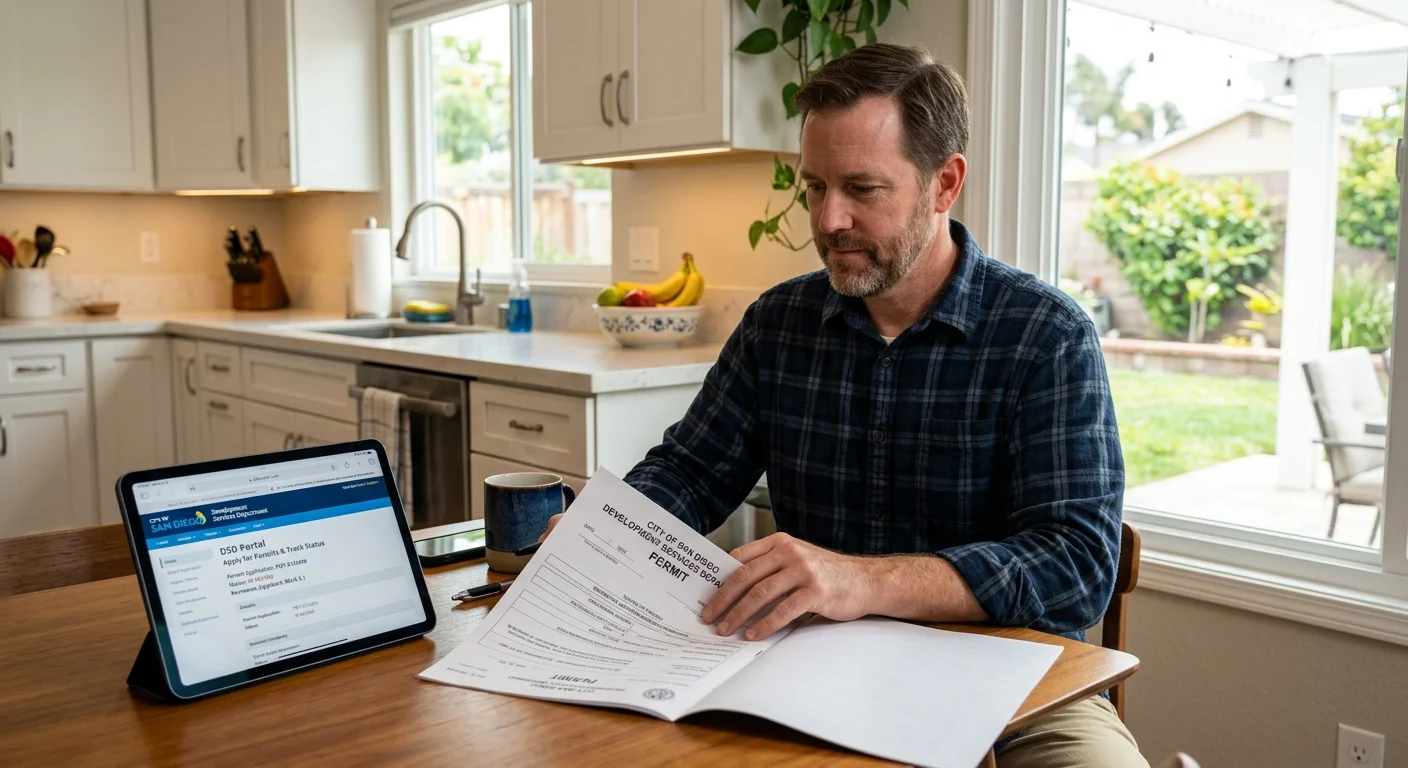
A new outlet at the same box is often a different permit question than a panel upgrade. In San Diego County the reviewing office for that address decides. Permits exist so new work can be inspected before it is covered.
TL;DR
- New circuits, panel changes, added subpanels, and EVSE often need a permit. Confirm with the city or county that issues permits for your address.
- Like-for-like replacements at the same location are often exempt, but exemptions are written in each municipal code, not as a countywide rule.
- City of San Diego electrical permit fees are published in Information Bulletin 103. Other cities and the County use their own schedules. Do not treat one fee as countywide.
- The City of San Diego uses Development Services. Unincorporated areas use County Planning & Development Services. Incorporated cities run their own departments.
- Unpermitted work can mean stop-work, exposure for inspection, and a harder sale. Insurance outcomes are a policy question, not a universal void.
Work that often needs a permit
When you’re adding circuits, changing service, or installing EVSE, ask the reviewing authority for that address. City of San Diego Development Services publishes electrical-permit tracks. County PDS covers unincorporated parcels. Poway and other cities use their own building divisions. “Always” is only true after that office says so for that project.
For example, if you’re planning to install an EV charger installation in your garage, this almost certainly requires a new dedicated circuit and often involves modifying your electrical panel. Similarly, any project that involves a complete Electrical Panel Upgrade (say, moving from 100-amp to 200-amp service) will trigger permit requirements. This ensures the new panel is correctly sized, safely installed, and can handle your home’s power demands without risk. Even adding a new 240V outlet for a large appliance where no circuit existed previously means pulling a permit. The City of San Diego and surrounding county jurisdictions want to verify that new electrical work meets strict safety standards before it’s covered up and put into service. It protects you, your family, and future homeowners from potential hazards.
Like-for-like swaps: when you can skip a permit
Like-for-like at the same location is a common exemption, but the exact list lives in the local code (for the City of San Diego, Municipal Code §129.0303 is the exemption section). A deteriorated cable behind the device can change the scope. Low-voltage work is not automatically exempt if it ties into line-voltage. When in doubt, ask the department for that address.
Replacing a failed device at the same location can be exempt in some cities when the work is like-for-like. Confirm the AHJ. If the electrician finds deteriorated wiring behind the wall, the scope changes and a permit may apply. Low-voltage doorbells, thermostats, or cameras that do not tap the branch circuit are a separate permit question. Ask the city, not this page.
City of San Diego vs. county unincorporated rules
San Diego County is a big place, and electrical permit rules can vary depending on whether your home is within the City of San Diego or an unincorporated county area, or even one of the independent cities. If you live within the City of San Diego, your electrical permits are handled by the Development Services Department (DSD). They offer an online permit portal where homeowners and contractors can apply for permits, submit plans, and schedule inspections. The DSD follows the California Electrical Code, with potential local amendments, focusing heavily on safety and energy efficiency. Their website is a great resource for specific checklists and application guides.
For homes in unincorporated areas, permitting is San Diego County Planning & Development Services, not a DPW label. Application forms and timelines differ from the City.

Permit costs, timelines, and inspection scheduling
Permit fees aren’t fixed; they depend on the jurisdiction and the scope. Figures on this page are published examples, not a county schedule. Confirm the current fee with the AHJ. Panel upgrades and new circuits are the jobs that usually need a permit. Like-for-like device swaps can be exempt in the City under SDMC 129.0303(a) when they are the same size and general type. Confirm the address.
The timeline for permits also varies. Submitting your application often involves online portals, especially with the City of San Diego DSD. Plan review, if required, can take anywhere from a few days for simple projects to several weeks for more complex ones, particularly if revisions are needed. Which track your job lands in is covered in Simple versus Plan electrical permits in San Diego. Once the permit is issued and work begins, scheduling inspections is the next step. You’ll typically need a rough-in inspection before walls are closed up, and a final inspection once all work is complete. Scheduling inspections can often be done online or by phone, usually with a few days’ notice. While the process is designed to be straightforward, navigating it can be tricky for homeowners unfamiliar with the specific forms, code requirements, and inspection criteria. A licensed electrician is often your best ally here, as they’re accustomed to these processes daily and can streamline permit acquisition and ensure inspections pass smoothly the first time. You can always verify a contractor’s license through the California Contractors State License Board.
What happens if work was done without a permit
Skipping the permit process might seem like a shortcut, but it can lead to significant headaches and financial penalties down the road. If the City of San Diego or county building department discovers unpermitted electrical work, they can issue a stop-work order immediately. This means all work must cease until a proper permit is obtained and inspections are scheduled. You’ll likely face fines that can be substantially higher than the original permit fee. The penalties are designed to deter non-compliance and cover the extra investigative work required by the authorities.
Beyond fines, you’ll be required to apply for a “retroactive” permit. This often involves exposing the work for inspection, which could mean tearing down newly installed drywall or finishes to allow the inspector to see the wiring, connections, and grounding. This demolition and subsequent repair add significant unexpected costs to your project. More importantly, unpermitted work often means uninspected work, which poses serious safety risks. Improperly installed wiring can lead to electrical fires, shocks, or short circuits, endangering your family and home. Without proper inspections, you have no official confirmation that the work meets safety codes. Some policies limit claims tied to unpermitted work. That is not a universal void. Ask your carrier. Retroactive permits often mean opening finished surfaces. Fines can exceed the original fee.
How permits affect home sales and insurance
Electrical permits play a crucial role, not just during construction, but for the long-term value and security of your San Diego home. When you decide to sell your property, any significant electrical work performed without a permit can become a major red flag. California law requires sellers to disclose known material facts about the property, and unpermitted work definitely falls into this category. Buyers and their inspectors will often look for evidence of permits, especially for major updates like an electrical panel upgrade. If they discover unpermitted work, it can significantly complicate the sale, leading to delays, demands for price reductions, or even the collapse of the deal.
Lenders also pay close attention to permitted improvements. If an appraisal flags unpermitted electrical work, it could affect the loan approval process, as the bank wants to ensure their investment is secure and meets all safety standards. From an insurance perspective, unpermitted electrical work can affect a claim. It is not a guaranteed denial. Read the policy. Permitted, inspected work is still the cleaner path for sale and lending.
Frequently asked questions
Does replacing an outlet or switch in San Diego require a permit?
Not if it’s a like-for-like replacement at the same location and the AHJ treats that swap as exempt. Confirm for that city. The City of San Diego has a like-for-like path under SDMC 129.0303(a). This page does not extend that exemption across every San Diego County jurisdiction. The exemption ends when you change the circuit, add a new location, or the work behind the wall is more than a device swap.
How much does an electrical permit cost in San Diego?
Permit fees vary by jurisdiction and project scope. This page does not publish a fee schedule. Your licensed electrician includes the city’s current fee in the quote and files the application.
What happens if I do electrical work without a permit in San Diego?
The reviewing authority can issue a stop-work order and require the work to be exposed. Fines can exceed the original permit. At sale, unpermitted work is a disclosure issue. Insurance companies may review unpermitted work on a claim. That is not an automatic denial.
Do I need a permit for an EV charger in San Diego?
EVSE usually needs a new circuit, and new circuits usually need a permit. Confirm with the city or county for that address. A licensed electrician can pull the permit. Bright Pro does not.
For a deeper look at the code standard behind permit requirements, see what San Diego homeowners should know about the NEC. If you want to understand the real-world fire risk behind why these inspections exist, the electrical fire data analysis puts it in plain numbers. To find a licensed electrician in San Diego who handles permitting end-to-end, our location page covers all cities we serve.
When to call us
Bright Pro Electric matches homeowners with independent licensed electricians. We do not pull permits or complete projects. Use contact and leave a message any time.