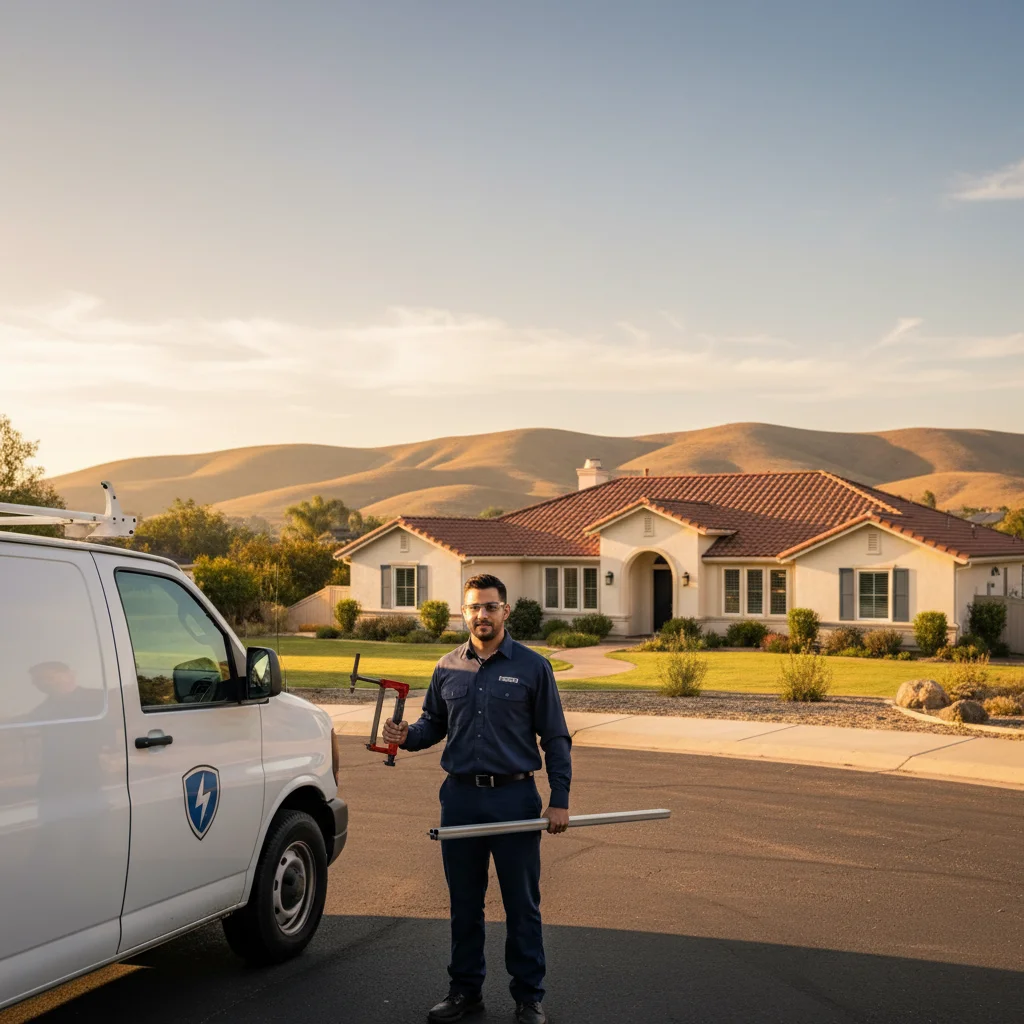
Finding the right electrician in Poway means finding a team that understands the city’s unique mix of properties. From sprawling estates in the backcountry to original homes in the city center, the electrical needs here are diverse. You need someone who can handle a long conduit run for a workshop just as easily as they can safely upgrade a 60-year-old panel.
TL;DR
- Level 2 EV charger installation in Poway runs $900–$2,000; main panel upgrade to 200A is typically $4,000–$7,500.
- Large-lot estates commonly need subpanels for detached garages, guest houses, and workshops, which requires underground conduit and voltage drop calculations for longer runs.
- Poway is designated as a high fire risk area by SDG&E, so PSPS shutoffs are a real possibility; generator readiness (transfer switch or whole-home standby) is a practical investment.
- Old Poway homes (1950s–1960s) often have 60- or 100-amp panels, ungrounded two-prong outlets, and cloth-insulated wiring. Green Valley and Heritage homes are generally in better shape but may need circuits added for new uses.
- The City of Poway Building Division requires permits for panel upgrades, new circuits, generators, and subpanel installations.
What Poway homeowners pay for common electrical jobs
It’s tough to give a flat rate for electrical work without seeing the job. The final cost depends on your home’s age, the state of your existing wiring, and the specific materials needed. Still, we can provide some typical price ranges for common projects independent licensed electricians handle for Poway homeowners in 2026.
- EV Charger Installation: A standard EV charger installation typically runs from $900 to $2,000. The cost varies based on the distance from your main panel to your garage or parking spot and whether your panel has enough capacity for a new 40-amp or 50-amp circuit.
- Dedicated Circuit: Adding a new 20-amp circuit for a high-draw appliance like a microwave, treadmill, or space heater generally costs between $450 and $900. Again, accessibility and the length of the wire run are the biggest factors.
- Recessed Lighting Installation: Installing four to six modern LED recessed lights in a room like a kitchen or living room can range from $1,200 to $2,500. This includes the fixtures, wiring, and new dimmer switches.
- Main Panel Upgrade: A panel upgrade to 200-amp service typically costs between $4,000 and $7,500. This is often necessary for home additions, installing an EV charger, or adding central air conditioning.
These are ballpark figures. The best way to get an accurate price is to schedule an estimate with a licensed Poway electrician who can assess your specific situation.
Large-lot estates: long conduit runs and sub-panels
Poway is famous for its large properties, often called “The City in the Country.” These multi-acre lots present unique electrical challenges that you won’t find in denser San Diego neighborhoods. If you have a workshop, a guesthouse (ADU), a well pump, or extensive landscape lighting far from your main house, you can’t just run an extension cord. You need a dedicated, safe, and permanent solution.
This is where sub-panels come in. A sub-panel is a smaller circuit breaker panel that is fed from your main electrical panel. It acts as a distribution hub for a specific area, like a detached garage or pool house. This approach is safer and more efficient than running multiple individual long-distance circuits.
The key challenge with these large-lot projects is the long conduit run. Electrical current loses voltage over distance, a phenomenon known as “voltage drop.” To combat this, a qualified electrician must perform calculations to select the correct gauge of wire for the distance and the expected electrical load. Using wire that’s too small is a serious fire hazard and will cause equipment to perform poorly or burn out.
Trenching to bury the conduit is also a major part of the job. It must be buried at a specific depth to comply with electrical code, protecting it from damage. For Poway estates, this requires an electrician with experience in site planning and long-distance wiring design.
Permits and inspection at the Poway building department
Any significant electrical work requires a permit from the city. This isn’t just bureaucratic red tape; it’s a critical safety measure that protects you and your property. As a homeowner, you don’t have to navigate this process alone. A professional, licensed electrician handles pulling the permit and scheduling the inspections.
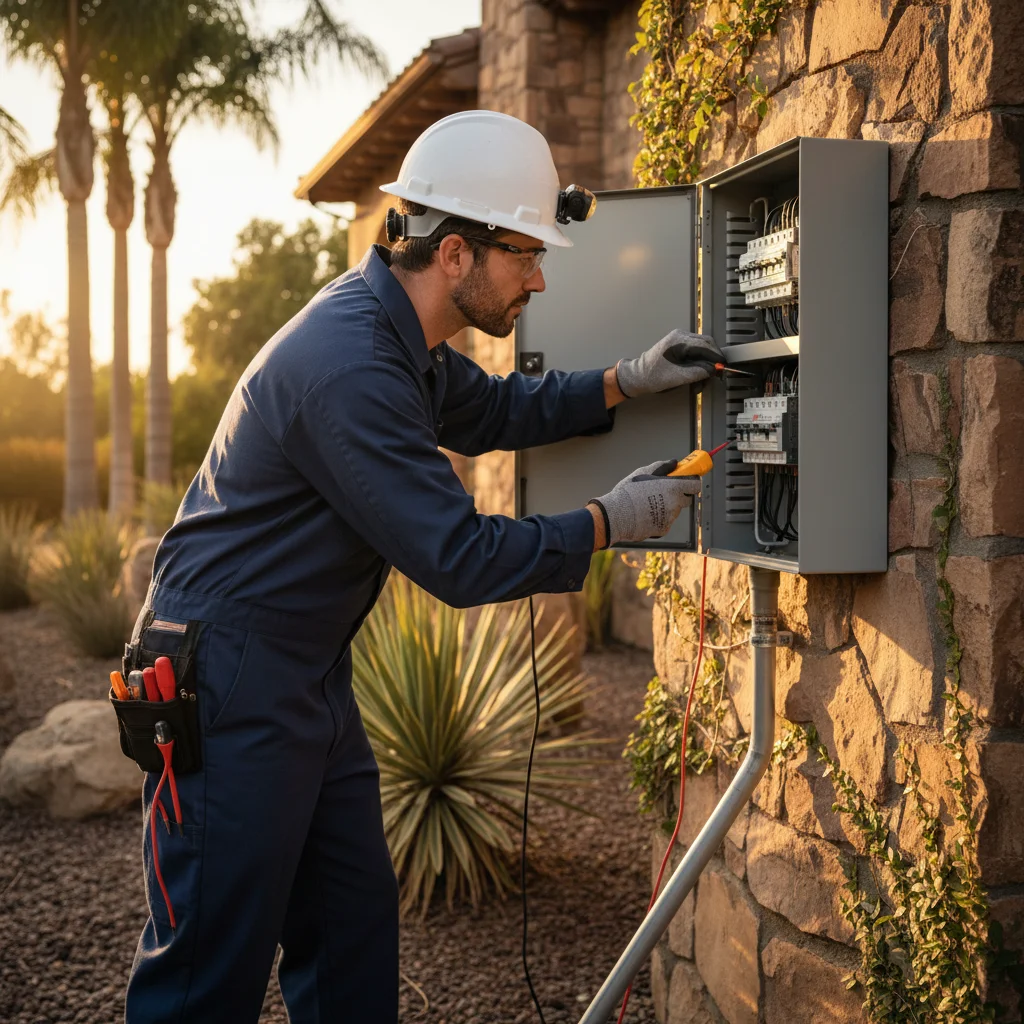
In Poway you generally need a permit for upgrading the main electrical panel, adding a new circuit, installing a whole-home generator, rewiring a significant portion of the home, or installing a new sub-panel.
The process involves submitting plans to the City of Poway Building Division for review. Once the work is completed, a city inspector will visit your property to verify that the installation was done correctly and meets all National Electrical Code (NEC) and local standards. This third-party verification ensures that the work is safe and reliable. Working with a licensed and insured contractor is non-negotiable, as they know the local codes and what inspectors look for. You can always verify a contractor’s license on the CSLB website.
PSPS exposure in Poway and generator readiness
Living in Poway’s beautiful backcountry comes with an increased risk of wildfires and, consequently, Public Safety Power Shutoffs (PSPS). During periods of high winds and dry conditions, SDG&E may intentionally shut off power to certain high-risk areas to prevent their equipment from starting a fire. For many Poway residents, especially those east of I-15, these shutoffs are a recurring reality.
Losing power for hours or even days can be more than an inconvenience. It can mean no water if you’re on a well pump, spoiled food in your refrigerator, and a complete loss of internet and AC. This is why many Poway homeowners are investing in backup power solutions.
There are two main options for generator readiness:
- Portable Generator with a Transfer Switch: This is a cost-effective solution. A licensed electrician installs a manual transfer switch and an inlet box on the exterior of your home. During an outage, you roll out your portable generator, connect it to the inlet, and flip the switch to power essential circuits you’ve pre-selected (like the refrigerator, well pump, and a few lights).
- Whole-Home Standby Generator: This is the most comprehensive solution. An automatic standby generator is permanently installed outside your home, similar to an AC unit. When it senses a power outage, it automatically starts up and powers your entire home within seconds. Our complete guide to PSPS and generator options breaks down the pros and cons in more detail.
Investing in a professionally installed generator system is an investment in safety, comfort, and peace of mind.
Old Poway vs. Green Valley: typical wiring by area
Poway’s neighborhoods tell a story through their electrical systems. The type of wiring and the capacity of the service can often be guessed by the age and location of the home.
In areas like Old Poway, where many homes were built in the 1950s and 1960s, original 60-amp or 100-amp panels still show up. So do ungrounded two-prong outlets and aging cloth insulation. An electrical panel upgrade is often the first licensed job on those houses. Bright Pro does not do the work.
Contrast that with neighborhoods like Green Valley or The Heritage, which feature newer, larger, and often custom-built homes. These properties typically have modern 200-amp (or larger) panels and copper wiring. The licensed work there is more often smart-home circuits, a home theater or sauna circuit, or a subpanel for outdoor lighting and a pool. Inland cities with mixed vintage stock, including Escondido, have a similar split between original tract panels and later custom work. Bright Pro does not claim that as field experience.
Same-day vs. scheduled service expectations
Understanding the difference between an emergency call and a scheduled project helps set the right expectations when you need a local electrician in Poway.
Same-Day or Emergency Service is for urgent safety issues. If you see sparks from an outlet, smell a burning odor from your panel, or have a critical circuit breaker that won’t reset, leave if there is flame, heavy smoke, or sparks and call 911. Then use contact. Bright Pro does not flag jobs urgent or promise an arrival.
Scheduled Service is for planned projects and upgrades. This includes things like installing an EV charger, upgrading your electrical panel, adding recessed lighting, or running power to a new ADU. These jobs require a thoughtful approach:
- Consultation & Estimate: The matched electrician visits, measures, and writes a quote. Bright Pro does not set a fixed-price policy.
- Planning & Permitting: That electrician designs the work, sources materials, and files any required city permits. Bright Pro does not pull permits.
- Installation: A licensed electrician schedules the work.
For non-urgent work, scheduling a consultation is always the first step. It ensures the project is planned correctly, priced fairly, and completed efficiently.
Frequently asked questions
How much does an electrician cost in Poway?
Common Poway jobs in 2026: EV charger (Level 2) installation runs $900–$2,000 depending on panel capacity and garage location. A new 20-amp dedicated circuit costs $450–$900. Recessed lighting installation for four to six fixtures runs $1,200–$2,500. A main panel upgrade to 200A lands at $4,000–$7,500 with permit. Large-lot projects involving underground conduit runs to detached structures are quoted individually based on run distance and load requirements.
Does my Poway home need a subpanel for my detached garage or workshop?
If your garage or workshop is more than 50–75 feet from the main panel or you want multiple circuits (lighting plus outlets plus a dedicated circuit for tools), a subpanel is usually the right approach. It distributes power more efficiently than running individual long-distance circuits, and it addresses voltage drop over distance by sizing the feeder wire to the full anticipated load. Your electrician will calculate the distance, the anticipated load, and the correct wire gauge before recommending the subpanel size.
What is a PSPS shutoff and how does it affect Poway homeowners?
Public Safety Power Shutoffs (PSPS) are intentional outages that SDG&E initiates during high fire risk conditions, typically when winds are strong and humidity is low. Many Poway neighborhoods east of I-15 are in SDG&E’s high fire risk zone and experience PSPS events regularly. Outages can last hours to days. A transfer switch with a portable generator or a permanently installed whole-home standby generator keeps essential circuits running when the grid goes down.
Do I need a permit for a generator installation in Poway?
Yes. Whole-home standby generators and transfer switches require a permit from the City of Poway Building Division. The permit process ensures the generator is correctly sized, safely connected, and that the transfer switch properly isolates your home from the grid during an outage (a critical safety requirement for utility workers). Your licensed electrician handles the permit application and inspection.
How to reach a licensed electrician
From a workshop subpanel to PSPS prep, that is licensed work, not DIY. Bright Pro matches licensed electricians for Poway homes. It does not handle the unique electrical needs of Poway as a crew.
Use contact. Bright Pro matches licensed electricians. It does not pull permits.