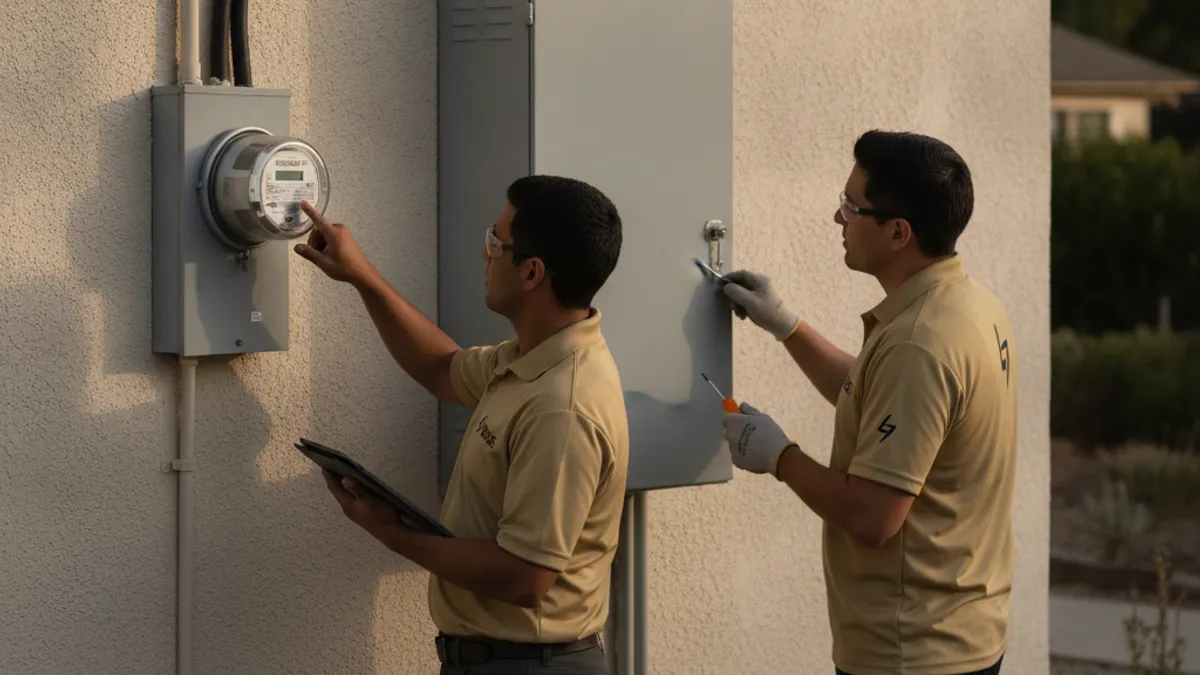
The meter on the side of your house and the socket it plugs into are two different pieces of equipment, owned by two different parties, and that split is the source of most of the confusion homeowners run into when something needs attention out there.
The meter itself belongs to SDG&E
The actual meter, the glass-domed device that measures your electricity use, is owned, installed, and maintained by San Diego Gas and Electric, not by you and not by your electrician. If the meter is malfunctioning, reading incorrectly, physically damaged, or simply old and due for a routine upgrade, that’s SDG&E’s equipment and SDG&E’s responsibility to replace. Homeowners generally don’t pay out of pocket for a straightforward meter swap of this kind, and you typically don’t need to hire anyone to make it happen. A call to SDG&E is usually the right first step if you suspect the meter itself is the problem.
Smart meter rollouts are one common reason a meter gets swapped without the homeowner asking for anything: SDG&E periodically upgrades meters across service areas as part of broader grid modernization, and that work is scheduled and performed entirely on their side.
The meter base is yours
The meter base, sometimes called the meter socket or meter can, is the metal enclosure mounted to your house that the meter plugs into. That part belongs to you, the homeowner, along with everything behind it: the service entrance conductors, the main panel, and every circuit in the house. If the meter base itself is cracked, corroded, scorched, or pulling away from the wall, that’s a homeowner repair, and it requires a licensed electrician, not SDG&E.
Coastal salt air is a real factor here. Homes closer to the coast, from Point Loma through La Jolla and up through Encinitas and Carlsbad, see meter bases corrode faster than homes further inland, since salt-laden air accelerates rust on the metal enclosure and the connections inside it. A meter base that’s ten or fifteen years old on a coastal property can look considerably more worn than the same-age base a few miles inland.
Why this split trips people up
The confusion almost always shows up when something looks wrong at the meter and the homeowner isn’t sure which side of the line it falls on. A meter that’s simply not registering usage correctly is SDG&E’s problem. A meter base with visible burn marks, a loose or wobbly meter, or a panel behind it that’s tripping breakers constantly is an electrician’s problem, even though both issues show up in the exact same spot on the wall.
Utility companies won’t perform electrical repairs on customer-owned equipment, and licensed electricians can’t legally alter or remove a utility-owned meter without coordinating with SDG&E first, since that meter has to be pulled and reset by an authorized process. Anytime a repair or upgrade touches both sides, replacing a meter base during a panel upgrade, for example, that coordination between your electrician and the utility becomes part of the job.
What happens during a panel upgrade or meter base replacement
When an electrician replaces a meter base, whether it’s failing on its own or as part of a larger panel upgrade, the utility meter has to come out first. SDG&E, or an authorized meter technician, pulls the meter, the electrician does the work on the meter base and panel, and the meter goes back in once the new equipment passes inspection. That sequence, and exactly what documentation, scheduling, or inspection steps apply, varies by project scope and by how your city’s building department handles the permit and utility coordination. A licensed electrician who does this work regularly can walk you through the specific sequence for your situation, and your city’s permit office can confirm what applies before work starts.
This is also the point where a lot of homeowners end up temporarily without power, since pulling a meter cuts service to the entire house until it’s reinstalled. A good electrician plans that outage window with you in advance rather than surprising you with it.
When to call SDG&E versus when to call an electrician
Call SDG&E directly if you suspect the meter is misreading, if the meter itself looks physically damaged separate from its mounting, or if you’re dealing with an outage that seems to affect your whole street rather than just your house. Call a licensed electrician if the meter base looks corroded, scorched, or loose, if you’re planning a whole home rewiring or panel replacement project, or if breakers are tripping in a way that suggests the problem is behind the meter rather than in front of it.
If you’re not sure which side of the line your issue falls on, an electrician can usually tell within a few minutes of looking at it, and can loop SDG&E in directly if that’s what’s actually needed.
Frequently asked questions
Do I have to pay SDG&E to replace a faulty meter?
Routine meter replacement for a malfunctioning or aging utility meter is typically handled by SDG&E as part of their standard service. Confirm specifics directly with SDG&E for your account and situation.
Can my electrician just swap the meter for me?
No. The meter itself is utility-owned equipment, and only SDG&E or an authorized technician can pull and reset it. An electrician can replace the meter base and everything behind it, but the meter itself goes through the utility.
How long does a meter base replacement take?
Timing depends on the scope of work and how quickly the utility can coordinate the meter pull and reset, which varies by project and scheduling. Your electrician can give you a realistic window once they’ve seen the job.
Will I lose power during a meter base replacement?
Yes, pulling the meter cuts power to the entire house for the duration of the work. A licensed electrician plans that outage with you ahead of time so it’s not a surprise.
If the meter base looks corroded, scorched, or loose, or you are planning a panel upgrade that needs a meter pull, Bright Pro Electric can match you with a licensed electrician. Hours are Monday through Saturday, 7am to 7pm. After hours, leave a message. Use the contact form.