
TL;DR
- Ceiling fan installation costs $185-$295 for a replacement (existing fan-rated box), $325-$475 if a fan-rated box needs to be added, and $475-$850 for a brand-new location with no wiring.
- A fan-rated electrical box is code-required for every ceiling fan. Standard light-fixture boxes can’t handle the vibration and torque.
- Three causes of wobbling fans: unbalanced blades (fix with the included balance kit), loose downrod/canopy connections, or a non-fan-rated box.
- A ceiling fan can let you set the thermostat a few degrees higher for similar comfort. That is not a verified SDG&E bill cut. See ceiling fan energy savings.
A ceiling fan is the cheapest cooling improvement most San Diego homes can make. Even with AC, a fan in the room you’re in can make a higher setpoint feel similar. That is a comfort effect, not a published SDG&E bill cut. Pair a ceiling fan with a working AC system and read the energy savings page instead of copying bill math from this article.
Here’s what installation actually costs and what makes the difference between a fan that runs quiet for 15 years and a fan that wobbles, hums, or worse.
How much does ceiling fan installation cost?
Published ranges on this page, not Bright Pro prices:
- Fan replacement (existing fan-rated box already in place): $185 to $295
- New install where there’s a light fixture but no fan-rated box: $325 to $475 (the electricians we connect you with add the box during install)
- New install where there’s no electrical box at all: $475 to $850 (run the wire, install the box, install the fan)
- Vaulted or sloped ceiling installs: $385 to $625 depending on ceiling height and slope
- High-foyer or 2-story stair installs: $625 to $1,200+ depending on lift access required
- Smart fan controls (Lutron, Hampton Bay, Hunter): $145 to $245 added to base install
- Dual fan/light switch where only single switch exists: $185 to $325 added (running the second wire)
The pros we send bring the fan-rated box, mounting hardware, and wire. You provide the fan.
Do you need a fan-rated electrical box?
A standard light-fixture electrical box is not rated for the dynamic load of a ceiling fan. Light fixtures hang in static load. They pull straight down with constant weight. Fans add vibration, torque, and lateral force that work loose any connection that wasn’t designed for it.
Code requires a fan-rated box for any ceiling fan install. Period.
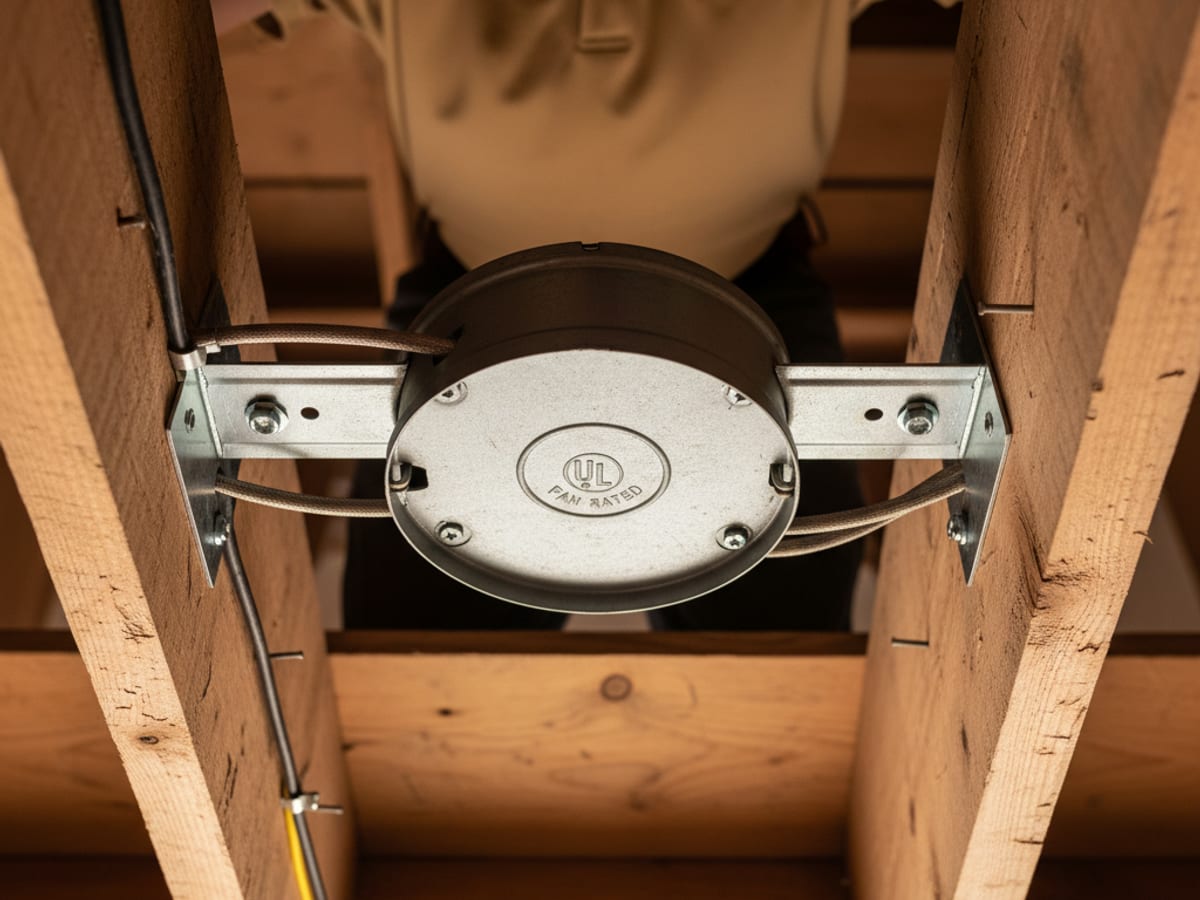
A fan-rated box looks different from a standard box:
- Heavier metal construction
- A heavy-duty mounting bracket that spans between joists (sometimes adjustable for joist spacing)
- A UL-listed “fan-rated” stamp somewhere visible
- Mounting screws sized for the fan canopy (rather than light fixture screws)
If you remove a fan that wobbles, look at the box. If it’s a standard light box (lighter, no joist bracket, screws into a single joist or mounting strap), the box is part of the problem.
Why does your ceiling fan wobble?
Three usual causes, in order of frequency:
1. Unbalanced blades
Manufacturing variation, blade warp from humidity, or a loose blade screw can put the rotating mass off-balance. The fix:
- Balance kit (almost every fan comes with one: small adhesive weights and a clip-on blade balancer)
- Run the fan on high. The blade that needs weight is identified by clipping the balancer to each blade in turn and finding which one creates the worst wobble (counterintuitively, that’s where the weight goes).
- Add adhesive weights one at a time near the center of the blade, retest, repeat.
20 minutes of work for a fan that won’t stop wobbling. Most homeowners can do this themselves with the included kit.
2. Loose downrod or canopy
The downrod (the metal tube between the ceiling and the motor housing) screws into the motor on one end and into the canopy mount on the other. If either end loosens over time, the fan develops a wobble. Tightening both connections often solves it without any other work.
3. Non-fan-rated box
If you’ve balanced the blades and tightened the downrod and the fan still wobbles, the box itself is flexing under the load. The only fix is to replace the box with a fan-rated one. That work is listed here with the new-install-with-box line: $325 to $475, not the $185 to $295 replacement band that assumes a fan-rated box is already there.
What size ceiling fan do you need?
Bigger isn’t always better. Match the fan span to the room size:
| Room size | Recommended fan span |
|---|---|
| Small (under 75 sq ft, small bedroom, office) | 36–42 inches |
| Medium (75–144 sq ft, typical bedroom) | 44–50 inches |
| Large (144–225 sq ft, large bedroom, small living room) | 52–56 inches |
| Great room (225–400 sq ft) | 56–60 inches |
| Two-story or vaulted great room | 60–72 inches, or two fans |
For ceiling height, standard 8-foot ceilings use a hugger or low-profile fan (no downrod or 6-inch downrod). Higher ceilings need progressively longer downrods to keep the fan blade height around 8 feet from the floor:
- 9-foot ceiling: 12-inch downrod
- 10-foot ceiling: 24-inch downrod
- 12-foot ceiling: 36-inch downrod
- 14+ foot ceiling: 48-inch+ downrod
What about vaulted or sloped ceilings?
Vaulted ceilings need a sloped-ceiling adapter. Most fan brands sell this as an accessory ($25–$60). It allows the canopy to mount level even though the ceiling is angled. Without it, the fan canopy sits crooked and the downrod can’t be plumb.
For high-foyer installs (12+ foot ceiling), the electricians we connect you with bring a tall ladder or scaffold. Some installs require a small lift; they’ll let you know when scheduling.
Can you use an indoor fan on a patio?
Patio, pergola, and covered-porch fans must be damp-rated or wet-rated depending on exposure:
- Damp-rated: covered outdoor area where rain can’t directly hit the fan (covered porches, pergolas with solid roofs)
- Wet-rated: fully exposed to weather (uncovered patios, areas where wind-driven rain can reach the fan)
Indoor fans installed outdoors corrode the motor bearings within a season or two. Always check the rating before buying for outdoor use.
How do smart fan controls work?
Lutron Caseta fan/light controllers, Hampton Bay smart wall controls, and Hunter SimpleConnect all work for in-app and voice control of ceiling fans. The electrician installs whichever you bring; Lutron Caseta is the easiest to integrate with existing smart-home setups.
For older fans with only pull chains, a licensed electrician can sometimes add wall switching if a switch leg was originally run to the box. If yes, that is usually a control change. If no, they either run a switch wire or install a remote. Bright Pro does not add switching.
How long does an install take?
- Fan replacement: 60–90 minutes for a single fan
- New install with box add: 90–120 minutes
- Vaulted ceiling install: 90–150 minutes
- Multiple fans in one visit: 60–75 minutes per additional fan after the first
Frequently asked questions
Do I need an electrician to install a ceiling fan?
If you’re replacing an existing fan and the box is already fan-rated, a handy homeowner can do it. But if there’s no fan-rated box, no existing wiring, or the ceiling is vaulted, you need a licensed electrician to install the proper box and wiring safely.
How do I know if my electrical box is fan-rated?
Look for a UL-listed “fan-rated” stamp on the box. Fan-rated boxes have heavier metal construction and a heavy-duty bracket that spans between joists. If the box is a lightweight standard light-fixture box screwed into a single joist, it’s not rated for a fan’s vibration and torque.
Why does my ceiling fan wobble?
Three common causes: unbalanced blades (fix with the included balance kit), a loose downrod or canopy connection, or a non-fan-rated electrical box that flexes under load. Start with the balance kit. It solves most wobbles in about 20 minutes.
What size ceiling fan do I need for my room?
Match fan span to room size. Under 75 sq ft needs a 36–42 inch fan. 75–144 sq ft works with 44–50 inches. 144–225 sq ft needs 52–56 inches. Great rooms over 225 sq ft need 56–60 inches or two fans.
Related guides
Planning lighting changes alongside your fan install? Our recessed lighting installation guide covers layout, dimmer compatibility, and costs for canless LED retrofits. For a broader look at what electrical work costs in San Diego, see our electrician pricing guide.
Once your fan is up, make sure it’s spinning the right direction for the season. Our guide to ceiling fan direction for summer and winter covers the counter-clockwise vs. clockwise setup and why it matters for both cooling and heating efficiency. If you’re installing outdoors, the rules change. Read our outdoor ceiling fan installation guide for San Diego for damp vs. wet ratings and coastal corrosion factors.
Service area
Ceiling fan installation across San Diego County. See the ceiling fan installation service page for scope. Use the contact form to match with a licensed electrician. That electrician quotes the work. Bright Pro does not.