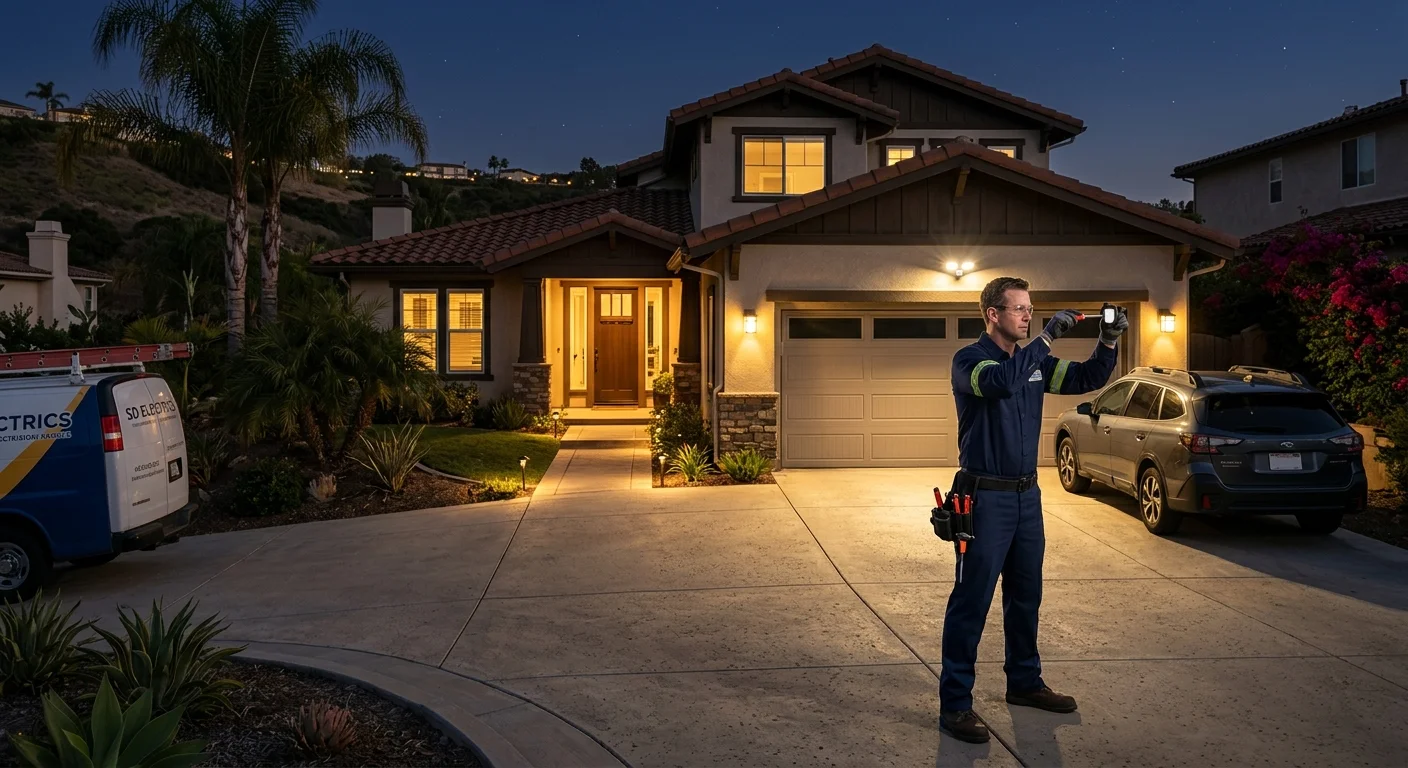
Motion-activated floodlights and dusk-to-dawn fixtures are placement and control choices. Used together they can light a driveway and a perimeter. Outdoor rating, control zones, and sightlines are the checks. Bright Pro Electric matches electricians. It does not warrant a security outcome.
TL;DR
- Keep placement, control-zone, and outdoor-rating checks. Motion floods for targeted zones; dusk-to-dawn for a listed all-night perimeter.
- Combining types is a coverage layout, not a crime-prevention promise.
- Confirm permits for new outdoor circuits with the jurisdiction. Unpermitted work is uninspected. Ask the insurer. This page does not void a policy.
- Park published costs.
- Smart lights connect to Wi-Fi so you can turn them on from an app, set a schedule, or tie a camera to a light for a clearer image. That is listing and control, not a security warranty.
- Installation costs vary widely; a licensed electrician can provide a detailed estimate after assessing the number of fixtures, wiring complexity, and any panel work required.
Choosing security lighting installation in San Diego means understanding fixture type, where to place it, and how controls can extend coverage. This page covers placement and hardware. It does not promise crime prevention.
What security lighting actually covers
This page is about fixtures, placement, and controls. It does not publish a crime-prevention result.
Lighting can reduce dark corners on a path and make a camera image more usable. Those are visibility jobs. They are not a crime-control warranty for San Diego yards, urban lots, or suburban setbacks.
Motion-activated floodlights vs. dusk-to-dawn fixtures
When it comes to outdoor security lights in San Diego, two primary types stand out: motion-activated floodlights and dusk-to-dawn fixtures. Each offers distinct benefits and serves different purposes, so understanding their differences helps you choose the right solution for your home.
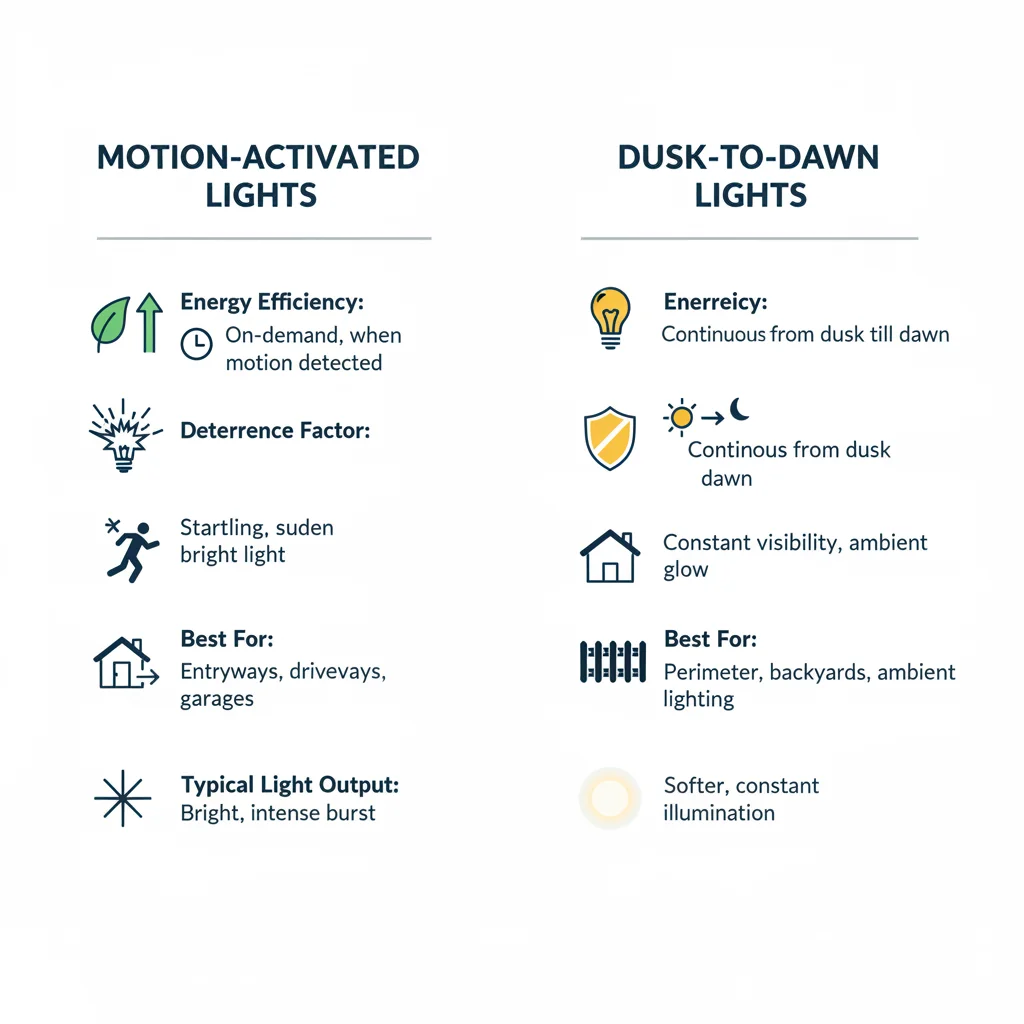
Motion-activated floodlights switch on when a PIR sensor sees a listed heat change. They use less energy when they stay off. They are a listed choice for driveways, entries, or side yards when you want light only after movement. They are less suitable for continuous, ambient lighting.
Dusk-to-dawn fixtures, on the other hand, provide continuous illumination throughout the night. They use a photocell sensor to detect ambient light, automatically turning on when it gets dark and off when the sun rises. These lights are ideal for general perimeter lighting, ensuring constant visibility around your property. They create a consistent, welcoming glow, which can be useful for guests and residents navigating pathways or outdoor spaces. They stay on all night. They do not pop on the way a motion flood does. They keep a path or perimeter lit so people and cameras can see. They are also useful for areas where you want consistent low-level light, preventing shadows from forming.
For many San Diego homes, a combination of both types covers more of the yard at night. Dusk-to-dawn on the front path, motion floods at the garage, a back entry, or a dark side yard, is a layout choice. It is lighting coverage, not a security system.
The best locations to install security lights around your home
Strategic placement matters as much as fixture type. Light the access points and dark corners you actually use: entries, the garage, side yards, and paths. That is a visibility job for the people who live there.
Start with the doors you actually use: front, back, and garage. Light those so you can see the landing. For side gates or a second entrance, light those the same way if they are dark.
Next, light the side yards, the back of the house, and spots hidden by landscaping or fencing if those are dark at night. Floodlights or motion lights there make those corners visible. If you have a shed, detached garage, or other outbuildings, consider lighting those as well so the path to them is visible.
Light pathways and driveways so residents can see the walk. That is trip visibility. For homes on larger lots in areas like Valley Center or Fallbrook, lighting the length of a driveway is a layout choice. In denser areas like Pacific Beach or La Mesa, aim lights down and use shields so spill stays on your lot.
Lights under window sills help you and a camera see the wall. Mount under eaves or on walls so the beam covers the path without a new dark patch next to it. For placement, fixture types, and low-voltage vs. line-voltage decisions, see outdoor and landscape lighting in San Diego. For wiring scope, see outdoor and landscape lighting service.
Smart security lighting options you can control from your phone
Modern technology has revolutionized home security, and lighting is no exception. Smart security lighting offers unparalleled control, convenience, and advanced features, allowing you to manage your San Diego home’s illumination right from your smartphone, no matter where you are.
These systems connect to Wi-Fi and an app so you can turn lights on, set a schedule, or vary the schedule. That is remote control and timing.
Smart lights can link to motion sensors, cameras, or a doorbell so a detection event turns a light on for a clearer image. That is a camera-visibility job. Some systems offer geo-fencing that turns lights on when the listed phone is near the house. That is convenience and energy use, not a security warranty.
You can turn yard lights on from the phone. For how licensed electricians typically plan the electrical side, see smart home wiring.
Cost of professional security light installation in San Diego
Understanding the cost of professional security lighting installation in San Diego involves several factors, as prices can vary depending on the scope and complexity of your project. While specific quotes require an on-site assessment, we can discuss the elements that contribute to the overall investment.
The primary cost drivers include the type and number of fixtures you choose. High-quality LED floodlights with advanced motion sensors or smart capabilities will typically cost more per unit than basic dusk-to-dawn fixtures. However, LEDs offer significant long-term energy savings. The number of lights you need around the property also directly impacts the material cost.
Another major factor is the complexity of the wiring. If you’re installing lights in areas where existing electrical circuits are not readily available, it might require running new dedicated lines, trenching for underground wiring, or more extensive electrical panel work. For instance, installing lights along a long driveway or in a backyard shed often involves more labor and materials than simply replacing existing fixtures near your front door. The terrain and existing landscaping of your property can also influence installation difficulty and, therefore, cost.
Labor costs in San Diego reflect licensed electricians who install to code. That is inspected work, not a Bright Pro warranty of years of reliable function. While initial installation can be an investment, it is a lighting and listing upgrade, not a guaranteed security outcome. A licensed electrician will provide a detailed estimate outlining materials and labor for your specific project.
Why professional wiring is safer than DIY options
When it comes to installing security lighting, especially for outdoor applications, the electrical work involved is often more complex and potentially hazardous than many homeowners realize. While DIY projects can seem appealing for cost savings, professional wiring is fundamentally safer and more reliable than attempting the job yourself.
Electrical work carries inherent risks, including the potential for severe electrical shock, fire hazards due to improper wiring, or damage to your home’s electrical system. Outdoor installations add another layer of complexity, as wiring must be correctly rated and protected against moisture, extreme temperatures, and physical damage common in San Diego’s climate. An unqualified installation can lead to short circuits, tripped breakers, or even house fires, posing a serious threat to your family and property.
Licensed electricians possess the necessary training, experience, and tools to perform these installations safely and efficiently. They understand the National Electrical Code (NEC) and all local San Diego County building codes, ensuring that your security lighting system is compliant and passes any required inspections. This compliance is not just about avoiding fines; it’s about guaranteeing the long-term safety and integrity of your electrical system. For example, knowing the proper gauge of wire, the correct conduit for underground runs, and how to safely connect new circuits to your main electrical panel are all critical details that pros handle expertly.
Professional installation can include equipment and labor warranties from the contractor who does the work, not from Bright Pro Electric. DIY or unpermitted work is uninspected. Ask your insurer how they treat it. This page does not void a policy. For safety and listing reasons, match with a licensed electrician. Use contact. Hours are Monday through Saturday, 7am to 7pm. After hours, leave a message.
Frequently asked questions
What’s the best security light for a San Diego driveway or garage?
Motion-activated floodlights with a PIR sensor are a listed choice for driveways and garage doors. They stay off until movement triggers them, which lights that zone. A 180-degree, 1,500 to 3,000 lumen LED floodlight covers many residential driveway widths; confirm the listing. Pair it with a dusk-to-dawn path light or entry light if you want low-level light all night.
Do I need a permit to install security lights in San Diego?
It depends on what the installation involves. Swapping an existing fixture for a new one on the same wiring and box does not require a permit. Running new wiring to add a light where none existed does require a permit, as does adding a new outdoor circuit from the panel. San Diego County inspectors require outdoor electrical work to meet GFCI protection and weatherproofing standards. A licensed electrician pulls the permit and ensures the installation passes inspection.
How do smart security lights work compared to standard motion floodlights?
Standard motion floodlights activate when the PIR sensor detects heat movement within range and turn off after a set delay. Smart lights do the same but also connect to your Wi-Fi, allowing you to control them from a phone, set custom schedules, dim them, create zones, and link them with cameras or doorbells. A camera can turn a listed light on for a clearer image. Smart lights also let you turn on all perimeter lights from inside the house.
Where should I put security lights on a typical San Diego house?
Focus first on all entry points: front door, back door, and garage door. Then light side yards, gates, and plant beds that are dark. Ground-floor windows can take a light under the sill so the wall is visible. Driveways and pathways need enough light to walk them at night. For properties with detached garages or accessory units, treat those structures as separate lighting zones.
When to call us
When you’re ready to add outdoor lighting, electrical work, particularly outdoor wiring and integrating smart controls, needs a licensed electrician. Bright Pro Electric matches you with one. It does not install the fixtures. Use contact to get matched.