TL;DR
- Build year is a screening clue: knob-and-tube shows up in many pre-1950 houses; aluminum branch wiring shows up in many 1965-1973 houses. Confirm the conductors in the field.
- Condition is not the same as type. Insulation covering knob-and-tube, damaged cloth, and hot or loose aluminum terminations are findings. The mere presence of a type is not a fire diagnosis.
- COPALUM crimp remediation for aluminum wiring costs $4,500-$9,500 on this page. Ask the insurer what they will accept. This article does not promise a policy.
- Whole-home rewiring costs $12,000-$28,000+ but can be done in phases. Whether you stay in the house is proposal-specific, not an “almost never move out” rule.
Two old electrical wiring types still show up in San Diego County homes: knob-and-tube (often in homes built before about 1950) and aluminum branch circuit wiring (often in homes built between roughly 1965 and 1973). Age is a reason to look. It is not proof of either type, and it is not a prediction that a carrier will refuse to write a policy.
If you have either, here’s how to identify it, what an electrician inspects, and what remediation can involve. Ask your insurer what they need in writing.
Knob-and-tube wiring
What it is
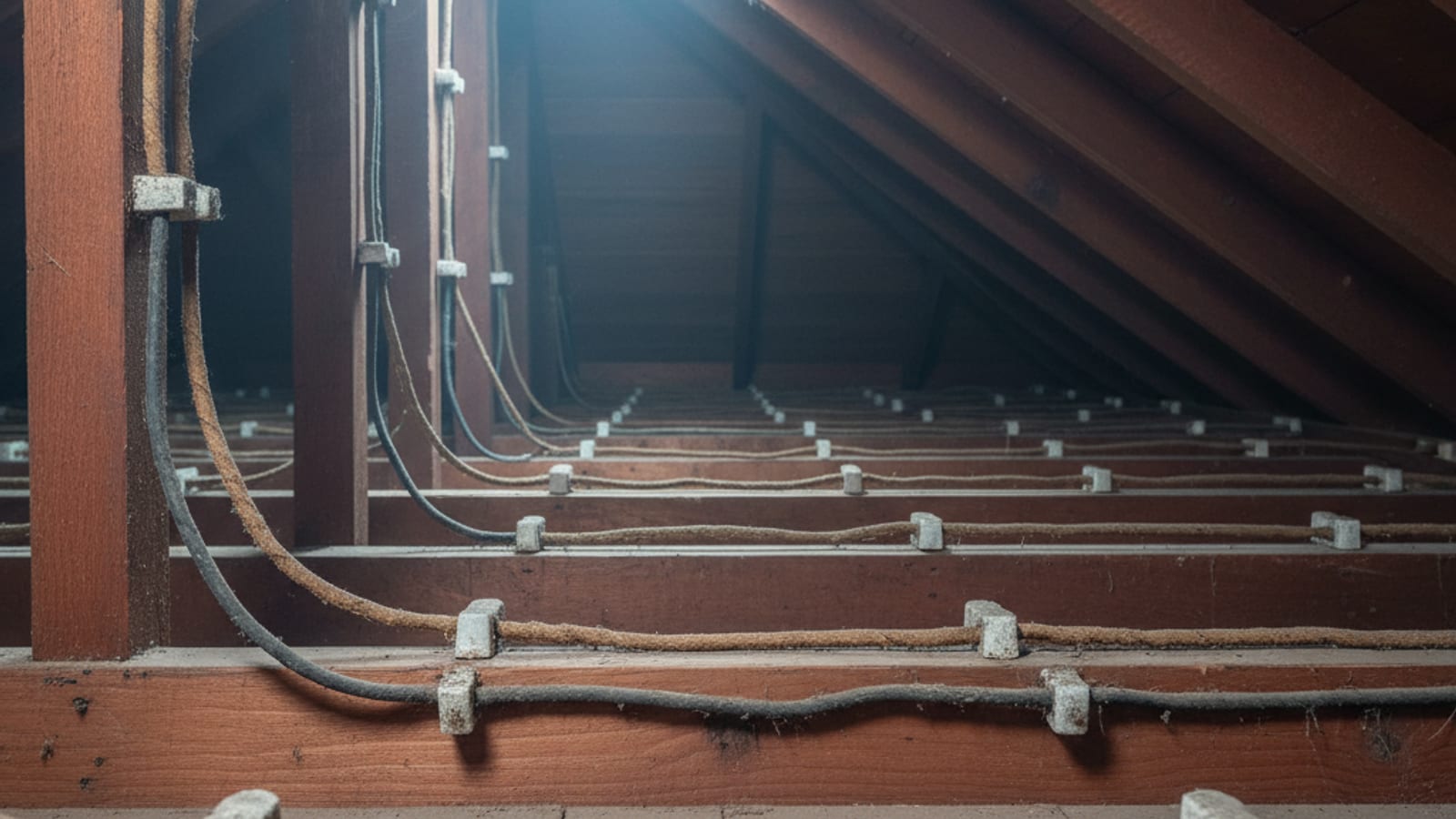
Knob-and-tube was the standard residential wiring method in the United States from roughly 1880 to 1940. It uses:
- Porcelain “knobs” screwed into framing to hold conductors away from wood
- Ceramic “tubes” that conductors pass through when crossing framing members
- Two separate insulated conductors (one hot, one neutral) running through the structure with air space between them
- Cloth or rubber insulation on the conductors themselves (not modern PVC)
Where you’ll find it in San Diego
Older homes in:
- North Park, South Park, Mission Hills, Hillcrest (older craftsman and bungalow neighborhoods)
- Coronado
- Encinitas, Leucadia, Cardiff (older beach bungalows)
- The original parts of Escondido, Vista, and Oceanside (pre-WWII town centers)
Why it’s a problem
Knob-and-tube isn’t inherently dangerous when undisturbed and original. The problem is what’s happened in the 80+ years since installation:
- Insulation has been added on top of it. Original installations relied on air space around the conductors for cooling. When attic insulation covers knob-and-tube, overheating is a documented risk category. Confirm in the attic. Do not treat insulation as proof of a fire, and do not treat it as an automatic insurance outcome.
- Cloth/rubber insulation has degraded. It cracks, flakes, and exposes bare conductor in places.
- Modifications by non-electricians over decades. Junctions made with electrical tape (instead of the proper porcelain or ceramic boxes), splices buried in walls, branch circuits added without grounding.
- No equipment grounding. Two-prong outlets throughout, which means no ground for modern appliances and electronics. What electrical grounding means covers why that matters more than it sounds.
- Modern HVAC loads on old wiring. Homeowners add window AC units or space heaters that draw real current through conductors never designed for it. If you’re upgrading your cooling, talk to an HVAC contractor about a properly sized system. A modern mini split draws a fraction of what a window unit does and runs on a dedicated circuit the electrician installs.
What to ask an insurer, not what this page predicts
Ask the carrier, in writing, what they want for wiring type, whether they will write or keep a policy with energized knob-and-tube, and what documentation they accept if circuits are abandoned. Some ask. Some do not. This article does not refuse or renew a policy.
Aluminum branch wiring
What it is
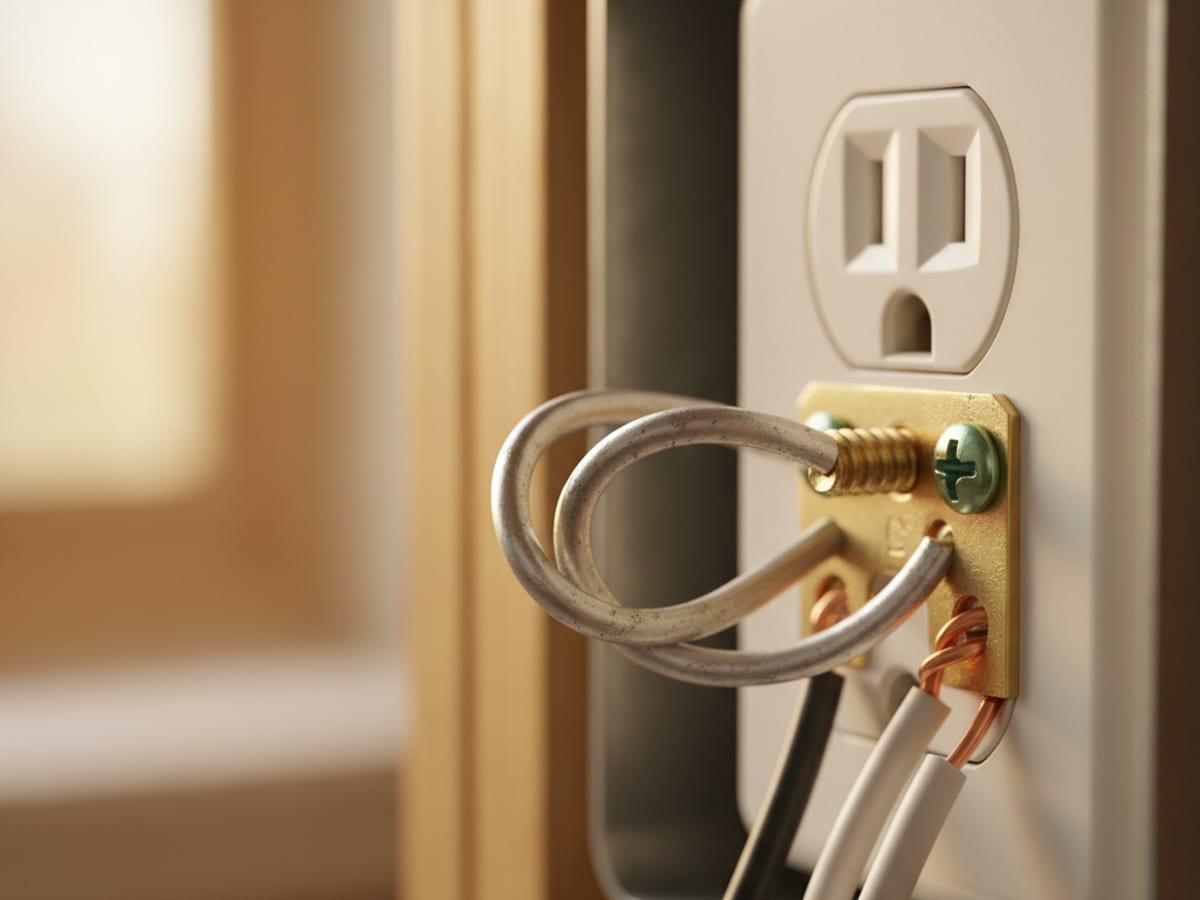
Between roughly 1965 and 1973, copper prices spiked. Aluminum branch circuit wire, for 15-amp and 20-amp circuits in residential homes, became common as a cost-saving substitute. The brand-name conductor is often labeled “AL” or has an aluminum-colored sheath. Aluminum is a slightly larger gauge than copper for the same amperage rating (12 AWG aluminum equals about 14 AWG copper).
Where you’ll find it in San Diego
Tract homes built between 1965 and 1973 in:
- Older parts of Chula Vista west of I-805
- older San Diego neighborhoods like Allied Gardens, Tierrasanta (some sections)
- Older El Cajon, Spring Valley, and La Mesa tract homes
- Some 1970s Escondido and Poway construction
Why it’s a problem
Aluminum branch wire isn’t inherently dangerous either. It conducts electricity fine. The problem is the connection points:
- Aluminum oxidizes at terminations. The oxide layer is electrically resistant, which causes heat at connections.
- Aluminum expands and contracts more than copper with temperature changes, which loosens connections over time.
- Galvanic corrosion occurs where aluminum touches copper directly, accelerating connection failure.
The result: connections can overheat. Discoloration, a hot device, scorching, or arcing are field findings. Type alone is not a diagnosis. If you see smoke or fire, leave and call 911.
What to ask an insurer about aluminum branch wiring
Ask whether they want COPALUM, AlumiConn, a full rewire, or nothing. Some carriers accept listed pigtails. Some want more. Do not treat this article as their underwriting desk.
What insurance carriers ask
Carriers treat aluminum branch wiring differently. Ask yours, in writing, whether they want COPALUM, another listed method, a full rewire, or nothing. This article does not refuse coverage or accept a method on their behalf.
Aluminum service entrance and aluminum to large appliances (range, dryer) are usually fine and not the concern. The issue is specifically aluminum on 15-amp and 20-amp branch circuits.
What are your remediation options?
For both wiring types, options sit between “inspect and document” and “rewire the whole house.” A matched electrician quotes the field-verified scope. Bright Pro Electric does not install.
Knob-and-tube remediation
- Full rewire. Whole-home rewiring is the matching page for pulling new copper and abandoning old K&T in place. See our knob-and-tube rewire cost guide. The electrician who takes the job does that work. Bright Pro Electric does not.
- Partial rewire. Sometimes only original sections need work. Scope phase-by-phase after inspection.
- Disconnect and abandon. Unused circuits can be disconnected and documented if the electrician confirms they are de-energized. Ask the insurer whether that letter is enough.
Aluminum branch remediation
- COPALUM crimp connections at every termination. UL-listed. About $35–$75 per device. Ask the carrier whether they accept it.
- AlumiConn lug connectors. A similar listed solution, sometimes used where COPALUM tooling isn’t available.
- Full rewire. The most expensive option if the home is already being remodeled.
For a full breakdown of pigtailing methods and per-device costs, see our guide to aluminum wiring repair in San Diego.
What it costs
Typical scopes for a 1,500–2,500 sq ft single-family home:
- COPALUM aluminum remediation: $4,500–$9,500 depending on device count
- Partial rewire (one wing or floor): $3,500–$8,000
- Whole-home rewire: $12,000–$28,000+ depending on access, wall finish, and drywall scope
Ask for an in-home assessment and a written scope before any commitment.
Will I have to move out?
Occupancy during a rewire is whatever the written proposal says. Phased circuit work can keep most of the house powered. Cutover windows are not a guarantee you stay home through the entire project. Ask which rooms lose power and for how long before you sign.
How much drywall damage should you expect?
Less than people fear, when attic, crawlspace, and existing chases are usable. The electrician pulls through those paths where possible and uses fish tape through walls when not. Many rewires need a handful of small drywall openings per room (4-inch round to 6×6 square is typical). Drywall repair is a separate trade. Bright Pro Electric does not patch walls and does not perform the rewire.
Frequently asked questions
How much does a whole-home rewire cost in San Diego?
A full rewire for a 1,500–2,500 sq ft single-family home costs $12,000 to $28,000+ depending on wall access, finish work, and the complexity of the existing wiring. Partial rewires (one wing or floor) run $3,500 to $8,000.
Can I get insurance with knob-and-tube wiring?
Ask your carrier. Some will write a policy with energized knob-and-tube, some will not, and some want it disconnected and documented. This page does not decide that.
What’s a COPALUM crimp and does it really fix aluminum wiring?
A COPALUM crimp is a UL-listed connection method that bonds aluminum wire to a short copper pigtail at every outlet, switch, and junction. It addresses oxidation and thermal expansion at termination points when installed to the listing. It costs $4,500 to $9,500 for a typical home on this page. Ask the insurer whether they accept that method.
Do I have to move out during a rewire?
Occupancy is proposal-specific. Rewiring is often staged by room or circuit so other rooms stay powered. That is not an “almost never move out” rule. Ask for the cutover plan in writing.
Related guides
A rewire usually means a panel upgrade too. Our panel upgrade cost guide covers pricing, permit process, and what SDG&E coordination looks like. If your home has a Federal Pacific or Zinsco panel alongside the old wiring, read our FPE and Zinsco replacement guide for the specific failure risks those panels carry.
Service area
Licensed electricians in the matching network handle whole-home rewiring and aluminum remediation across San Diego County. Older inland tracts in El Cajon, Spring Valley, and the older parts of Chula Vista and Escondido are where aluminum branch wiring is a screening clue. Knob-and-tube is a screening clue in coastal beach bungalows and older central San Diego neighborhoods. Confirm the conductors in the field.
Use the contact page. Hours are Monday through Saturday, 7am to 7pm. After hours, leave a message.