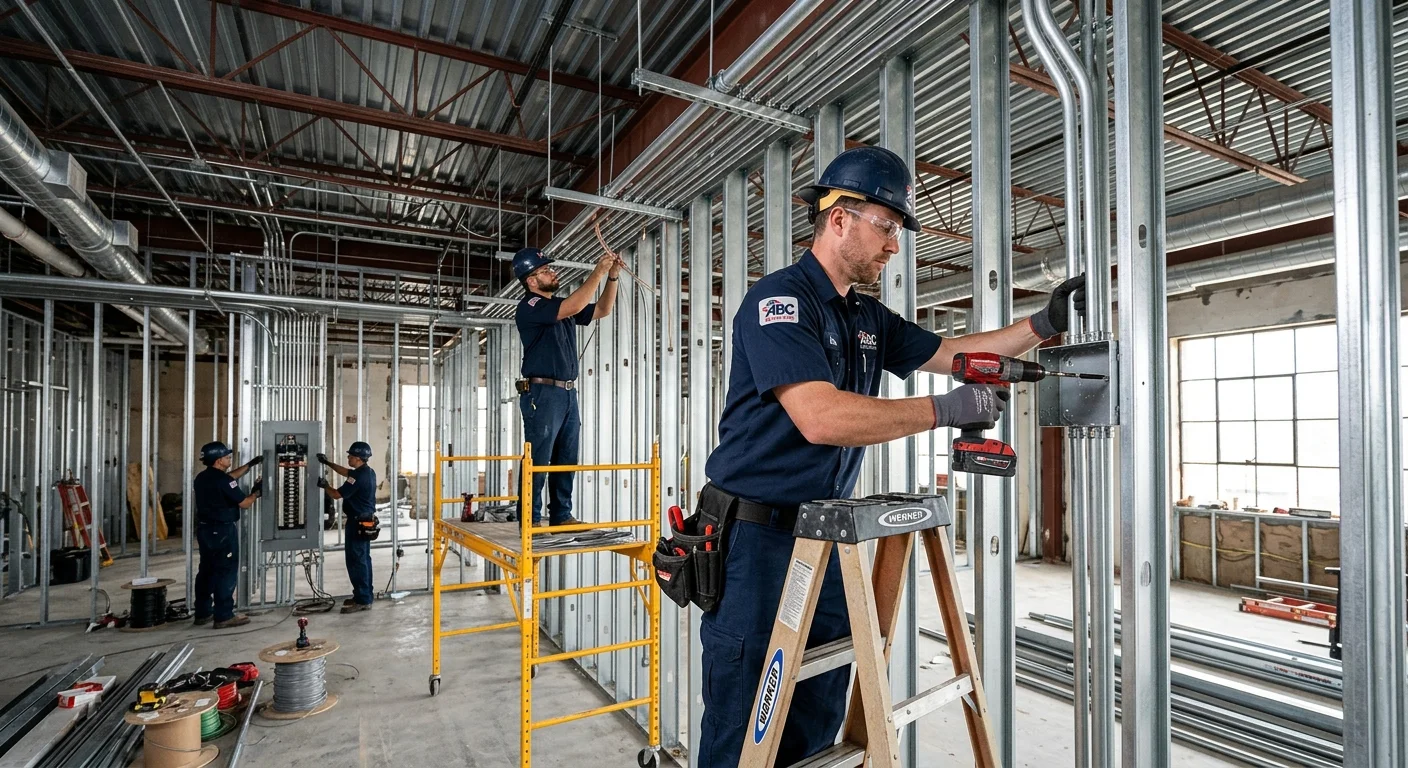
A commercial tenant improvement in San Diego County, office, retail, or restaurant, lives or dies on the electrical plan. Load, Title 24 lighting, dedicated equipment circuits, and the permit path decide whether the space can open on the GC’s schedule.
Bright Pro Electric matches property managers and business owners with independent licensed electricians for commercial electrical TI work. It is not a C-10 contractor and does not install the build-out.
TL;DR
- A commercial tenant improvement (TI) typically runs $15,000–$80,000+ for electrical work alone, depending on space size, equipment load, and existing infrastructure.
- California Title 24 compliance is mandatory on every commercial TI in San Diego County, covering lighting controls, occupancy sensors, and energy-efficient fixtures.
- Restaurants and medical offices require the most dedicated circuits; offices and retail are less intensive but still need careful load calculations.
- Permits are required for all commercial TI electrical work; the licensed electrician on the project handles the submittal and coordinates the city inspection.
- A good TI electrician works directly with the GC and coordinates with other trades to stay on schedule and avoid costly delays.
What is a tenant improvement (TI) electrical project?
A tenant improvement (TI) project involves modifying an existing commercial space to meet the specific needs of a new tenant. From an electrical perspective, this often means far more than just adding a few extra outlets. It’s a comprehensive overhaul of the space’s power distribution and wiring to support the tenant’s operational requirements.
A landlord usually delivers a shell, or a space last used by a different business. The new tenant still needs circuit layout, lighting, equipment power, and often data rough-in. Office, retail, and restaurant kitchens each have different loads. The licensed electrician on the job does the planning, load calculations, code path, and trade coordination. Bright Pro does not handle that as the contractor.
Common electrical needs for office, retail, and restaurant TIs
Every commercial space has different electrical requirements. A licensed electrician designs and installs to that use. Bright Pro does not.
For office remodels, modern businesses rely heavily on data and communication. Electrical TIs typically include extensive data cabling for networks, dedicated circuits for server rooms and high-capacity printers, ergonomic task lighting, and power solutions for conference room AV equipment and charging stations. Efficient power distribution is key to supporting a productive work environment.
Retail build-outs demand electrical systems that enhance product display and customer experience. This often means specialized track or accent lighting to highlight merchandise, reliable power for point-of-sale (POS) systems, security cameras, and dynamic digital signage. Dedicated circuits are frequently needed for refrigeration units or specialized display equipment. A reliable retail electrician in San Diego understands how lighting and power contribute directly to sales and aesthetics.
Restaurants present some of the most complex electrical needs due to their high demand for specialized equipment. Kitchens require heavy-duty dedicated circuits for ovens, fryers, commercial refrigerators, dishwashers, and ventilation systems. Dining areas need sophisticated lighting controls to create specific ambiances, while POS systems and entertainment setups require stable power. Emergency lighting and power solutions are also crucial for safety and continuity. See commercial electrical for the matching category. The electrician on the contract owns the install.
Navigating Title 24 compliance in your new space
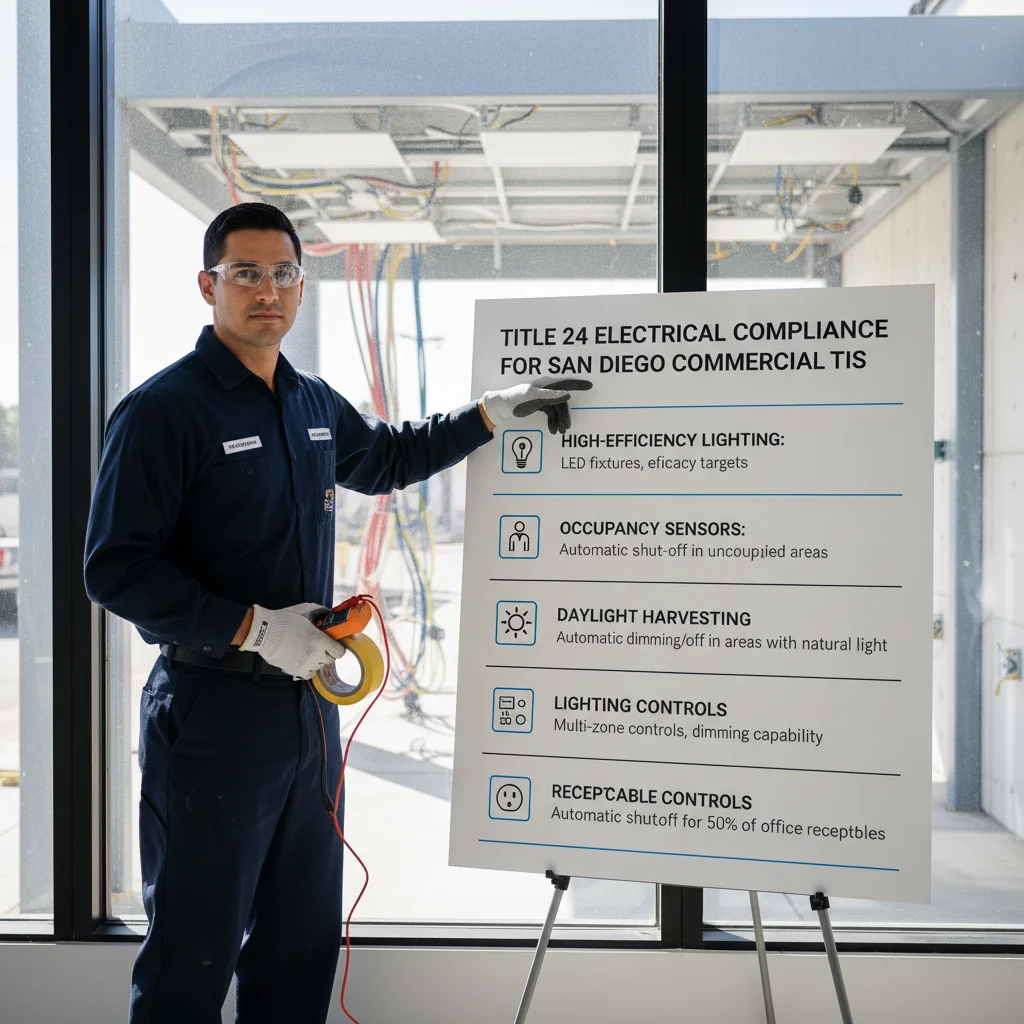
For any tenant improvement project in San Diego County, understanding and adhering to California’s Title 24 Energy Efficiency Standards is not optional. It’s mandatory. Title 24 sets stringent requirements for energy conservation in new construction and major renovations, including commercial TIs. Ignoring these standards can lead to costly project delays, failed inspections, and significant redesigns.
Title 24 primarily impacts lighting and power usage within commercial spaces. For electrical TIs, that means efficient fixtures plus controls: occupancy sensors, daylight harvesting, and dimming where the occupancy requires them. Independent licensed electricians stay current with the California Energy Commission rules. Bright Pro does not author the Title 24 report or guarantee plan-check approval.
The importance of a dedicated circuit for commercial equipment
In a commercial setting, certain equipment demands consistent and reliable power without interference from other devices on the same circuit. This is where dedicated circuits become critical. A dedicated circuit is an electrical circuit that serves only one appliance or piece of equipment. It has its own circuit breaker in the electrical panel, ensuring that power surges or faults from other devices won’t affect it.
For businesses, dedicated circuits are essential for preventing overloaded circuits, which can cause breakers to trip, leading to frustrating downtime and potential damage to valuable equipment. Imagine a restaurant’s refrigerator or an office’s server rack suddenly losing power because a coffee maker on the same circuit tripped the breaker. This type of disruption can lead to lost revenue and operational inefficiencies. Common commercial equipment requiring dedicated circuits includes:
- Heavy-duty kitchen appliances: Ovens, fryers, large refrigerators, freezers, dishwashers.
- Medical or laboratory equipment: Sensitive diagnostic machines, lab freezers.
- IT infrastructure: Server racks, large computer clusters, data storage units.
- Industrial machinery: Manufacturing equipment, large power tools.
- Retail displays: Large, illuminated signage, specialty refrigeration units.
Installing dedicated circuits during the TI protects that equipment from shared-circuit trips. A licensed electrician does the load calculations that decide which loads get their own breaker. Bright Pro does not.
TI process: from design and load calculations to final inspection
A commercial TI electrical job follows a licensed-contractor sequence, not a Bright Pro crew checklist.
Design. The electrician works with the owner, GC, and architect from the drawings.
Load calculations. They add equipment, lighting, and receptacle demand so the panel is sized before rough-in.
Permitting. They file with the AHJ. Bright Pro does not pull permits.
Installation. Independent licensed electricians land conduit, wire, and devices. Bright Pro does not employ that crew.
Testing and city inspection. The electrician tests circuits and meets the inspector. This page does not guarantee the system is ready on day one.
Partnering with general contractors and property managers
The licensed electrician coordinates with the GC and other trades on the construction schedule. Bright Pro does not bid the electrical package, does not promise on-time-every-time completion, and is not the TI contractor. City-specific notes: Santee and Carlsbad. What to ask before signing: hiring a commercial electrician in San Diego.
Frequently asked questions
Do I need a separate electrical permit for tenant improvement work in San Diego?
Yes. Any commercial TI that involves new wiring, new circuits, or changes to the electrical distribution system requires a permit from the applicable jurisdiction, whether that’s the City of San Diego, Chula Vista, Carlsbad, or another municipality. Your licensed C-10 electrical contractor handles the permit application and coordinates the inspection. Work without a permit can hold up your certificate of occupancy and create serious problems at lease renewal or sale.
What does Title 24 compliance actually require for a commercial space?
Title 24 is California’s energy efficiency standard. For a commercial TI, it primarily governs lighting. You’ll need occupancy sensors in private offices, restrooms, and conference rooms, along with automatic shut-off controls and daylight harvesting in spaces with significant natural light. Fixture selection must meet minimum efficacy thresholds. Your TI electrician should provide a Title 24 lighting control narrative as part of the permit package, not just select compliant fixtures.
How long does the electrical portion of a commercial TI take?
Rough-in work in a shell space typically runs two to four weeks for a 2,000–5,000 sq. ft. commercial space. Restaurants and medical offices take longer due to the volume of dedicated circuits and specialized equipment connections. Permit review can add one to three weeks depending on the jurisdiction and the complexity of the submittal. A TI electrician who pulls the permit early and stays ahead of the GC schedule can prevent those delays from cascading.
Can we phase the electrical work to avoid disrupting an operating tenant next door?
Yes, and it’s common in multi-tenant buildings. The electrician works in coordination with the GC and property manager to schedule noisy or disruptive work during off-hours, and to limit any temporary shutdowns to the panel sections that serve only the TI space. Your electrician should have experience with live-building work and clear communication protocols with the building operations team.
What’s included in a commercial TI electrical quote?
A thorough quote covers load calculations, design drawings, the permit fee, all conduit and wire, panel or sub-panel work, lighting fixtures (or just rough-in if the GC is supplying fixtures), data and low-voltage rough-in if included in scope, dedicated circuits for all identified equipment, testing, and the final inspection walkthrough. Get a line-item breakdown, not a single number.
When to call us
If you are planning an office, retail, or restaurant TI in San Diego County, use the contact form. Bright Pro matches you with an independent licensed electrician. That electrician handles the TI electrical scope. Bright Pro does not.
Bright Pro Electric matches San Diego County homeowners and property managers with independent licensed electricians. It does not hold a C-10, pull permits, or guarantee dispatch. Hours are Monday through Saturday, 7am to 7pm. After hours, leave a message.